
corrugated mailing boxes
Showing all 2 results
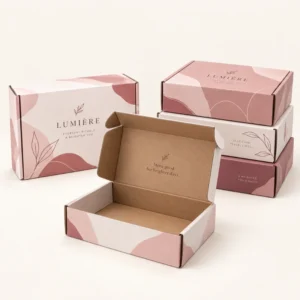
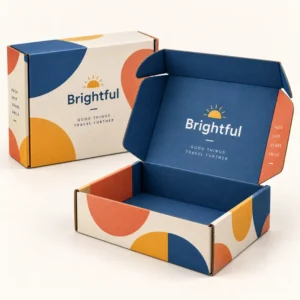
Corrugated mailing boxes are corrugated board cartons made for sending goods by post, with a firm structure that survives sorting, stacking and delivery handling. They cover a wide range of shapes, from slim flat packs for documents and prints to deeper cartons for multi item orders, and they keep the contents still while the parcel moves.
Why corrugated mailing boxes are a postal staple
Postal handling is rougher than shelf storage. A parcel may be stacked, turned, dropped a short distance and pressed against other parcels, all in one journey. Corrugated board handles that journey well because the fluted middle layer cushions shocks and the flat liners spread pressure across the panel. When the box is the right size, the product cannot build up momentum inside, which is the main cause of corner damage and scuffing. That simple fit, more than any extra filling, is what protects most postal orders.
Mailing boxes also help the sender. They arrive flat, so a drawer or a shelf can hold a useful stock without a dedicated storage room. They fold in a clear sequence, so packing stays quick even during a busy period. A smooth outer panel takes an address label cleanly, and a printed outer face can carry a brand without needing an extra outer bag. For sellers who post daily, that combination of speed, storage and presentation is hard to beat.
Flat, slim and deep mailing formats
Slim mailing boxes suit documents, certificates, photographs, prints and thin books, because they hold the item flat and stop bending. Standard depth boxes suit clothing, cosmetics, toys and household goods. Deep boxes suit multi item orders, gift sets and items with a protective sleeve or a presentation tray. Some mailing boxes use adjustable creases, so one box can fold down to different depths. That flexibility helps sellers with varied order thicknesses, but the fold must still close flat and seal fully.
Seal types and when to use each
A self seal strip gives fast, clean closure and suits high volume packing, because no tape dispenser is needed at every pack. A tuck in closure suits light items and gives a neat, tape free finish. Tape closure suits heavy or valuable orders, where an extra seal adds tamper evidence and peace of mind. Test the seal on a filled pack, and check that it holds when the pack is lifted by one edge and when it is pressed from the side.
Sizing a mailing box for the postal journey
Measure the product closed and packed, including any sleeve, tissue or protective wrap. Choose a box whose internal length and width sit just above the product, and whose depth matches the packed thickness. A box that is too large invites movement and needs filling. A box that is too small forces the product, strains the seal and distorts the finished size. After packing, measure the finished parcel at its thickest point, including any bulge, and weigh it, because the finished size and weight decide the postal format.
Royal Mail formats give a useful planning guide. A large letter must stay slim, with a maximum thickness of 2.5 cm and a maximum weight of 750 g in the published business guide. A parcel allows a larger size, up to 61 cm by 46 cm by 46 cm in that same guide. Check the current Royal Mail guidance before printing labels, because formats and limits can change, and a pack that was correct last season may fall into a different format after a size change. You can check the Royal Mail UK parcel and letter services page for current format details.
Packing fragile and mixed orders
Wrap fragile items separately before they share a box, and keep heavy items at the bottom with lighter items on top. Use a divider or a tray where glass, ceramics or bottles could knock together. Fill only the remaining gaps, with just enough material to stop movement, and avoid overfilling that forces the lid up. A pack that closes flat, seals fully and shows no bulge will measure true and travel better than a pack stuffed to the top.
Labelling a mailing box clearly
Place the address label on the largest flat panel, clear of seals, tear strips and folds. Use a label that sticks firmly to board, and write or print the address in a size that stays legible after handling. Add a returns address where the service allows it, and keep handling notes short. A clear label reduces misrouting and helps a parcel reach the right door without extra handling.
Custom printed corrugated mailing boxes
Print turns a postal carton into a brand touchpoint. A logo and a shop name on the outside help the customer recognise the sender at a glance. A message on the inside, such as care instructions, a thank you note or a returns note, adds warmth without cluttering the outside. Keep outside artwork bold and simple, because labels, seals and handling marks will compete for space. Reserve fine detail and longer text for the inside, where the customer can read it in comfort.
For custom printed orders, artwork approval comes first, and production follows after final artwork is approved. Corrugated lead times after final artwork approval are 12 to 15 working days. These are production lead times, not a promised delivery date, so allow time for artwork checks and for the postal service itself when you plan a launch or a seasonal send. To start, request a custom quote and a quote will confirm the specification, quantity and print details for your exact orders. You can also browse the full shop, read delivery information, learn about the team, and view corrugated postal boxes for related options.
Recycling after delivery
Corrugated mailing boxes are widely recyclable through household cardboard recycling. Customers can flatten the box, remove labels and tape where practical, and place it with cardboard recycling. A plain board is usually simplest to recycle, so consider finishes carefully if recycling is a priority for your brand. A short note on the pack, inviting reuse for storage or a return, can extend the life of a sturdy box.
Common mailing mistakes to avoid
Avoid choosing a box by the product alone and forgetting the packed size, because sleeves and wraps add thickness. Avoid sealing a bulging pack, because it will not measure true and may open in transit. Avoid placing a label across a seal or a tear strip, because the label may lift or tear on opening. Small checks at the bench prevent most postal problems.
Frequently asked questions about corrugated mailing boxes
What is the difference between a mailing box and a shipping carton?
A mailing box is usually a postal format carton that folds neatly around an order and presents well on arrival. A shipping carton is often a plainer transit carton used for bulk or courier freight. Many orders suit either style, but a mailing box is the better choice when presentation matters.
Do corrugated mailing boxes need extra padding?
Many orders need little or no extra padding when the box fits snugly. Fragile or mixed orders benefit from separate wrapping, a divider or a small amount of gap filling to stop movement.
Can I use a corrugated mailing box for a large letter?
Yes, if the finished packed item stays within the large letter limits for size and weight. Measure the finished pack at its thickest point and check current Royal Mail guidance before posting.
Are corrugated mailing boxes recyclable?
Yes, corrugated board is widely recyclable through household cardboard recycling. Flatten the box and remove labels and tape where practical before recycling.
How do I order custom printed corrugated mailing boxes?
Use the quote page to share product sizes, quantities, board choices and artwork ideas. You will receive a quote based on your specification, and production follows after final artwork approval.