
cardboard mailer boxes
Showing all 3 results
-
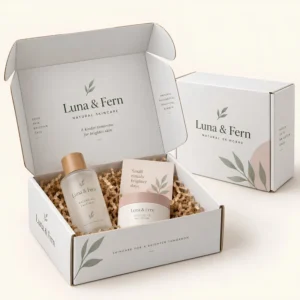
Custom Cardboard Mailer Boxes
Get a Quote -
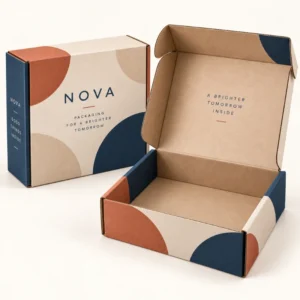
Custom Mailer Boxes UK
Get a Quote -
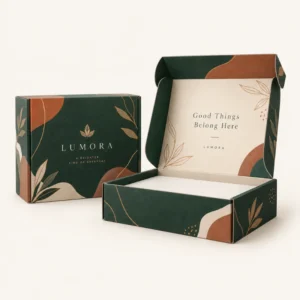
Personalized Mailer Boxes
Get a Quote
cardboard mailer boxes are corrugated boxes with a self locking lid, made to send single orders and subscription sets through the post and courier networks while also presenting the brand well on opening. They close without tape in most designs, they hold their shape in transit, and they can be printed inside and outside. That combination is why online sellers choose them when the box itself is part of the customer experience, not just a transit shell.
What cardboard mailer boxes are made to do
A mailer box is built around two jobs at once. First, it must protect the contents from knocks, pressure and handling during delivery. Second, it must open cleanly and look intentional, so the customer feels the order was packed with care. The roll end tuck design, with side flaps that fold in and a front flap that tucks into place, gives a neat rectangular box with no loose flaps and no tape across the opening face. That clean face is also what makes printing so effective, because the design is not broken by tape or by a taped seam.
Most cardboard mailer boxes use E flute or B flute corrugated board. E flute is thinner, lighter and gives a smoother surface for detailed print, which suits books, apparel, cosmetics and other light to medium items. B flute is thicker and stronger, which suits heavier sets, fragile items that need extra cushioning support, and larger boxes that must resist crushing. Board choice should follow product weight and fragility, not fashion, because a beautiful box that arrives crushed has failed its main job.
Mailer boxes compared with plain shipping cartons
A plain shipping carton is usually a taped slotted box chosen mainly for strength, stacking and low material use. A mailer box is chosen when presentation, easy opening and branding matter as much as protection. Neither style is automatically stronger. Strength depends on board grade, box size, wall construction and how well the contents fit. For bulk distribution and heavy goods, a taped carton may be the practical choice. For direct to customer orders, a mailer box usually gives a better opening experience and a stronger brand impression.
When a mailer box is the right choice
Choose a mailer box when the order is a single product or a curated set, when the customer will open the box themselves, and when print, colour or an inside message will add value. Choose a different style when the load is very heavy, when pallets and stacking dominate, or when the outer box will be discarded before the customer sees it. Matching the box to the journey, not just to the product, is the simplest way to avoid damage and waste.
Sizes and fitting for cardboard mailer boxes
Size matters more than most buyers expect. A box that is too large needs extra void fill, adds weight and lets contents move. A box that is too small squeezes the product, bends corners and strains the tuck closure. Measure the product with its inner packaging, such as a pouch, tissue wrap or insert, then add a small allowance for cushioning where the product is fragile. The internal size is what counts, so confirm whether quoted dimensions are internal or external before ordering.
Common mailer box shapes include shallow boxes for apparel, books and flat sets, and deeper boxes for cosmetics, candles, food sets and multi item kits. Before posting, check the current Royal Mail size guidance so the finished parcel, including the box and label, fits the service you plan to use. A shallow box keeps a folded garment flat and looks tidy on opening. A deeper box allows dividers and inserts that keep jars and bottles upright. If you sell several product combinations, it may be better to hold two or three well chosen sizes than to force every order into one box that fits none of them well.
Inserts, dividers and protection inside the box
Inserts turn a plain box into a fitted pack. A cardboard insert can hold bottles apart, keep a book flat, or present several small items in a neat row. Tissue, paper void fill and corrugated pads can stop movement without adding much weight. For fragile items, wrap each item separately and keep it away from the box walls, so a knock on the outside does not transfer straight to the product. Test the packed box by shaking it gently. If you hear movement, add protection or change the size.
Packing steps that reduce damage
Pack in this order for most orders. First, place a layer of protection at the base. Second, set the product in its insert or wrap. Third, fill remaining gaps so nothing can slide. Fourth, close the tuck flap fully and check that it sits flat. Finally, add the address label to a flat, clear area where it will not cover print that must stay visible or seal across a closure that the customer needs to open cleanly.
Printing, finishes and branding for cardboard mailer boxes
Print can run on the outside, the inside or both surfaces. Outside print creates recognition before the box is opened. Inside print creates a second impression at the moment of unboxing, when the customer is most attentive. Many brands use a bold outside design with a simpler inside message, a pattern or a thank you note. Others keep the outside plain for discretion and put the full brand story inside. Both approaches work, provided the choice is deliberate and matches how the customer receives the parcel.
Finishes such as matt or gloss lamination, spot colour and simple kraft board effects change how the box feels in the hand. Kraft board gives a natural, rustic look and suits brands that want an honest, low fuss presentation. White board gives brighter colours and a cleaner premium feel. Discuss board colour and finish with your artwork, because the same design can look quite different on kraft and on white board.
Ordering printed mailer boxes on a quote basis
Personalized Mailer Boxes supplies printed packaging on a quote only basis, so quantity, size, board, print and finish all shape the final arrangement. When you get a quote, share the product size and weight, the number of items per box, the print design and the quantity you need. You can also shop all packaging to compare related styles, and review cardboard mailing boxes and cardboard postal boxes if your orders also need a plain posting format.
Lead times after artwork approval
Standard lead times after final artwork approval are 10 to 14 working days, corrugated lead times are 12 to 15 working days, and rigid or specialist lead times are 13 to 16 working days. These are guide times for planning, not a guaranteed delivery date. Allow time for proof checking and for any artwork revision, especially before a launch, a seasonal peak or a subscription dispatch date.
Frequently asked questions about cardboard mailer boxes
Do cardboard mailer boxes need tape?
Most mailer boxes close with a tuck flap and do not need tape for normal handling. Tape can be added for extra security on longer journeys or heavier loads, but it should not cover the main opening message or make the box hard to open.
What is the difference between a mailer box and a mailing box?
In everyday use the terms overlap, and many sellers use them for the same style of box. In general, a mailer box emphasises presentation and a self locking closure, while a mailing box is a broader term for any box used to post goods. The board, size and closure matter more than the name, so check the specification for the box you are buying.
Can I print inside cardboard mailer boxes?
Yes, inside printing is a popular option for unboxing. A pattern, message or simple brand mark inside the lid adds impact without changing the outside design. Keep inside text short and legible, because the customer will read it at close range.
Are cardboard mailer boxes recyclable?
Corrugated cardboard is widely recyclable, and plain and simply printed boxes can usually go in paper and card recycling. Laminates, heavy coatings and food soiling can affect recycling, so keep the specification as simple as the brand allows and advise customers to flatten boxes before recycling.
How do I choose between E flute and B flute?
Choose E flute for light, flat or presentation led orders where print quality matters most. Choose B flute for heavier or more fragile orders where extra rigidity matters. If you are unsure, test both boards with your real product and packing method before committing to a large quantity.