
buy custom shipping boxes
Showing the single result
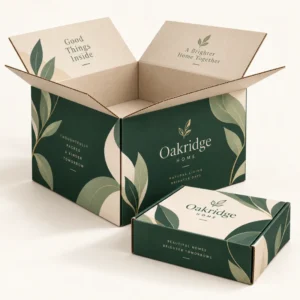
To buy custom shipping boxes is to order cartons made to your exact size, board strength and print, rather than adapting a standard carton to a product that does not quite fit. Custom shipping boxes protect heavier or unusually shaped goods, present a brand on arrival and reduce wasted space inside the parcel. The buying process starts with product dimensions and use, moves through board and print choices, and ends with artwork approval before production begins.
Why Buy Custom Shipping Boxes
A standard carton can work well for a single, regular product, but problems appear when products vary in size or when a parcel contains several items. Too much empty space allows movement and damage. Too little space puts pressure on the product and on the carton seams. A custom box removes that compromise by matching internal dimensions to the product as packed, including any protective wrapping or insert. That fit improves protection, improves presentation and often reduces the amount of void fill needed.
Custom shipping boxes also give a business control over how it appears in transit. A plain carton with a shipping label looks anonymous. A carton with a logo, brand colour and clear handling guidance looks intentional and helps a customer recognise a delivery before opening it. For businesses that ship direct to customers, that first sight of the carton is part of the service, not an afterthought.
When Custom Sizing Makes Sense
Custom sizing makes sense when a product is long, tall, wide, heavy or fragile, or when several items must travel together in a fixed arrangement. It also makes sense when a business ships the same kit repeatedly, such as a multi item gift set, a tool kit or a subscription bundle. In those cases, a custom box can include dividers or inserts that hold each item in place, which speeds packing and reduces damage compared with loose packing in a larger carton.
Products That Benefit Most
Examples include electronics with accessories, glassware with protective dividers, footwear with a presentation insert, home goods with several components and multi item retail orders. For each, the key question is not just the outer size of the product, but how it will be protected, how it will be lifted from the box and how it will look on opening. A custom shipping box designed around those answers will perform better than a carton chosen on length alone.
Strength for the Journey Ahead
Shipping boxes face stacking, vibration, drops and changes in temperature and humidity. Single wall corrugated board suits light and medium parcels that travel short distances or by a careful courier route. Double wall board suits heavier parcels, parcels that will be stacked under other goods and parcels that travel through several handling stages. Triple wall board is used for very heavy or bulky goods, but it adds weight and bulk, so it should be chosen only where the load genuinely requires it.
Board strength is not the only factor. Closure style matters too. A regular slotted carton sealed with strong tape is a reliable choice for many shipping boxes. A crash lock or tuck style base can speed assembly for lighter boxes. For heavy boxes, full overlap flaps and strong tape on all seams give extra security. Test the closure with the heaviest load the box will carry, and check that the base does not bow or open when lifted by the sides.
How to Buy Custom Shipping Boxes
Buying custom shipping boxes begins with a clear specification. Measure the product in three dimensions as packed, note its weight, and describe how many items will travel together. State whether the box needs print inside, outside or both, and whether it needs an insert, divider or window. Mention the carrier type if known, because a parcel service and a pallet service place different demands on a carton. A supplier can then advise on board, style and print method with confidence.
Next, artwork and print decisions are agreed. Full colour print suits detailed designs and photographic artwork. One or two colour print suits bold logos and simple messages and can give a clean result on kraft board. White board gives brighter colour reproduction, while kraft board gives a natural look that softens bright colours. Check proofs carefully for colour, logo position and text placement, especially near folds and seams where print can crease.
Artwork, Proofs and Approval
Supply artwork in a print ready format where possible, with logos and text checked for spelling and accuracy. A proof shows how artwork will sit on each panel and where folds will fall. Read the proof as a customer would, from the outside first, then on opening. Check that important information is not hidden by a flap or a label area, and that any handling guidance is easy to read. Final artwork approval is the point at which production can begin, so any change after that point may cause delay.
Lead Times to Plan Around
After final artwork approval, standard boxes are usually produced in 10 to 14 working days, corrugated boxes in 12 to 15 working days and rigid or specialist boxes in 13 to 16 working days. Those timings are production guides, not guaranteed delivery dates, and they can vary with structure, finish and quantity. Plan backwards from a launch, a seasonal peak or a warehouse move, and allow time for delivery to your premises, sample packing and staff training on any new fold or closure.
Quantities and Repeat Orders
Custom boxes are made to order, so quantity affects planning more than a stock carton. A first order should be large enough to justify artwork and tooling effort, but not so large that a size mistake becomes a long term problem. Many businesses start with a quantity that covers a few months, test the box in live dispatch, and then repeat with adjustments if needed. Keep the agreed specification, including internal dimensions, board grade, print files and closure style, so repeat orders match the first run.
If demand may grow, mention likely repeat volumes when requesting a quote. A specification that works for a first run should also work for a larger repeat run, provided storage and handling are considered. Flat packed custom boxes store well, but very large quantities need dry, accessible storage and clear labelling by size and print version, especially if several designs are held at once.
Print, Finish and Sustainability Choices
Print and finish choices should support both brand and durability. A matt finish reduces glare and can look refined, while a gloss finish can lift bright artwork. Foil, embossing and spot finishes draw attention to specific elements but should be used sparingly, so the design remains clear in photographs and in normal light. For shipping boxes, durability matters more than decoration, so test a printed sample after a real journey and look for scuffs, rubbing and label adhesion problems.
Sustainability choices start with material. Cardboard shipping boxes can usually be recycled with paper and card collections in the UK, depending on local rules and on any lamination, tape or mixed materials used. Choosing a simple board, a water based print approach where suitable and minimal mixed materials can make recycling easier for the recipient. For businesses that place packaging on the market, packaging responsibilities may also apply. The GOV.UK guidance on extended producer responsibility for packaging explains recycling obligations and waste disposal fees for organisations that supply or import packaging.
Packing and Protection Inside a Custom Box
Even a perfectly sized custom box needs sensible internal protection for fragile or valuable goods. Wrap fragile items separately, use dividers to stop items knocking together and fill small gaps with paper void fill so contents do not shift. For heavy items, place them low in the box and support the base, and avoid placing a heavy item on top of a fragile item in the same parcel. A packing guide with a photograph of a correctly packed box helps staff pack consistently, especially when several people share the task.
Labelling and Courier Handling
Leave a clear, flat area for the address label, and keep it away from folds, seams and important print. Use strong tape on all seams, and double tape the base for heavy parcels. Add handling guidance only where it is genuinely needed, such as a fragile mark for glassware, and place it where handlers will see it without covering the address. A well labelled custom box is less likely to be delayed by a label that is folded, obscured or damaged. For related packaging, see buy shipping boxes, buy mailer boxes and request a quote for custom shipping boxes.
Frequently asked questions
How do I buy custom shipping boxes?
To buy custom shipping boxes, share product dimensions as packed, product weight, quantity, print needs and carrier type, then approve artwork before production begins.
What information is needed for a quote?
A quote usually needs internal box size, board strength if known, print coverage, quantity and artwork stage. The more accurate the dimensions, the more accurate the advice on structure and print.
What board should I choose for heavy parcels?
Double wall board suits heavier parcels and parcels that will be stacked, while single wall board suits light and medium parcels. Triple wall board is reserved for very heavy or bulky goods.
How long does production take?
After final artwork approval, standard boxes are usually produced in 10 to 14 working days, corrugated boxes in 12 to 15 working days and rigid or specialist boxes in 13 to 16 working days. These are production guides, not guaranteed delivery dates.
Can custom shipping boxes be recycled?
Cardboard shipping boxes can usually be recycled with paper and card collections in the UK, depending on local rules and on any lamination or mixed materials used.
Should I print inside the box as well as outside?
Inside print can improve the opening experience and carry a message or guide, while outside print creates recognition in transit. Printing both sides suits direct to customer brands.