
book mailing boxes
Showing the single result
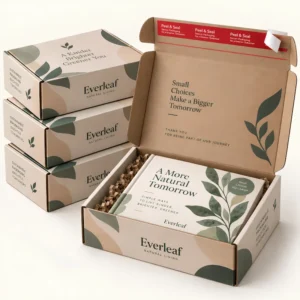
A book mailing box wraps around a single book or a small stack of flat printed items and folds down to their thickness, so the contents cannot slide about in transit. Booksellers, publishers, libraries and private senders use book mailing boxes because corners, spines and covers stay flat and protected from knocks, bending and scuffing on the journey to the reader.
Why book mailing boxes protect books in transit
A book is heavy for its size, and that weight concentrates at the corners and along the spine. A loose box lets a book gather speed with every movement, which is how corners get crushed and covers get dented. A wrap around mailer removes that empty space. Pre scored creases let the board fold to the height of the book, so the pack stays slim, firm and even. Extended corners add a second layer of board where damage is most likely, and a peel and seal strip closes the pack without tape hunting or loose flaps.
Corrugated board is the usual material for this job because the fluted layer between two flat sheets absorbs shocks while keeping the pack light. Single wall board suits most paperbacks and slim hardbacks. A stronger board suits heavier reference books, art books and boxed sets. The board also gives a clean surface for an address label and for printed branding, which matters when a parcel is also the first impression a customer gets of a shop or a publisher.
What a good book mailer looks like
A good mailer opens flat, folds in a clear sequence and closes securely in seconds. Look for creases that are easy to see and easy to fold, a seal strip that grips on first contact, and a tear strip that lets the reader open the pack without a knife near the book inside. The pack should sit flat on a table, hold its shape when lifted by one edge, and show no gap at the sides once sealed. If a pack needs a large amount of extra filling to stop movement, the size is wrong.
Choosing between a wrap mailer and a rigid postal box
A wrap mailer is the better choice for one book or a small number of books of similar size, because it hugs the contents and keeps the finished parcel slim. A rigid postal box is the better choice for an odd shaped bundle, a set with loose inserts, or books packed with other items that need separation. Many sellers keep both styles on the bench and choose by the order in front of them, rather than forcing every order into one pack type.
Book sizes and how to measure for a snug fit
Measure the book closed, from cover to cover, and note length, width and thickness in millimetres. Add a small allowance for a protective sleeve or a sheet of tissue if you use one, then choose a mailer whose internal length and width sit just above those figures. The adjustable depth does the rest. A5 mailers suit mass market paperbacks, small journals and slim catalogues. A4 mailers suit larger paperbacks, standard hardbacks, magazines and portfolios. Larger formats suit art books, coffee table books and atlases, which often need a deeper fold and stronger board.
Weigh the finished pack before you choose a postal service, because the packed weight decides the service band, not the weight of the book alone. A slim paperback in a wrap mailer may stay within a large letter format, while a thick hardback or a pair of books will usually travel as a parcel. Measure the finished pack at its thickest point, including any bulge at the seal, and check the current size limits on the Royal Mail UK parcel and letter services page before you print a label.
Packing a single book step by step
Start with a clean, dry book. Place it centrally on the open mailer with the spine away from the opening edge if the design allows it, so the spine is not the first part to meet a sharp edge. Fold the side flaps in first, then fold the main panel over to the height of the book, creasing firmly along the scored lines. Peel the seal strip, press the flap down along its full length, and run a finger along the seal to check that no edge has lifted. Add the address label to the flat outer panel, clear of the seal and the tear strip.
Packing two or more books together
Stack books of similar size with the largest at the bottom and the smallest on top, and keep spines aligned so the stack forms one even block. If the books differ greatly in size, pack them separately rather than letting a small book rattle beside a large one. A sheet of board between two valuable books stops covers rubbing together. Check that the finished stack still folds neatly inside the mailer. A pack that bulges at the middle will not seal cleanly and will not measure true.
Custom printed book mailing boxes for sellers and publishers
Print turns a plain postal pack into a recognisable part of a brand. A logo, a short message, a returns note or a simple pattern on the outside tells the reader who sent the book before the seal is broken. Printing on the inside creates a pleasant surprise on opening and gives space for a thank you note, a reading suggestion or details of a series. Because the board is flat before folding, artwork can be planned to sit clear of creases, seals and labels, so the finished pack looks intentional rather than crowded.
For custom printed orders, artwork approval comes first, and production follows after final artwork is approved. Standard lead times after final artwork approval are 10 to 14 working days, corrugated lead times are 12 to 15 working days, and rigid or specialist lead times are 13 to 16 working days. These are production lead times, not a promised delivery date, so allow time for artwork checks and for the postal service itself when you plan a launch, a subscription send or a seasonal promotion. To start, visit the Personalized Mailer Boxes home page and request a custom quote and a quote will confirm the specification, quantity and print details for your exact books. You can also browse the full shop, read delivery information, learn about the team, and view book packaging boxes for related options.
Branding ideas that work on a book mailer
Keep the outside simple. A single strong logo, a shop name and a short line about the book inside usually read better than a busy design. Use the inside for the warmer message, where the reader has time to enjoy it. A clear returns instruction on the inside flap reduces queries and makes a return feel easy rather than awkward. If you sell a series, a small note about the next volume can encourage a repeat order without turning the pack into an advertisement.
Sustainability notes for book senders
Corrugated board mailers are widely recyclable through household cardboard recycling, and many boards use recycled fibre. That helps a sender who wants a pack that can be reused by the reader for storage or returned for recycling without a complicated sorting step. Avoid plastic lamination where a plain board will do, keep tape to a minimum, and tell the reader on the pack that the mailer can be recycled. Small, honest notes on the pack build more trust than broad claims that cannot be checked.
Frequently asked questions about book mailing boxes
What size book mailing box do I need for a paperback?
Measure the closed paperback and choose a mailer with internal length and width just above those figures. An A5 mailer suits most mass market paperbacks, while a larger paperback may need an A4 mailer. The adjustable depth folds down to the thickness of the book.
Can I post more than one book in a single mailer?
Yes, if the books are similar in size and form one even stack. Stack the largest book at the bottom, align the spines, and check that the pack seals flat without bulging. Books of very different sizes travel better in separate mailers.
Do book mailing boxes need extra padding inside?
Most wrap mailers need no extra padding because the board folds snugly around the book. A protective sleeve or a sheet of tissue can help a signed copy, a gilt edged book or a book with a delicate cover. Avoid loose filling that lets the book move.
Are book mailing boxes recyclable?
Corrugated board mailers are widely recyclable through household cardboard recycling. Remove labels and any tape where practical, flatten the mailer, and place it with cardboard recycling. Check local guidance if the mailer has a plastic coating.
How do I request custom printed book mailing boxes?
Use the quote page to share your book sizes, quantities and artwork ideas. You will receive a quote based on your specification, and production follows after final artwork approval.