
wholesale candle box packaging
Showing the single result
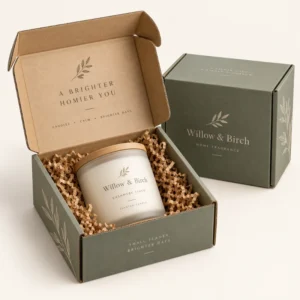
wholesale candle box packaging is packaging bought in larger quantities to hold, protect and present candles for sale or for posting. It is made to fit the candle shape, whether that is a jar, a tin, a pillar or a set, and to keep the candle steady during handling. Good candle packaging also gives space for scent names, safety information and brand design without crowding the box.
Candles are heavier than they look, especially glass jars, and they can chip, scuff or break if they move inside a loose box. At the same time, candle buyers often judge the product by its box before they smell the candle. Wholesale candle packaging therefore has to do two jobs at once: protect a fragile and weighty item, and present it as a considered gift or home product.
What wholesale candle box packaging includes
Wholesale candle box packaging includes the outer box, any insert or divider, and the print and finish applied to the board. The outer box may be a tuck end carton for a single jar, a two piece lid and base box for a premium set, a mailer box for posting, or a rigid box for a luxury range. Each structure opens differently and creates a different first impression, so the choice should reflect how and where the candle will be sold.
Inserts are especially important for candles. A card insert, a shaped divider or a foam style support can stop a jar from rolling, keep a lid in place, and prevent glass from touching glass in a set. Inserts also raise the candle slightly, which can improve presentation when the box is opened. Measure the jar with its lid on, and check the insert against the real product rather than relying on a nominal jar size alone.
Candle types and the boxes that suit them
Jar candles need a box that supports weight from below and prevents sideways movement. A snug carton with a well fitting insert usually works better than a larger box filled with loose material, because the jar stays centred and the label stays visible. Tin candles are lighter and less fragile, but they still benefit from a snug box that prevents denting and keeps the lid secure.
Pillar candles need protection for edges and corners, which can dent or mark easily. A box with a close fit and a simple insert can prevent rolling and rubbing. Wax melts and smaller candle products often suit smaller tuck end boxes, sometimes in sets, with dividers that keep each melt separate. Gift sets need a larger box with compartments, so each item arrives in place and the set looks intentional when opened.
Why a snug fit matters for glass jars
A snug fit reduces movement, which reduces the chance of chips and label scuffs. It also reduces the amount of extra packing material needed, which keeps the parcel neater and easier to recycle. Test a filled box by gently tilting it and by closing the lid several times. The jar should stay in place, the lid should close without force, and the print should not rub against the jar.
Materials, print and finishes for wholesale candle box packaging
Kraft board suits natural, rustic and eco focused candle brands, and its uncoated surface works well with simple, bold print. White board gives a brighter base for full colour artwork, photography style imagery and pastel colours. Corrugated board, particularly E flute, adds strength for posting heavier jars or for multi packs. Rigid board suits premium candles where the box itself is part of the gift and is likely to be kept.
Print choices should support legibility. Scent names, burn instructions and safety warnings need to remain clear, even in small text. Avoid placing essential information across a fold or very close to an edge, where it may be hard to read or may be cut. A matte lamination gives a soft, understated feel and can reduce glare. A gloss finish can make colours appear stronger, but may show scuffs more readily after posting.
Finishes that suit candle brands
Foil stamping can highlight a logo or a scent name, and works well on darker boards where contrast is strong. Embossing adds a tactile detail that customers notice when they hold the box. Spot UV can draw attention to a single design element, such as a logo or an illustration, without covering the whole box. Use finishes sparingly, so the candle remains the focus and the box does not feel busy.
Window cutouts are sometimes requested for candle boxes, so buyers can see colour or texture before opening. A window can work well for retail display, but it needs careful placement so it does not weaken the box or expose a label to scuffing. For posted candles, a fully closed box usually offers better protection than a large window, especially for glass jars.
Safety and labelling information to plan for
Candle boxes need space for clear, honest information, including scent, burn guidance and any required safety warnings. Plan the layout early, so warnings are not squeezed into a corner at the last minute. Check that text remains readable at the final box size, and that the print method keeps small text sharp. If you sell in more than one market, confirm which wording applies before artwork is approved, rather than after printing.
Ordering wholesale candle box packaging well
Start with exact product details: jar diameter and height with the lid on, total weight, quantity per box, and whether the candle will be posted, sold in store, or both. Share the number of scents or designs in the range, because a shared box structure with different print panels can simplify stock holding. Confirm whether inserts are needed, and whether the box must stack neatly for retail display.
Ask for a proof that shows the box assembled, not only flat, so you can check how artwork falls across folds and how the insert sits. Check colours under normal shop lighting as well as on screen, because screen colours can differ from print. For a new range, a small test run with real candles can reveal issues with fit, weight and opening that a flat proof cannot show.
Lead times on this site after final artwork approval are 10 to 14 working days for standard boxes, 12 to 15 working days for corrugated boxes, and 13 to 16 working days for rigid and specialist boxes. These are production lead times, not a guaranteed delivery date, so plan artwork approval and posting time around launches, seasonal peaks and gift periods. Candle sales often rise before festive periods, so ordering early helps avoid a rush.
Explore related ideas through wholesale mailer boxes for posting, and window gable boxes for gift presentation. For a tailored candle specification, use the get a quote page and include jar dimensions, quantities and insert needs. You can also read delivery details on the delivery information page.
Frequently asked questions about wholesale candle box packaging
What size candle box do I need for a jar candle?
Measure the jar diameter and height with the lid fitted, then choose a box with internal dimensions that hold the jar snugly with its insert. The lid should close without pressure, and the jar should not roll or tilt when the box is moved gently.
Do candle boxes need inserts?
Many jar and set candles benefit from inserts, because inserts prevent movement, protect glass and improve presentation. Single tin candles in a very snug box may need less support, but a test with the real product is the best way to decide.
Which board is best for posting candles?
Corrugated board offers good protection for posted jars, especially heavier glass, while sturdy card boxes suit lighter candles and retail display. The right choice depends on candle weight, distance travelled and whether the box will also serve as the retail pack.
Can candle boxes carry safety information?
Yes, and the layout should be planned early so scent, burn guidance and safety warnings remain clear and legible. Keep essential text away from folds and edges, and check small text at the final printed size before approval.
How many candle box designs should a range use?
Many brands use one box structure across a range, with different print for each scent, to simplify ordering and stock holding. A shared structure also keeps the shelf presentation consistent, while scent colours or illustrations provide variety.