
vistaprint mailer boxes
Showing the single result
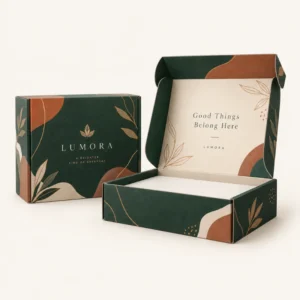
The phrase vistaprint mailer boxes is used by buyers who are looking for branded, custom printed mailer boxes in the style made popular by large online print suppliers. This page explains what that style usually means, how to compare it with other custom mailer options, and what to check before ordering, without claiming that Personalized Mailer Boxes sells another brand’s products.
What buyers usually mean by vistaprint mailer boxes
When people search for vistaprint mailer boxes, they are often looking for a corrugated mailer that can be printed with a logo or a full design, ordered in a chosen size, and used to post products in a presentable box. The appeal is a box that does two jobs at once: it protects the contents in transit and it presents the brand at the moment of opening. That combination suits online shops, subscription sellers, gift sellers and small businesses that post regularly.
The typical mailer style in this category
The typical box in this category is a folding mailer made from corrugated board, often E flute board, with a front tuck closure that is easy to open and close. It stores flat before use, folds up quickly, and can be printed on the outside only, the inside only, or both sides. Smaller sizes suit jewellery, cosmetics, stationery and gift sets, while larger sizes suit apparel, multi item orders and subscription parcels.
Print areas and what they change
Outside print gives instant recognition when the parcel arrives. Inside print creates a reveal when the customer opens the box. Printing both sides gives the fullest brand experience, but it also needs more careful artwork planning, because text and images must align with folds and must stay clear of the label area. A sample is the best way to judge how a design looks once the box is folded.
Why brand named searches need careful reading
A brand name in a search does not always mean the buyer wants that exact supplier. It can mean the buyer has seen a style they like and wants something similar, or wants to compare suppliers on size range, print quality, board strength, minimum quantity and lead time. Reading the search in that wider sense helps a buyer focus on the specification that matters, rather than on a name alone.
Questions that reveal the real requirement
Ask what will go inside the box, how heavy it is, how far it will travel, and whether the box will be posted on its own or inside an outer carton. Those answers determine board choice, size and print area far more reliably than a brand name does. They also make a quote more accurate, because a supplier can recommend a structure that fits the product rather than guessing from a general description.
Comparing mailer boxes like for like
A fair comparison starts with the box itself, not with marketing claims. Compare footprint, depth, board type, closure style, print method and print area, and check whether the box is supplied flat or made up. Also compare how the supplier handles artwork, proofs and samples, because those steps affect the final result as much as the board does.
Size, board and closure
Measure the product, including any inner packaging, tissue or inserts, then add a small allowance so the box closes without pressure. E flute board gives a smooth print surface and a neat, slim profile for smaller items. B flute board gives more cushioning for heavier or more fragile contents. A front tuck closure is quick to assemble and gives a clean opening experience, while a self sealing style may suit high volume packing lines.
Testing fit with a real product
Pack a real product in a sample box, seal it, shake it gently, and open it as a customer would. Check that the product does not shift, that the closure stays shut, and that print is not hidden by a fold or a label. That test takes a few minutes and can prevent a large order of boxes that look good flat but work poorly when packed.
Print quality and artwork preparation
Good print starts with artwork prepared at the right size and resolution, with colours checked on the chosen board. Kraft board will soften colours compared with white board, while white board gives brighter, cleaner results for detailed designs. Keep essential text away from folds, creases and the label area, and confirm how the supplier will proof the design before production.
Proofs, samples and colour expectations
A digital proof shows layout, but a physical sample shows colour on real board and print quality after folding. If colour accuracy matters for a logo, ask how colour will be matched and whether a printed sample can be checked before a full run. That step is especially useful for brands with a strong colour identity.
Ordering custom mailer boxes with confidence
Ordering with confidence means being clear about quantity, size, board, print and timing before a quote is requested. It also means understanding that custom production follows artwork approval, so the artwork stage deserves as much attention as the box specification itself. A clear brief reduces revisions and helps production run smoothly.
What to include in a brief
Include product dimensions and weight, the number of items per box, the preferred board and colour, the print areas, and the quantity you expect to order. Add any inserts, dividers or tissue that will sit inside the box, because they affect the internal size needed. If the box must suit a particular postal size band, state that early so the finished, sealed parcel can be checked against the relevant guidance. You can request a quote for custom packaging once the brief is ready.
Quantities and storage planning
Mailer boxes usually store flat, which makes them practical even for small businesses with limited space. Order enough to cover a launch or a sales peak, plus a reserve for reorders, but avoid holding a large stock of a size that only suits one product. Flat storage in a dry place keeps board flat and print in good condition.
Lead times and delivery planning
Custom boxes need time for artwork approval and production, so order ahead of launches, seasonal peaks and subscription deadlines. Standard lead times after final artwork approval are 10 to 14 working days, corrugated lead times are 12 to 15 working days, and rigid or specialist lead times are 13 to 16 working days. These are planning guides, not a guaranteed delivery date. More detail is on the delivery information for custom orders page. You can also browse the full shop range and learn more about Personalized Mailer Boxes before deciding.
Planning for reorders
Keep a copy of the final artwork, the box specification and the sample that was approved. That record makes reorders faster and more consistent, and it helps a new team member understand exactly what was ordered last time.
Frequently asked questions about vistaprint mailer boxes
Does this page mean Personalized Mailer Boxes sells Vistaprint products?
No. This page explains a style of branded mailer box that buyers often search for by that brand name. It does not claim that this site sells another brand’s products.
What is the difference between logo print and full print?
Logo print places a logo or a simple design in chosen areas, while full print covers a larger part of the box surface with colour, pattern or imagery. The right choice depends on the brand look you want and the budget for the order.
Should I print inside the mailer as well as outside?
Inside print adds a reveal on opening and works well for gifts and subscription boxes. Outside print is better for instant recognition on arrival. Printing both sides gives the fullest effect.
How do I choose between E flute and B flute board?
E flute board suits smaller, lighter items and gives a smooth print surface. B flute board gives more cushioning for heavier or more fragile products. Product weight and fragility should guide the choice.
What should I check before ordering a large quantity?
Check fit with a real product, print quality on the chosen board, closure strength, and the label area. A physical sample packed as a customer parcel would be packed is the most reliable check.