
shipping boxes custom
Showing the single result
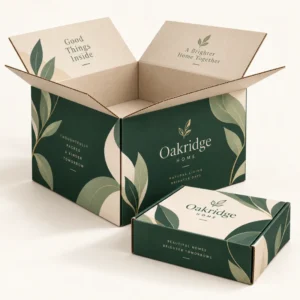
Shipping boxes custom printed with your brand turn an ordinary parcel into a recognisable delivery that carries your logo, colours, and message to the customer. They still need to protect the contents through handling and stacking, so the design, board, and print areas must be planned together. A well planned custom box looks professional on arrival and works just as hard as a plain shipping carton.
Why choose shipping boxes custom printed for your brand
A plain parcel tells the customer nothing until it is opened. A printed box tells them who sent it, often before they read the label. That recognition can build trust, especially for repeat orders, subscription deliveries, and gifts, where the parcel itself is part of the experience. It can also help a customer spot their delivery quickly among other parcels, and it gives a small business a more established appearance.
Print does not need to be loud to be effective. A single strong logo, a clear brand colour on the main panels, and a short message on the inside lid can be enough. The aim is a design that survives scuffing, stays readable after handling, and leaves clear space for delivery labels, barcodes, and handling notes. Restraint often produces a cleaner result than filling every panel with detail.
Print areas and artwork planning
Plan the artwork around the way the box folds and seals. Keep logos and key wording away from fold lines, taped seams, and the area where the delivery label will sit, because print in those places can crack, be covered, or become hard to read. Use the largest flat panels for the main design, and treat the inside lid as a separate space for a welcome note, a returns message, or a simple pattern.
Colour choice affects how the finished box looks. Kraft board gives a natural, warm background that suits simple one colour and two colour designs. White board gives a brighter background for full colour artwork and for designs with fine detail. Ask for a proof before production, and check the colours, the position of the logo, and the wording at actual size, not only on screen.
Artwork checks before approval
Check spelling, contact details, and any handling wording before you approve artwork, because a mistake that reaches production is costly to correct. Check that the logo is sharp at the printed size, that small text is still readable, and that no important element sits close to a fold or an edge. Confirm the board colour, the print colours, and which panels carry print, and keep a copy of the approved artwork for reorders.
Board, style, and finish choices
Custom shipping boxes can be made in corrugated board for strength in transit, or in a mailer style that folds and locks for a tidier customer facing finish. Single wall board suits light to medium orders, while double wall board suits heavier parcels and boxes that will be stacked. The style should follow the product: a heavy item needs strength first, while a light gift set can place more emphasis on presentation.
Finishes can add character, but they should never weaken the box or hide important information. A simple printed finish is often the most practical choice for a shipping box, because it keeps the focus on the brand and on the delivery label. If you want a special finish, discuss how it will cope with tape, handling, and stacking before you commit.
Inside print and the unboxing moment
Inside print is a good place for a short thank you, a care note, or guidance on returns, because the customer sees it at the moment of opening. Keep the wording short and useful, and avoid clutter that competes with the product itself. A clean interior with one clear message feels more considered than a busy interior that tries to say everything at once.
Shipping boxes custom orders that run smoothly
A smooth custom order starts with a clear brief. Share the product sizes and weights, the number of items that usually go in one parcel, the board you prefer, and the artwork you want to use. Add details about how parcels are packed, whether inserts are needed, and whether the box will be used for returns. That information helps the specification match real packing conditions, rather than an ideal case that never happens in the warehouse.
Order quantities also matter. A larger run usually makes more sense for a design that will be used for many months, because it keeps the look consistent across orders. A smaller first run can be sensible for a new product, a seasonal design, or a brand refresh, because it lets you test the box in real transit before committing to a larger quantity. Either way, keep buffer stock of your most used size so a busy period does not leave you packing in plain boxes.
Testing a custom box before a large run
Pack a sample exactly as it will be packed for a customer, seal it, label it, and stack it with other parcels if that reflects real conditions. Check the corners, the base, and the print after handling, and open the box as a customer would. That test can reveal a fold that catches, a label area that is too small, or print that sits too close to tape, all of which are easier to fix before production.
Lead times after artwork approval
For standard boxes, allow 10 to 14 working days after final artwork approval. Corrugated boxes usually take 12 to 15 working days, and rigid or specialist boxes usually take 13 to 16 working days. These are production lead times, not a guaranteed delivery date. Allow extra time for proofing, artwork changes, and busy periods, and agree the final specification in writing before production begins.
Ordering shipping boxes custom printed from Personalized Mailer Boxes
Send your artwork, product details, and preferred board and style, then request a quote for boxes made around your brand. You can compare ideas through shipping boxes and shipping boxes custom size, browse the range in the shop, and check delivery details on the delivery information page. When you are ready, send your brief through the get a quote page.
Frequently asked questions about shipping boxes custom
Will print weaken a shipping box?
No, print on the outer panels does not weaken corrugated board when the design keeps fold lines, taped seams, and label areas clear. Board grade and internal protection decide strength in transit.
Should I print inside the box as well as outside?
Inside print works well for a short welcome note, a care message, or returns guidance. Keep it short so it adds to the unboxing moment without competing with the product.
What artwork should I supply for custom shipping boxes?
Supply a sharp logo, the colours you want, and the wording for each panel, with the label area left clear. Check a proof at actual size before you approve production.
Can I order a small first run to test a design?
A smaller first run can be sensible for a new product or a brand refresh, because it lets you test packing, transit, and customer reaction before a larger order. Ask in your quote request about the quantities available.
How long do custom shipping boxes take after artwork approval?
Standard boxes usually take 10 to 14 working days after final artwork approval, corrugated boxes 12 to 15 working days, and rigid or specialist boxes 13 to 16 working days.