
packaging mailer box
Showing the single result
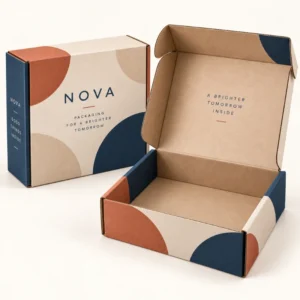
packaging mailer box is a folding box made for posting and delivery, with a self locking structure that closes without a separate lid. It combines a protective outer, a printable surface and a clean opening into one piece of packaging, which is why it suits online orders, subscription boxes and gift despatches so well. A well chosen mailer box protects the product, presents the brand and packs quickly at the bench.
Why a packaging mailer box works for delivery
A mailer box folds from a flat sheet into a rigid box with interlocking flaps, so there are no loose parts to lose and no separate lid to tape in place. That structure gives strong corners and a lid that stays shut during handling, while still opening cleanly when the customer pulls the tear strip or lifts the flap. Packing staff can assemble it quickly, which matters when many orders must be despatched in a day.
The large flat exterior also gives room for branding that a taped carton cannot offer as easily. A logo, a pattern or a short message can cover the lid and the sides, turning the parcel itself into part of the customer experience rather than a plain container that is discarded without notice.
Corrugated mailers and folding board mailers
Corrugated mailers suit most posted products, because the fluted layer cushions knocks and resists stacking pressure. Folding board mailers suit lighter products and retail style presentation, where print quality matters more than heavy transit protection. Some sellers use a folding board inner inside a corrugated mailer, combining presentation with transit strength.
Choosing board strength for a mailer box
Choose single wall corrugated board for light and medium orders, and double wall board for heavy, fragile or high value products. Check the board grade against the weight of a packed sample, not an empty box, because weight changes how corners and creases behave in transit.
Print inside and outside a mailer box
Outside print makes the parcel recognisable and can carry a logo, a pattern or a simple instruction to keep the parcel flat. Inside print is seen at the moment of opening, so it suits a welcome message, a thank you note, product care guidance or returns information. Using both surfaces well turns a functional delivery into a considered brand moment, without adding a separate leaflet.
Keep print clear of the label area, and keep the label flat on the largest face of the closed box. A label that crosses a flap, a fold or a printed pattern can be harder to scan, which can delay a parcel in sorting. Test the label position on an assembled sample before approving artwork.
Finishes for mailer boxes
Matte lamination gives a calm, paper like surface that suits natural and premium brands. Gloss lamination gives stronger colour and a surface that resists scuffing during handling. Foil, embossing and spot UV can highlight a logo or a small area of the lid, but they work best when used sparingly, so the box still reads clearly as a postal parcel.
Print areas to plan first
Plan the lid exterior first, because it carries the main brand mark and is seen by couriers and customers alike. Plan the lid interior second, because it is seen at opening and suits a short message. Plan the sides last, because they carry secondary patterns and small details that support the main design.
Sizing a packaging mailer box correctly
Measure the product as it will be packed, including any inner carton, wrap or insert, and choose an internal size that holds it firmly with minimal void fill. A mailer that is too large lets the product slide and increases postage size, while a mailer that is too small can bulge at the flaps and fail to lock properly. Check the lock on a packed sample, and check that the flaps sit flat when the box is sealed.
For subscription boxes, the size must also suit the full set of items in a typical month, not only the largest single item. For multi item orders, a divider or an insert can keep products apart inside one mailer, avoiding the need for a second parcel. Review sizes after a change in the product range, because a size that once fitted perfectly can become wasteful.
Packing a mailer box well
Place the product so it sits centrally, add an insert or void fill that stops movement, and close the flaps in the correct order so the lock engages fully. Seal with tape if the mailer will travel a long distance or carry a heavy product, even when the lock alone would hold for a short journey. Keep the parcel upright where the product needs it, and add a handling note on the outside only if the carrier guidance supports it.
Posting heavy mailer parcels
Heavy mailers need extra care with sealing, weighing and size checks before posting. Royal Mail guidance on heavy parcels covers strong boxes, secure seals and a final weigh in, all of which apply to a heavy mailer as much as to a taped carton. See the Royal Mail heavy parcel packaging guide for its current advice.
Ordering and lead times
When you request a quote for a mailer box, share the product size and weight, the board you prefer, the print areas you need and the quantity. Standard boxes are normally produced in 10 to 14 working days after final artwork approval, and corrugated boxes in 12 to 15 working days. Those figures are production lead times, not a guaranteed delivery date. You can also browse the full packaging shop and read delivery information before you order.
Frequently asked questions about packaging mailer box
What is a mailer box?
A mailer box is a folding box with a self locking structure and no separate lid, made for posting and delivery. It protects the product and gives a large area for branding.
Do mailer boxes need tape?
Many mailer boxes close securely without tape for light orders, but tape helps for heavy products and long journeys. Test a packed sample to decide for your orders.
Can I print inside a mailer box?
Yes, inside print suits welcome messages, care notes and returns information. Keep the outside label area clear for scanning.
What board suits a mailer box?
Corrugated board suits most posted products. Single wall board suits light orders, while double wall board suits heavy or fragile products.