
packaging boxes for ecommerce
Showing the single result
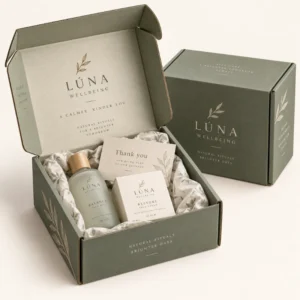
packaging boxes for ecommerce are boxes made for online orders, from a single product despatch to a subscription box that arrives every month. They must protect the product through sorting, stacking and delivery, and they must present the brand well at the moment the customer opens the parcel. A good ecommerce box does both jobs without adding needless size, weight or filler.
Why packaging boxes for ecommerce differ from retail boxes
A retail box is usually carried home by hand and opened on the day of purchase. An ecommerce box travels through vans, cages and sorting machines, and it may be left on a doorstep before it is opened. That journey calls for stronger corners, a secure closure and a fit that holds the product still, even when the parcel is turned on its side.
Ecommerce packaging is also the first physical contact many customers have with a brand. A clean print, a tidy interior and a product that arrives undamaged build trust far more effectively than extra decoration on a box that fails in transit. The unboxing matters, but protection comes first.
Mailer boxes, despatch boxes and postal boxes
Mailer boxes fold into a self locking shape with a large printable exterior, and they suit clothing, skincare, gifts and subscription products. Despatch boxes with a taped closure suit heavier or irregular orders, where a simple strong carton is more practical than a printed mailer. Postal boxes in a slim profile suit flat products and single items that must fit a postal size category.
Choosing the right structure for your orders
Choose a mailer when presentation and a clean opening matter most. Choose a taped despatch box when weight, size variation or warehouse speed matters most. Many online sellers use both, with a printed mailer for standard orders and a plain strong carton for oversized or mixed orders.
Materials and strength for online orders
Corrugated board is the usual material for ecommerce boxes, because the fluted layer cushions knocks and resists crushing when parcels are stacked. Single wall board suits light and medium orders, while double wall board suits heavy, fragile or high value orders. Kraft board gives a natural look that suits handmade and sustainable brands, while white board gives a brighter base for full colour brand artwork.
Recycled content and recyclability are now part of many customers’ buying decisions, so state the material clearly on the box or in the order confirmation if that matters to your audience. Keep any recycling note simple and accurate, and avoid claiming a material benefit that the finished box does not actually provide.
Print and the unboxing experience
Outside print can carry a logo, a pattern or a short message, and it turns a plain parcel into a recognisable delivery. Inside print can carry a thank you note, a returns note, a care guide or a discount code for a repeat order, all without adding a separate leaflet. Keep the label area flat and clear, so the address and any barcode remain easy to scan.
Print areas that work hardest
The lid interior is often the first surface a customer sees, so it suits a short welcome message or a clear brand mark. The base interior suits care notes and returns information, because it is seen when the product is lifted out. The exterior sides suit a logo and a simple pattern that stays readable from a distance.
Sizing for ecommerce orders
Start with your most common order, not your largest product. Measure the product as it will be packed, including any inner carton, bottle cap or protective wrap, and choose an internal size that holds it firmly with minimal void fill. A box that is too large wastes board, increases postage size and lets the product move, while a box that is too small risks damage when it is forced shut.
Most online sellers settle on two or three sizes that cover the majority of orders, with a larger size held for mixed baskets. That approach speeds up packing, reduces the stock of boxes held in the warehouse, and keeps parcels consistent for couriers. Review the sizes after a busy period, because a small change in the product range can make a previously ideal size suddenly wasteful.
Inserts, dividers and void fill
An insert holds a product in place and presents it neatly when the lid opens. Dividers suit multi item orders, where products would otherwise knock together. Paper void fill suits light orders and is easy to recycle with the box, while foam or moulded pulp suits fragile items that need a shaped cradle. Choose the lightest protection that actually stops movement, and test it with a packed sample before a full run.
Sealing and labelling for despatch
Seal the box along the centre seam and across the ends with strong tape, and keep tape clear of the label. Place the label on the largest flat face, away from flaps and folds, and check that it does not wrap around an edge. A flat label scans faster and reduces the chance of a parcel being delayed in sorting.
Ordering, quantities and lead times
When you request a quote for ecommerce packaging, share your typical order sizes, your monthly volume, the products you sell and the print you need. Standard boxes are normally produced in 10 to 14 working days after final artwork approval, and corrugated boxes in 12 to 15 working days. Those figures are production lead times, not a guaranteed delivery date. Sellers who supply packaging should also check their duties under UK packaging rules, as explained in the GOV.UK packaging producer responsibility guidance. You can also browse the full packaging shop and read delivery information before you order.
Frequently asked questions about packaging boxes for ecommerce
What is the best box for online orders?
A corrugated mailer suits most online orders, because it is strong, printable and easy to pack. Heavier or irregular orders may suit a taped despatch box instead.
How do I reduce damage in transit?
Choose a close internal fit, add an insert or void fill that stops movement, and seal the box firmly. Test a packed sample with your heaviest typical order.
Can I print inside an ecommerce box?
Yes, inside print can carry a welcome message, care notes or returns information. Keep the label area on the outside clear for scanning.
How many box sizes should an online seller hold?
Two or three sizes usually cover most orders. Add a larger size only for mixed baskets or oversized products, and review the range after busy periods.