
packaging boxes ecommerce
Showing the single result
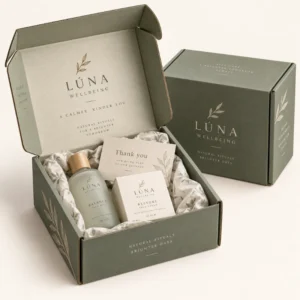
Packaging boxes ecommerce brands use are the boxes that carry an online order from a warehouse or a home studio to a customer’s door, protecting the product, presenting the brand and surviving handling by couriers and postal services. For an online shop, the packaging boxes ecommerce brands rely on are often the first physical contact a customer has with the brand, so each box needs to work as practical shipping packaging and as a piece of branding at the same time. A good ecommerce box is sized to the order, easy to pack, strong enough for transit and pleasant to open.
What packaging boxes ecommerce sellers need most
Ecommerce orders vary far more than retail orders, because a customer may buy one small item, several items in different sizes, or a gift set with a card and extra wrapping. The packaging system therefore needs to cope with variation without slowing down fulfilment. Many sellers settle on a small range of box sizes that cover most orders, with inserts, tissue and paper void fill to adapt each box to the specific order inside. That approach keeps stock simple, helps staff pack quickly and reduces the chance of choosing the wrong box under pressure.
Speed matters in fulfilment. A box that folds quickly, has a clear closure and can be sealed with one strip of tape, or with a self locking design, saves seconds on every order, and those seconds add up across hundreds of orders. A box that needs complicated folding, extra tape in several places or a separate outer carton will slow the process and increase the risk of errors. At the same time, the box must be strong enough to protect the order through sorting, stacking and delivery, including being placed on a doorstep in wet weather, so a balance between speed and protection is essential.
Common ecommerce box styles
Mailer boxes are the most recognisable ecommerce style, with a self locking lid, a clean exterior and a printable interior that creates an unboxing moment. Regular shipping cartons, sealed with tape, suit heavier, bulkier or less presentation focused orders, and they are easy to stack and store. Book wrap mailers suit flat items such as books, prints and calendars, because they wrap snugly around the product and use less material than a full carton. Rigid boxes suit premium ecommerce ranges, where the customer is expected to keep the box, while postal tubes suit posters, artwork and rolled items that do not fit a standard box shape.
Choosing between these styles depends on product type, order value and brand positioning. A low value, everyday item may not need a fully printed mailer, while a higher value gift or a subscription style order benefits from a box that feels considered. Many brands use a printed mailer for their main range and a plain shipping carton for oversized or multi item orders that do not fit the standard mailer, which gives a consistent brand experience for most orders without forcing every order into the same box.
Right sizing for ecommerce orders
Right sizing means choosing the smallest box that still protects the order, rather than using one large box for everything. An oversized box needs more void fill, looks wasteful to the customer and may push the parcel into a larger postage size. A box that is too small risks damage and makes packing difficult. Measure your most common orders, group them into size bands, and choose a box for each band. Revisit those bands when your product range changes, because a new product can shift the most common order size and make a previously ideal box less suitable.
Materials, print and sustainability for packaging boxes ecommerce
Corrugated board is the main material for ecommerce boxes, because it is light, strong and widely recyclable. E flute board gives a smooth print surface and a neat look for mailers, while B flute board gives extra strength for heavier orders. Kraft board has a natural appearance that suits eco focused brands, while white board gives brighter print for bold colours and detailed artwork. For fragile items, a fitted insert, a divider or a layer of paper void fill is often more effective than simply choosing a thicker board, because it stops items moving and knocking against each other.
Print for ecommerce boxes usually focuses on the outside first, because that is what the customer and the courier see on arrival, and then on the inside, where a pattern, a message or a simple illustration can create a reveal. A logo, a short thank you message and clear handling guidance are often enough, especially if the design is consistent across box sizes. Finishes such as matt lamination, gloss lamination and spot UV can enhance the look, but they should not make the box harder to recycle or harder to open. Paper based tapes, paper void fill and card inserts help keep the whole package easy to recycle at home.
Reducing waste and returns
Waste reduction starts with right sizing and with avoiding mixed materials that are hard to separate. A single material, paper based package is easier for customers to recycle and sends a clearer sustainability message than a box filled with plastic fill and multiple material types. Damage reduction is closely linked: a well sized box with proper internal protection leads to fewer damaged orders, fewer replacements and fewer returns, which saves cost and reduces waste from repeat shipments. Tracking damage reasons, for example crushed corners, water damage or items moving inside the box, helps you adjust board, size or void fill rather than guessing.
Fulfilment tips for online shops
Set up a packing station with boxes, tape, labels, tissue and void fill within easy reach, and keep a packing guide with photographs of a correctly packed order for each main box size. Weigh and measure a sample of packed orders regularly, to check that your boxes still suit your current range and postage bands. Keep flat boxes in a dry area, stacked without crushing, and reorder before stock runs low, especially ahead of sales events and seasonal peaks.
Ordering ecommerce boxes and lead times
When you order ecommerce boxes, start with your order data: your most common products, your most common order combinations, and the weight and size of a typical packed parcel. Share that information, along with your artwork and any insert needs, so the box can be designed around real orders. A proof to approve before production lets you check colours, text, logo placement and the fit of your products, and it is worth checking the proof with a real packed order, not only on screen.
Standard lead times after final artwork approval are 10 to 14 working days, while corrugated boxes are 12 to 15 working days and rigid or specialist boxes are 13 to 16 working days. These are guide times for planning, not a guaranteed delivery date, so order ahead of launches, sales and seasonal peaks. You can explore the shop range, learn more on the about us page, check the delivery information page, or request a quote for packaging for your online shop.
Frequently asked questions
What are the best packaging boxes ecommerce brands use?
Mailer boxes suit most branded ecommerce orders, regular shipping cartons suit heavier or bulkier orders, and book wrap mailers suit flat items. The best choice depends on product size, weight, order value and brand positioning.
How do I choose the right ecommerce box size?
Measure your most common orders, group them into size bands and choose the smallest box that still protects each band, using inserts or void fill for variation. Revisit the bands when your product range changes.
Can ecommerce boxes be printed inside and outside?
Yes, many ecommerce boxes can be printed inside, outside or on both sides. Outside print carries your brand on arrival, while inside print creates a reveal on opening.
How far ahead should I order ecommerce boxes?
Order ahead of launches, sales and seasonal peaks, allowing time for artwork, proof approval and production. Standard lead times after final artwork approval are 10 to 14 working days, with corrugated boxes at 12 to 15 working days.