
mailer boxes black
Showing the single result
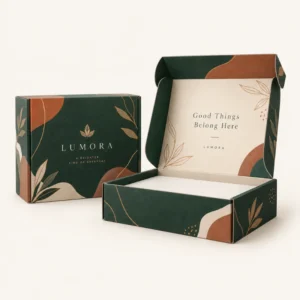
Mailer boxes black are best planned as a range, not as a single box bought in isolation, because most brands ship a mix of single items, pairs, gift sets and subscription orders. A shared black look across several sizes lets a customer recognise every parcel at a glance, while the packing team learns one folding style and one labelling routine. When the range is planned well, mailer boxes black give small orders a smart finish and larger orders a consistent reveal, without forcing every product into one oversized box.
Why mailer boxes black work as a range
A range works when each size has a clear job. A small black mailer can carry a single candle, a jar, a book or a small gift. A medium black mailer can carry a pair of products, a skincare set or a small clothing order. A large black mailer can carry a gift set, a bundle or a subscription box with several items inside. If the jobs overlap too much, staff hesitate over which box to pick, stock builds up in the wrong sizes and customers receive parcels that feel either cramped or wasteful. A short written guide for the packing bench, listing which order types go in which size, removes that hesitation and keeps the range working day after day.
Consistency is what turns several sizes into a range rather than a collection. Use the same black board, the same logo position and the same inside colour across the range, even if the artwork layout changes to fit a smaller lid. A customer who receives a small black parcel one month and a large black gift box the next should still feel they are dealing with the same brand. That consistency also helps photography, because parcels photographed together for a shop or a social post will look like a family, not like unrelated boxes bought at different times.
Small boxes for single items and samples
Small black mailers suit orders where the product itself is the hero. A single candle in a small black box looks intentional, because the box frames the product rather than swallowing it. Samples, trial sizes and single gifts also suit a small format, because the recipient opens a tidy parcel that feels complete rather than half empty. For small boxes, pay close attention to the lid and the closure, because a lid that lifts cleanly matters more when there is only one item inside to reveal. A tissue wrap in a light colour can add contrast against the black interior and make a small product easier to find on opening.
Keeping small boxes consistent with the rest of the range
Small boxes are where a range most often breaks down, because artwork that looks strong on a large lid can look crowded on a small lid. Simplify the small box artwork rather than shrinking the large box artwork unchanged. Keep the logo, keep the main colour and keep the message, but drop secondary decoration that will not read clearly at a small size. Check a proof of the small size on its own, under normal light, and photograph it next to a medium box, so you can see whether the two still belong together.
Medium and large boxes for sets and subscriptions
Medium and large black mailers earn their place when an order contains several items that must arrive in good order. A divider can separate bottles that might otherwise knock together. A tray can hold jars in place so they do not roll during transit. A paper nest can protect a fragile item inside a larger box without filling the whole box with loose material. For subscription orders, the same medium or large box used month after month becomes familiar, and customers begin to look forward to its arrival. Changing only the insert or the message card each month keeps the experience fresh while the outer black box stays recognisable.
Choosing board and print across the range
Board choice should follow the heaviest and most fragile item in each size, not the lightest item. A small box for a single jar needs enough rigidity to protect glass, while a large box for soft textiles needs enough strength to survive stacking without crushing the contents. E flute board gives a smooth print surface and suits most presentation led orders. B flute board gives more cushioning and suits heavier items and longer journeys. If one size in the range regularly carries fragile goods, give that size a stronger board and a fitted insert, rather than upgrading the whole range and adding weight to every parcel.
Print on black board needs a different eye from print on white or kraft board. White ink, pale grey and metallic foil in gold, silver or copper stand out clearly, while very dark artwork can disappear into the background. Test print on the actual black board you will use, because a colour that looks vivid on screen can look muted on a dark surface. A matt finish absorbs light and gives a soft and modern feel, while a gloss finish reflects light and can make print appear brighter. Check proofs in daylight and in a photograph, because black can show dust, fingerprints and glare more readily than a pale box.
Board strength by order type
Think about order type before you think about board grade. A single item order that travels through a parcel network needs a box that holds its shape through sorting and stacking. A retail order collected in store needs a box that looks smart when carried home and that can be opened and closed again. A gift order needs a box that hides packing material and presents a message card where it will be seen first. Each of those jobs can use the same black range, but the board, closure and insert for each size should be chosen for its main job, and noted in the packing guide so every order is packed to the same standard.
Print that stays legible on dark board
Legibility on dark board comes from contrast and simplicity. Use large, clear lettering for the brand name, keep supporting text short, and leave clear space around the logo so it does not compete with folds or tape. Avoid fine detail that will be lost on a dark surface, and avoid placing essential text across a fold where it can crack or distort. If a design includes a pattern, test it at actual size on black board, because a pattern that looks subtle on screen can look either invisible or busy in print. One well placed effect, such as foil on a logo, usually reads as more premium than several competing effects.
Finishes that work across sizes
A finish chosen for a range should work on the smallest lid and the largest lid alike. Matt lamination softens colour and reduces glare, which suits a restrained black look. Gloss lamination adds shine and can protect print during handling, which suits boxes that will be handled many times before delivery. Spot gloss or foil can highlight a logo without covering the whole box, and that restraint usually reads as more premium than a heavily decorated surface. Whatever finish you choose, use it consistently across the range, because a mix of matt and gloss boxes in the same delivery can make the range look unsettled.
Packing and storing a black range
Storage for a range needs a system, not just shelf space. Store flat packed black mailers by size, clearly labelled, in a dry place away from direct sunlight and damp walls, because moisture and heat can affect board and print. Keep black boxes away from dusty areas where possible, and wipe the outer surface lightly before packing if a box has been stored for a long time. Assemble only the quantity needed for the next packing session, so finished boxes do not take up bench space or get scuffed before use. A tidy storage system also makes stock checks faster, because you can see at a glance which size is running low.
Packing a black range well is mostly about fit and order. Fold the box along its creases before packing, so the lid closes cleanly and the walls sit square. Place heavier items at the base, keep fragile items away from corners where impact is most likely, and use tissue or an insert rather than loose filling where presentation matters. A quick shake test before sealing will reveal movement that a customer would notice on opening. For multi item orders, pack in the same order every time, so the customer finds each item in a sensible place and nothing is hidden under loose material.
Storage and stock rotation
Track usage by size and by order type, not only by total boxes used, because a surge in gift sets will deplete large boxes faster than small boxes. A simple reorder point for each size, based on average weekly use and lead time, will keep the range balanced. Rotate stock so older flat packs are used first, and check stored boxes for dust or scuffing before a busy period. That discipline may seem administrative, but it protects the customer experience, because an out of stock size often leads to a substitute box that looks inconsistent with the rest of the range.
Labelling so the right size is picked first time
Labelling a black range clearly saves time and prevents mistakes. Label each shelf by size and by main order type, and add a photograph of the ideal packed arrangement for multi item orders. Keep the address label away from folds, flaps and dense print, so it can be scanned without delay. A dedicated label area, kept clear of artwork, is worth planning into the design of each size, especially for high volume posting where a creased or obscured label can delay sorting.
Ordering mailer boxes black as a range
Start with your most common orders and test the fit for each size before ordering at scale. Pack a finished order exactly as a customer would receive it, close the box, carry it, stack it and open it again. Check that the lid stays closed, that nothing rattles, and that the print looks as intended after handling. If a size will be posted, send a test parcel to yourself or a colleague and inspect it on arrival, because a box that looks perfect on a bench can behave differently in transit. Use those tests to settle the range, rather than adding sizes on guesswork.
When you are ready to order, confirm size, board type, print, finish and closure for each size in writing, and share exact packed measurements with the supplier. After final artwork approval, standard lead times are 10 to 14 working days, and corrugated lead times are 12 to 15 working days. Use that window to plan photography, labelling and launch dates, and remember that the lead time is a production guide rather than a guaranteed delivery date. Before finalising a postal size, check the Royal Mail size and weight guide for current UK limits. Browse the shop for packaging options, look at black mailer boxes for related sizes and custom mailer boxes for branded orders, and use the get a quote form for custom packaging with the sizes and print ideas for your range. Full timing details are on the delivery information page.
Frequently asked questions
How many black mailer sizes should I stock?
Most brands do well with three sizes based on common orders, such as a small box for single items, a medium box for pairs and small sets, and a large box for gift and subscription sets. Too many sizes create storage and packing problems, while too few force small items into oversized boxes.
Can one black design work across all sizes?
Yes, if the artwork is simplified for the smallest size rather than shrunk unchanged. Keep the logo, the main colour and the message identical across sizes, and vary only the layout, so customers receive the same brand promise in every size.
How do I keep black boxes looking new in storage?
Store flat packs in a dry place away from sunlight, damp walls and dust, rotate older stock first, and assemble only what you need for the next packing session. Wipe a stored box lightly before packing if it has been on a shelf for a long time.
What insert works for mixed orders in a black mailer?
A divider suits bottles and jars that might knock together, a tray suits small items that need to stay in place, and a paper nest suits a fragile item inside a larger box. Choose the insert for the real product dimensions and test it packed, rather than using a generic insert that moves in transit.
When should a black mailer be replaced by a shipping carton?
Use a shipping carton when an order is very heavy, very bulky or needs extra outer protection beyond presentation, such as a large multi item order that will be stacked under other parcels. A black mailer suits most online, gift and subscription orders where presentation matters as much as protection.