
mailer box supplier
Showing the single result
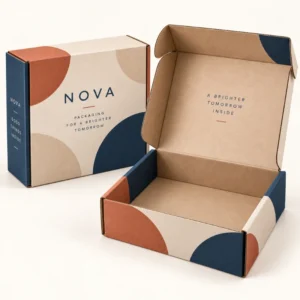
A mailer box supplier provides the boxes, printing, inserts and related packaging that a business needs to send products safely and present them well on arrival. The right supplier does more than sell boxes, helping you choose the right board, size and closure, checking your artwork, keeping repeat orders consistent and giving realistic lead times. Choosing carefully at the start can save repeated problems with damaged parcels, mismatched branding or late launches.
Choosing a mailer box supplier
Start by describing your product, your order volume and your delivery journey, rather than by asking for a box in isolation. A good supplier will ask about product weight, fragility, packed dimensions, storage conditions and how the parcel will be handled. Those details determine board strength, closure type and whether an insert is needed. A supplier that asks those questions is more likely to recommend a box that performs well, rather than one that simply looks right in a photograph.
Also consider how your packaging needs may change. A business that starts with a single product may soon add gift sets, seasonal editions or subscription boxes. A supplier that can handle plain boxes, printed boxes, sleeves, stickers and inserts can support that growth without forcing you to rebuild your packaging system with a new partner each time.
What to check before a first order
Ask for a sample box in the size and board you are considering, and pack it exactly as you would pack a customer order. Check the fold quality, the closure, the print clarity and the fit of your product. Check the box again after it has been closed and opened a few times, because a box that looks good once may weaken at the folds with repeated handling. That sample test is the most reliable check available before committing to a larger run.
Questions to ask about materials and board
Ask what board grades are available, whether kraft or white board suits your design, and how recycled content or recyclability is described for the exact board and finish you choose. Avoid accepting a general sustainability claim without checking what it means for your specific combination of board, ink, laminate and insert. Clear, specific answers on materials are a good sign of a supplier that understands its own products.
Consistency across repeat orders
Consistency matters more than a single perfect sample. Customers notice when a repeat order arrives in a box that folds differently, prints in a different shade or feels thinner than before. Ask how the supplier records your specification, including box size, board, print method, finish and insert details, and how that record is used on reorders. A clear specification record helps future runs match the first one.
Handling design changes and reorders
Keep your own record too, including the approved artwork file, the board and finish used, and the date of approval. When you reorder, refer to that record and flag any change, however small. A change in logo, colour, box size or insert layout should be treated as a new proof, not as a minor tweak, because even small changes can affect fit, print and packing.
Quantities, lead times and the quote process
Quantity affects both unit cost and practicality. Larger runs usually spread setup and print costs across more boxes, but they also need storage space and tie up cash in stock. Smaller runs give flexibility for new products and seasonal designs, but they may carry higher setup costs per box. Balance those factors against how quickly you expect to use the stock, and how likely the design is to change.
Lead times should be clear before you approve artwork. Standard lead times after final artwork approval are 10 to 14 working days. Corrugated boxes follow a lead time of 12 to 15 working days, and rigid or specialist boxes follow a lead time of 13 to 16 working days. These periods start after final artwork approval, not after your first enquiry, so allow time for sampling, proofing and any artwork revisions in your launch plan. They are production lead times, not a guaranteed delivery date.
What a good quote should include
A useful quote should state the box size and style, the board, the print coverage and colours, any finishes, inserts or sleeves, the quantity, and the lead time after artwork approval. It should also state what is not included, such as delivery arrangements or artwork changes after approval, so there are no surprises later. If a quote is vague on any of those points, ask for clarification before approving it.
Artwork support and proofing
Artwork support is especially valuable for a first order. Ask whether templates are provided for your chosen box size, whether a proof will be supplied for checking, and what file format and resolution are required. Read the proof carefully, including spelling, contact details and small text, because approval usually means the design will go into production as shown.
Service, communication and long term fit
Good service shows in responsiveness, clear explanations and honest advice when a requested option will not work well. A supplier that warns you that a design may not print well on kraft, that a box size may strain under weight, or that a finish may affect recycling is giving useful expertise, not creating an obstacle. That honesty protects your brand and your customers.
Communication also matters during production. Ask how you will be updated if a proof needs revision or if a specification query arises. Clear contact routes and a single point of contact for your order can prevent misunderstandings, especially when several people in your business are involved in artwork, packing and ordering.
Working with a UK supplier
A UK based supplier can offer shorter communication cycles, familiar delivery arrangements and easier sample exchanges, which helps when a launch date is tight. It can also simplify discussions about board sourcing, recycling guidance and delivery information in UK terms. Those practical benefits matter as much as the box itself, because packaging problems often need a quick, clear response.
Reviewing the relationship over time
Review your packaging periodically, rather than reordering the same specification by habit. Product ranges change, order volumes change and customer feedback can reveal packing problems that were not obvious at launch. A periodic review with your supplier, covering damage rates, packing time, customer comments and storage, can reveal small improvements that make a real difference over many orders.
To start a conversation about your packaging needs, use the get a quote page, learn more on the about us page, check delivery information on the delivery information page, or browse the mailer boxes collection.
Frequently asked questions
What should I tell a mailer box supplier before ordering?
Share your product dimensions as packed, product weight, fragility, order volume, design ideas and delivery journey. Those details help the supplier recommend the right board, size, closure and insert.
Should I order a sample first?
Yes, whenever possible. Pack the sample exactly as you would pack a customer order, and check fold quality, closure, print clarity and product fit before committing to a larger run.
How long does production take after artwork approval?
Standard production takes 10 to 14 working days after final artwork approval. Corrugated production takes 12 to 15 working days, and rigid or specialist production takes 13 to 16 working days.
Can one supplier handle boxes, printing and inserts?
Many suppliers can, and that can simplify specification, proofing and reordering. Confirm which elements are included in your quote, so sleeves, stickers and inserts are not assumed to be included when they are not.