
mailer box sizes
Showing all 2 results
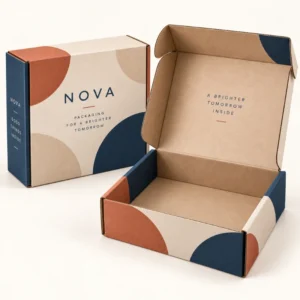
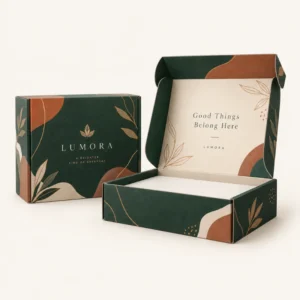
Mailer box sizes describe the internal length, width and depth of a folding postal box, and the right size is the smallest box that holds your product safely with room for any protective layer. A box that is too large wastes filler, adds weight and lets the product move in transit. A box that is too tight can crush the product, strain the closure or make packing slow and awkward.
Mailer box sizes explained
Most mailer boxes are measured from the inside, because the inside space is what your product actually occupies. Length is usually the longest side, width is the next side, and depth is the height of the box when it is closed. Always confirm whether a size you are comparing is internal or external, because board thickness and flap construction can add several millimetres to the outside dimensions.
When you measure a product, measure it as it will be packed, not as it appears on a shelf. Include any wrapping, tissue, sleeve or insert that will travel with it. Then add a small clearance so the product slides in without force and lifts out without tearing the box. A snug fit is good. A forced fit is not, because it puts pressure on corners and seams during delivery.
How to measure a product for a mailer box
Start with the longest side of the packed product and record that as the length. Measure across the product for the width, then measure the tallest point for the depth. If the product is round, measure the diameter and treat that as both length and width. If the product is soft, such as folded clothing, measure it after folding, because the folded shape is the shape the box must hold.
Allow clearance without adding empty space
Clearance of a few millimetres on each side usually gives a clean fit. That gap lets the lid close flat, lets the tuck flap seat properly and leaves room for a thin protective layer where needed. Larger clearance quickly becomes empty space, which then needs filler to stop movement. The goal is a box that holds the product still, not a box that holds a lot of air around it.
Common size ranges and what they suit
Small mailers suit jewellery, cosmetics samples, small accessories, stationery and single compact items. A small box in the region of 150 mm by 100 mm by 50 mm can hold many single item orders without excess space. Medium mailers suit candles, skincare sets, books, small gift sets and folded apparel. A medium box in the region of 250 mm by 200 mm by 100 mm covers a wide range of everyday ecommerce orders.
Large mailers suit clothing bundles, multi item gift sets, shoes and larger subscription kits. A large box in the region of 350 mm by 250 mm by 100 mm, or larger where the contents require it, gives room for several items without stacking them in a way that damages the lower layers. Very large mailers suit bulk orders and bulky kits, but they need stronger board and a secure closure, because weight and handling increase with size.
Flat mailers for books and printed items
Flat mailers have a shallow depth and suit books, prints, documents, calendars and other flat products. A shallow box protects corners and edges better than a padded envelope, while keeping the parcel slim for posting. Measure the thickest point of the flat item, including any board backing or sleeve, so the lid closes without bowing.
Depth, board strength and closure
Depth deserves as much attention as length and width. A deep box can hold tall items or several layers, but a deep box that is only partly filled can allow items to shift. A shallow box keeps items in one layer and often packs faster, but it cannot hold tall products. Match depth to the tallest item, or to the total height of the layers you plan to pack.
Board strength also changes with size. E flute corrugated board gives a thin, smooth surface that suits presentation and lighter products. B flute board gives more cushioning and suits heavier or more fragile items. Larger boxes benefit from stronger board, because the panels span a greater distance and face more stacking pressure in transit and in storage.
Closures that suit different sizes
A tuck flap closure suits most small and medium mailers and gives a clean opening experience. A locking tab closure adds security for heavier contents. A tape sealed flap can suit large or heavy parcels where extra holding strength matters. Test the closure with the actual product inside, because a closure that feels secure when empty can behave differently under weight.
Testing a size before ordering at scale
Pack a sample box exactly as you would pack a customer order. Close it, turn it gently, and check whether the product moves, the lid lifts or the corners strain. Open it again and check whether the product lifts out cleanly. That simple test reveals more than a dimension chart, because it shows how the product, insert, filler and box work together.
Custom sizes, postage bands and storage
Standard sizes suit many products and can simplify stock control. Custom sizes suit products with unusual shapes, multi item sets or a fixed unboxing layout. A custom size removes void fill, reduces parcel weight in some cases and can improve the unboxing experience, because the product sits exactly where it was designed to sit. The trade off is that a custom size needs a template and a proof, so allow time for that stage.
Parcel size can affect postage, because carriers group parcels into bands based on dimensions and weight. A box that sits just over a band threshold can cost more to send on every order, even if the extra space serves no purpose. Checking the size against your usual carrier bands before ordering can therefore save money over the life of a packaging range, without any change to the product itself.
Planning sizes across a product range
Many brands do not need a different box for every product. Group products by packed size, and choose two or three box sizes that cover most orders well. That approach simplifies packing, reduces storage and makes reordering easier. Keep a separate size only for products that truly cannot fit the standard range, such as very tall, very flat or very fragile items.
Storage and flat packing
Mailer boxes usually arrive flat, which helps storage, but flat packs still take space. Record the flat dimensions and the number of boxes per bundle when planning shelf space. Stack flat packs evenly, keep them dry and avoid placing heavy items on top of printed surfaces, so the boxes stay clean and easy to fold when they are needed.
For help choosing a size for your product, use the get a quote page, browse the shop page, or explore the mailer boxes collection and the mailer box with insert collection for fitted packing options.
Frequently asked questions
Are mailer box sizes internal or external?
Most mailer box sizes refer to internal dimensions, because that is the space your product occupies. Confirm this when comparing suppliers, and check the external size separately if postage bands or shelf space depend on it.
How much clearance should I leave around my product?
A few millimetres on each side usually gives a clean fit, with room for wrapping or a thin insert. Measure the product as packed, then test a sample box before ordering at scale.
Should I choose a standard size or a custom size?
Choose a standard size when it fits well and simplifies stock control. Choose a custom size when your product has an unusual shape, when a standard box leaves a lot of empty space, or when a precise unboxing layout matters.
Does a larger box always protect a product better?
No. A larger box can let a product move, which increases damage risk. Protection comes from a good fit, suitable board strength and the right insert or filler, not from extra empty space.