
kraft packaging
Showing the single result
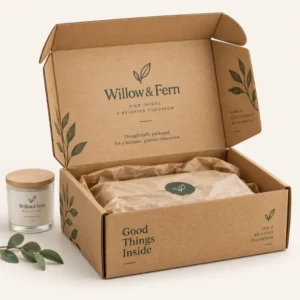
kraft packaging is packaging made from natural brown kraft paper or kraft board, valued for its strength, its plain honest appearance and its wide use across retail, posting and gift presentation. It ranges from simple wraps and bags to printed boxes and protective cartons, and it suits brands that want packaging to feel practical and considered rather than glossy or overdecorated. Because kraft material is paper based, it is often easier to recycle than mixed material packaging when finishes are kept simple.
What kraft packaging includes
The term kraft packaging covers more than one format. Kraft paper can be used as a wrap, a filler or a bag. Kraft board can be formed into folding cartons, sleeves, trays and mailer boxes. Corrugated kraft board can be formed into stronger shipping and mailing boxes. Each format uses the same natural brown material story, but each one serves a different job, from protecting a single product to presenting a full gift set.
That breadth is useful for a brand that wants a coherent look across different products. A kraft bag for a shop purchase, a kraft box for an online order and a kraft sleeve for a gift set can share colour, print style and tone, even though the structures are different. Consistency helps customers recognise the brand and helps staff pack orders quickly, because the material handling feels familiar across formats.
Why kraft paper looks and feels different
Kraft paper is made from wood pulp that retains much of its natural colour, which gives the familiar brown tone and a slightly textured surface. It is strong for its weight, it folds cleanly, and it accepts print, stamps, labels and handwriting well. Those qualities make it popular for artisan goods, food retail where suitable material is specified, stationery, skincare, candles and clothing, where a natural presentation supports the product story.
The appearance also affects print. Colours appear warmer on brown kraft than on white board, and dark inks tend to stay bold. A brand that relies on pale pastel colours may need a white ink base or a different board choice to keep the design legible. A brand that uses bold typography, simple line art or a single strong colour often finds kraft an easy and attractive canvas.
Uncoated, coated and laminated kraft
Uncoated kraft keeps the natural texture and is usually the simplest route for recycling. Coated kraft can give a smoother print surface, while laminated kraft can add water resistance or a glossy finish, but lamination can change the recycling route and should be chosen only when the protection it adds is genuinely needed. For most retail and posting uses, uncoated kraft with simple print gives the best balance of appearance, protection and ease of disposal. If a product needs moisture protection, discuss a suitable specification in your quote request rather than assuming a laminated finish is required.
Uses for kraft packaging across a business
In retail, kraft packaging suits shop bags, gift boxes, product sleeves and tissue wraps that present a purchase neatly at the till. In online selling, kraft boxes and mailers protect orders in the post and give a branded opening experience. In wholesale and fulfilment, kraft cartons protect multi item orders and keep labelling clear. In gifting, kraft boxes, wraps and tags give a warm, handmade feel that can be dressed up with ribbon, a printed sleeve or a simple stamp.
Kraft packaging also suits seasonal and limited edition ranges, because a change of print, ribbon or sleeve can refresh the look without changing the underlying box or bag. That flexibility helps small businesses test a new product line without committing to a completely new packaging structure. It also helps larger businesses keep a consistent base format while varying the outer message for different campaigns.
Kraft packaging for food, gifts and retail goods
For food retail, material suitability must be checked for the specific product, because not every kraft board is intended for direct food contact. Ask about the intended use in your quote request, and share whether the packaging will touch food directly, hold a wrapped product or simply carry a sealed item. For gifts, kraft boxes pair well with tissue, paper ribbon and a printed card, giving a presentation that feels generous without plastic heavy extras. For retail goods such as candles, soap, skincare and stationery, a kraft carton or sleeve can carry essential information clearly while keeping the product visible through a simple cut out or a clear label area where that is appropriate.
For posting, see kraft mailer boxes and kraft postal boxes for box formats made specifically for transit. Those formats use corrugated board for extra protection, while lighter kraft cartons and sleeves are better suited to retail display and hand delivery.
Choosing between a bag, a sleeve and a box
A bag suits a quick retail purchase and a light product that does not need rigid protection. A sleeve suits a product that already has its own container, such as a jar, bottle or tin, and needs branding and information without a full box. A box suits a product that needs protection, stacking or a gift presentation. When in doubt, choose the format that protects the weakest point of the product, whether that is a lid, a corner, a label or a fragile surface, and test it with a real packed sample.
Sustainability and recycling in plain terms
Kraft packaging is often chosen for environmental reasons, and the reasons are practical rather than abstract. Kraft paper and board are made from a renewable fibre source, they are widely recyclable through paper recycling where local collection accepts them, and they can be reused for storage or as protective wrap before recycling. Keeping the parcel paper based, with paper tape, paper inserts and simple print, makes recycling simpler for the recipient.
There are limits to keep in mind. Foil, heavy plastic lamination, plastic windows and mixed material tapes can complicate recycling. Wet or greasy kraft that has been in contact with food waste may not be accepted in paper recycling in some areas, and local rules vary. The honest approach is to keep finishes simple, to avoid claiming a product is recyclable when a finish changes that, and to give customers a clear disposal note where that helps. For business duties that may apply to packaging supplied in the UK, see GOV.UK guidance on extended producer responsibility for packaging.
Reducing waste without weakening protection
Right sizing is the most effective waste reduction step. A box that fits the product needs less void fill, less tape and less board, and it also reduces damage in transit. Reusable formats, such as a sturdy kraft box that a customer keeps for storage, can also reduce waste over time. A second useful step is to design print so it does not need to change every season, allowing unused stock to remain useful. A third step is to choose inserts that serve a real protective purpose, rather than adding decorative fill that the customer must discard immediately.
Staff training helps as well. A packing guide that shows the correct box, the correct insert and the correct tape pattern for each product reduces errors and returns. It also keeps the unboxing experience consistent, which matters for online reviews and repeat orders.
What to ask before you order kraft packaging
Ask about board weight, print method, finish, size tolerance and lead time. Ask whether a sample can be checked for print contrast on brown board. Ask how the packaging should be stored to avoid damp and crushing before use. Clear answers to those questions prevent most common problems, such as print that is too pale, a box that is too tight for its insert, or a bag handle that does not suit the product weight.
Ordering kraft packaging on a quote basis
All packaging from this site is quote only, so no price is stated on this page. A quote allows the material, format, size, print and quantity to be matched to the product, rather than forcing a standard item onto a specific need. Share the product, the intended use, the quantity and any print artwork or brand guidelines you have. After final artwork approval, standard boxes are typically produced in 10 to 14 working days, corrugated boxes in 12 to 15 working days, and rigid or specialist boxes in 13 to 16 working days. Those figures are production lead times, not guaranteed delivery dates.
To begin, request a quote and describe how the packaging will be used. Mention whether it will be posted, handed over in a shop, used for gifts or stored for a season, because each use places different demands on board strength and finish. A short, specific brief usually leads to a faster and more accurate quote than a general request for kraft packaging alone.
Keeping a consistent brand across kraft formats
Use the same logo artwork, the same ink colours and a similar layout across bags, boxes and sleeves, even if the sizes differ. Keep the most important information, such as the brand name and care notes, in a consistent position where practical. That consistency helps customers recognise repeat orders and helps staff identify the correct packaging quickly during busy periods.
Frequently asked questions about kraft packaging
What is kraft packaging made from
kraft packaging is made from kraft paper or kraft board, which is a strong natural brown paper material produced from wood pulp. It can be used as a flat paper, a folding board or a corrugated board, depending on the strength and structure needed.
Is kraft packaging recyclable
Uncoated kraft paper and board are widely recyclable through paper recycling where local collection accepts them. Finishes such as plastic lamination, foil and mixed material components can affect recycling, so keep finishes simple if recycling is a priority.
Can kraft packaging be printed
Yes, kraft packaging can be printed with logos, patterns, product information and short messages. Dark inks usually print boldly on brown kraft, while pale colours may need a white ink base to stay legible.
Is kraft packaging suitable for food products
Some kraft materials are suitable for food retail, but suitability depends on the specific product and whether the packaging touches food directly. Share the intended food use in your quote request so a suitable material specification can be confirmed.
How long does kraft packaging take after artwork approval
After final artwork approval, standard boxes are typically produced in 10 to 14 working days, corrugated boxes in 12 to 15 working days, and rigid or specialist boxes in 13 to 16 working days. These are production lead times, not guaranteed delivery dates.