
kraft corrugated mailer boxes
Showing the single result
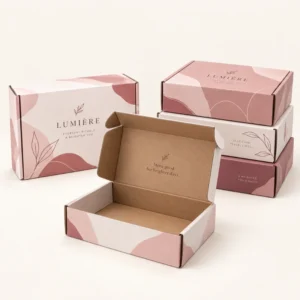
Kraft corrugated mailer boxes are postal boxes made from unbleached brown kraft board with a corrugated layer that gives strength without excess weight. In use, kraft corrugated mailer boxes protect products in transit, present a natural and honest brand look and can be custom printed inside and out. For many online shops, they are the everyday workhorse of ecommerce packaging.
What kraft corrugated mailer boxes are made from
Kraft board is made from wood pulp that has not been bleached white, which gives it the warm brown colour that customers recognise instantly. Corrugated board adds a fluted layer between two flat liners, and that flute acts like a series of small arches that resist crushing and cushion knocks. The result is a box that is light to post, strong enough for repeated handling and easy to recycle with paper and card, subject to local recycling guidance. Tape, labels and any non paper inserts should be considered separately when giving recycling advice to customers.
The natural look is part of the appeal. Kraft board suits candle makers, skincare brands, coffee roasters, clothing labels and handmade goods, because it signals a practical, eco minded approach without needing elaborate design. A single colour logo, a simple pattern or a short message often looks finished on kraft, whereas the same artwork might look sparse on white board. Scuffs and handling marks also show less on brown board, which helps the box still look good when it reaches the customer.
Flute types and board strength
Flute size affects thickness, crush resistance and print quality. E flute is thin and gives a smooth surface that prints well, which makes it popular for mailer boxes that need good artwork and a slim profile. B flute is thicker and stronger, which suits heavier products or parcels that face rough handling. C flute is thicker again and is more common for larger shipping cartons than for slim mailers. The right choice depends on product weight, product fragility and postal size, not on a general rule that thicker is always better.
Single wall and double wall board
Single wall corrugated board has one fluted layer and suits most mailer boxes for light to medium products. Double wall board has two fluted layers and suits heavier or more fragile goods, but it adds thickness and weight. If a product is already protected by an insert, single wall board may be enough. If a product is heavy, sharp edged or likely to be stacked under other parcels, double wall board gives extra insurance. Always test a packed sample with real handling, because board grade alone does not guarantee protection.
Styles of kraft corrugated mailer boxes
Roll end tuck front mailers are a popular style, because the ends roll in and the front tucks shut to give a clean, tape free closure in many cases. Mailers with dust flaps give extra protection at the corners and help keep the contents secure. Self seal mailers use a peel strip to close quickly, which speeds up packing for high volume senders. Tear strip mailers give the customer an easy opening experience, which matters for unboxing videos and for products where a neat opening is part of the brand experience.
Mailer boxes differ from ordinary shipping cartons in one important way. They are designed to be the outer packaging and the presentation packaging at the same time. The inside can be printed, so the customer sees branding the moment the lid opens. That dual role means the box must be strong enough for the courier network and attractive enough for the customer, which is why board choice, print quality and closure design all need to be considered together.
Printing on kraft board
Print on kraft board needs a different approach from print on white board. Dark inks read clearly, while pale colours print more softly and can look muted against brown. One or two colour designs often look sharp and intentional, while full colour photography can lose brightness unless the artwork is designed for kraft. A printed sample is essential, because screen colours do not predict kraft results reliably. Check that small text remains legible, that the logo does not sit across a fold and that the inside print does not clash with the product.
Finishes that suit a natural look
Uncoated kraft with simple print is the most natural finish and suits brands that want an honest, low fuss look. A matte lamination can protect print from scuffing, but it changes the feel and may affect recyclability, so ask about material compatibility before choosing it. Foil stamping in gold or another metallic tone can add a premium detail for gift ranges, while embossing adds texture that customers notice when they handle the box. Use finishes sparingly, so the kraft character remains the star.
Sizing, inserts and packing kraft corrugated mailer boxes
Measure the product, including any inner packaging, then choose a mailer that fits snugly with room for protection. A mailer that is too large wastes postal space and lets products move, while a mailer that is too tight can crush a corner or make packing slow. For multiple items, a card insert, a divider or a shaped tray keeps products apart and stops them scratching each other. For fragile items, add cushioning that fills gaps without forcing the lid shut.
Packing speed matters for growing shops. A mailer that folds quickly, closes cleanly and needs little tape can save minutes on every order, which adds up across hundreds of parcels. Flat packed mailers also save storage space, because they stack neatly until needed. Keep a small range of sizes rather than one size for everything, so small orders are not sent in large boxes and large orders are not squeezed into small ones. Review sizes when product ranges change.
Sustainability and customer disposal
Kraft corrugated mailers are widely seen as a sustainable choice, because the board is paper based, often contains recycled content and is usually recyclable. The strength of that claim depends on the full pack, including tape, labels, inserts and any lamination. Paper tape and paper labels keep the pack simpler to recycle, while plastic tape and mixed material inserts complicate it. Give customers clear disposal guidance on an insert or on the box itself, and avoid overstating a claim that only part of the pack can support.
Producer responsibility in the UK
Businesses that place packaging on the UK market may have duties under extended producer responsibility for packaging, depending on their size and the packaging they supply. The GOV.UK collection on this topic explains who may be an obligated producer and what registration and reporting duties can apply. It is worth reading early, because packaging choices made at design stage affect the data a business needs to record later. For a tailored design, request a quote and share your product sizes and order volumes. You can also browse the full shop for related mailer styles, and read the GOV.UK packaging producer guidance for producer duties.
Frequently asked questions
Are kraft corrugated mailer boxes strong enough for posting?
Yes, for most light to medium products, especially when the flute and board grade match the product weight. Heavier or fragile goods may need double wall board, a fitted insert or extra cushioning.
What is the difference between E flute and B flute?
E flute is thinner and prints smoothly, which suits slim mailers with good artwork. B flute is thicker and stronger, which suits heavier products and rougher handling.
Can kraft mailer boxes be custom printed?
Yes, inside and out, although pale colours print more softly on brown board. Dark inks and simple designs usually look best, so approve a printed sample first.
How long do custom kraft mailer boxes take to produce?
After final artwork approval, corrugated lead times are typically 12 to 15 working days. These are planning guides, not guaranteed delivery dates, so allow a buffer for sampling and delivery.
Are kraft mailer boxes recyclable?
The board itself is usually recyclable with paper and card, subject to local guidance. Tape, labels, lamination and mixed inserts should be checked separately before making a recycling claim.