
gable lunch boxes
Showing the single result
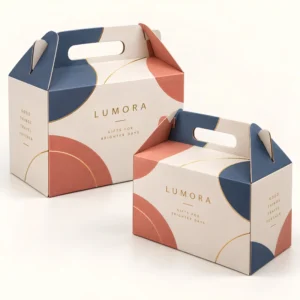
Gable lunch boxes are folding cardboard boxes with a peaked top that closes to form a carry handle, made to hold a complete lunch in one easy to carry pack. They suit sandwiches, wraps, salads in a pot, fruit and a snack, and they remove the need for a separate carrier bag at the counter or collection point. Because they arrive flat packed and fold into shape in moments, they work well for busy cafes, school catering, workplace lunches, picnics and catered events.
What gable lunch boxes are and how they work
The shape is the point. Two sloping top panels meet and lock to create a handle, so the customer can pick up the lunch with one hand and keep the other hand free. The base is a straightforward rectangle, which makes packing simple and keeps items sitting level. When the box is closed, the contents are covered and protected from dust and light handling, while the handle keeps the pack together on the way to a table, a desk or a picnic spot.
Most lunch versions are made from kraft board or white board. Kraft gives a natural, relaxed look that suits delis, farm shops and outdoor catering. White board gives a clean surface for bright print and suits cafes and brands that want a crisp, modern presentation. In both cases, the board should be sturdy enough to hold the lunch without sagging, and any food that is moist or greasy should be wrapped or placed in a pot first. That simple step protects the board, keeps flavours separate and makes the lunch more pleasant to eat.
Packing a balanced lunch in one box
A good packed lunch has a main item, something fresh and something to finish with. A sandwich or wrap sits well at the base, a small salad pot or fruit portion sits beside it, and a biscuit, flapjack or small snack fills the remaining space. Keep heavier items at the bottom and lighter items on top, and avoid packing the box so tightly that the top panels cannot close cleanly. If a drink is included, check the size and weight first, because a tall bottle can press against the sloping top and a heavy bottle can strain the handle.
Keeping food fresh and tidy on the move
For food that will be eaten later in the day, wrapping matters more than the box itself. Wrap sandwiches well, use a lidded pot for salads and dressings, and keep hot and cold items apart. The box then acts as a neat outer carrier rather than as direct food contact packaging. For a lunch that will be eaten soon after collection, a simple inner wrap is usually enough, and the box keeps everything together for a short journey.
Who uses gable lunch boxes most often
Cafes and delis use them for takeaway lunches that customers carry to a park, an office or a train. Schools and holiday clubs use them for packed lunches on trips, because each child receives the same complete pack and staff can hand them out quickly. Workplaces use them for meeting lunches and training days, where a uniform pack looks more organised than a mix of bags and boxes. Caterers use them for outdoor events, markets and festivals, where a carry handle is a practical advantage when there are no tables nearby.
Why the handle changes the experience
A handle turns a box into a personal pack. The recipient does not need to ask for a bag, juggle a box and a drink, or worry about the lunch opening in a larger bag. For events, that small detail speeds up service, because staff can hand over a finished pack in one movement. For the customer, it feels considered, as if the lunch was prepared as a complete set rather than assembled from separate parts.
Choosing a size and board for gable lunch boxes
Size starts with the longest and tallest item in the lunch. Measure the sandwich, wrap or salad pot, then allow a little space around it so the box closes without squashing the food. Remember that the sloping top reduces usable height near the edges, so a tall pot should sit in the centre of the box where there is most headroom. If the lunch varies from day to day, choose a size that fits the largest regular combination, and use tissue paper or a small divider to stop a smaller lunch from moving around.
Board choice follows weight and use. A light lunch of a sandwich, fruit and a snack suits a standard board. A heavier lunch with a salad pot, a yoghurt pot and a drink needs a thicker board and a well formed handle, and it is worth testing one filled box by carrying it for a few minutes before ordering a large quantity. If the lunch will be carried for a long time, comfort matters too, so a handle that folds cleanly and does not dig into the hand is worth checking on a sample.
Print, colour and branding for lunch packaging
Print on a lunch box is seen in public, on a desk, in a park and on a train, so it is a useful place for a logo, a name and a simple message. Keep the design bold and readable, with generous space around text so it does not disappear into a fold. A single colour logo on kraft board can look smart and understated, while full colour print on white board suits a cafe with a strong visual identity. If allergen or ingredient information is needed, put it on a card inside the box, where it can be read clearly at eating time.
Finishes that suit daily lunch service
A matt finish gives a soft, natural feel and hides small marks from handling. A gloss finish makes colours look brighter and can suit a bold cafe brand. Neither finish changes the basic job of the box, so choose the one that matches the rest of your packaging and your counter display. For a lunch box that will be reused as a keepsake or a craft box, a clean print and a sturdy board will make it more likely to be kept, which extends the life of the branding.
Ordering gable lunch boxes from Personalized Mailer Boxes
To get a quote, share the size of the lunch you plan to pack, the quantity you need, the board you prefer and your artwork. The team can advise on board weight, print and finish, and on whether a related style would suit a heavier or taller lunch better. Standard lead times after final artwork approval are 10 to 14 working days, so allow proofing time in your catering plan. For corrugated styles, the lead time is 12 to 15 working days, and for rigid or specialist styles it is 13 to 16 working days. These are production lead times, not a guaranteed delivery date, and they run from final artwork approval.
For related carry packaging, see gable treat boxes for party food and favours and gable window boxes that show the contents. To start an order, use request a quote for gable lunch boxes, browse the shop for packaging ideas, and check delivery information for lead times.
Frequently asked questions about gable lunch boxes
What fits inside gable lunch boxes
A sandwich or wrap, a small salad pot, fruit and a snack fit well in a standard lunch size. Measure the tallest item first and place it in the centre, where the sloping top gives the most headroom.
Do gable lunch boxes arrive flat
Yes, they are usually supplied flat packed for easy storage. They fold into shape with tabs that lock the base and top panels that form the handle.
Can gable lunch boxes be printed with a cafe logo
Yes, a logo and simple branding can be printed on the outer panels. Keep text large and clear, and check one proof before production so colours and spelling are correct.
Are gable lunch boxes suitable for hot food
They suit warm food that is wrapped or placed in a pot, but very hot or wet food should be in a suitable inner container first. That protects the board and keeps the lunch tidy to carry.
How many gable lunch boxes should I order for an event
Order one per person, plus a small allowance for spares and breakages. Confirm numbers close to the event, and keep a few flat spares aside for last minute guests.