
customized shipping boxes
Showing the single result
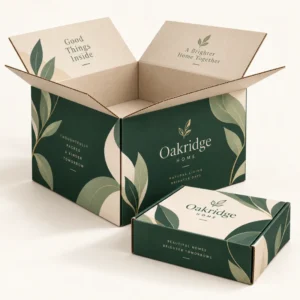
customized shipping boxes are strong, printed cartons made for heavier, bulkier and multi item orders that need to survive courier handling, stacking and longer journeys without crushing or opening. A shipping box is judged first on protection, because a heavier parcel puts more strain on board, tape and closures than a light mailer, and second on presentation, because a branded shipping box still represents the sender when it reaches the customer. A box made to the order, with the right board and a firm seal, does both jobs better than a reused carton that was never made for that weight.
Why customized shipping boxes suit heavier orders
Heavier orders need a different approach from light postal parcels. Weight increases pressure on the base, the sides and the closure, especially when parcels are stacked in a van or a warehouse. A shipping box with a suitable corrugated board, a firm base and a tape sealed closure spreads that load and resists crushing, while a light mailer designed for apparel may bow or split under the same weight. That protection matters for customer satisfaction, because a damaged heavier order is often expensive to replace, difficult to return and disappointing to receive, even when the product inside is undamaged.
Shipping boxes also need to work for packing teams. A regular shipping carton that assembles quickly, holds its shape while being filled, and seals cleanly with tape helps teams pack heavier orders safely and consistently. A consistent size for a regular order type reduces time spent choosing cartons and judging filler, and it gives a predictable parcel for courier handling. Print on a shipping box can still carry a logo, a brand colour or a simple handling note, so the parcel looks intentional on delivery, even when its main job is protection rather than presentation.
Choosing board strength for shipping boxes
Corrugated board strength should be chosen for the weight of the packed parcel, the height of stacking and the length of the journey, not just for the size of the box. Single wall board suits many medium weight orders, while double wall board gives extra strength for heavier orders, fragile items and parcels that will be stacked under other parcels. E flute board gives a smooth print surface, while B flute and C flute boards give more cushioning and stacking strength. The flute choice, the board grade and the box construction work together, so a heavier parcel may need a combination of a stronger board and a construction that supports the base, rather than a stronger board alone.
Measuring a heavier or multi item order
Measure a multi item order as it will actually be packed, with items arranged together, protective wrap in place and any dividers seated correctly. Measure the total length, width and height of that packed arrangement, and add just enough clearance to pack and unpack without force. For a single heavy item, measure the item with any protective wrap, and check that the base can support its weight without bowing. Test the size with a real parcel, packed as it will be packed for customers, and check that the box closes cleanly, the tape seals firmly, and the parcel still feels solid when lifted by its base rather than by its sides.
Print, handling notes and presentation
Print for a shipping box should be clear and practical, because the box will be handled many times and may be seen from a distance. A logo or a brand colour on the outside helps recognition, while handling notes such as this way up, fragile or heavy can help handlers treat the parcel correctly, provided they are placed where they remain visible and are not covered by a label. Keep postal and courier labels clear of folds and tape seams, so labels stay attached and remain readable through sorting. Artwork should be checked at actual size, because a design that looks good on screen can look faint or crowded when printed on a large shipping carton.
Packing shipping boxes for courier handling
Packing a shipping box well starts with the base. Tape the base firmly, with tape extending well onto the sides, so the base does not split under weight. Place heavier items at the bottom, with lighter or more fragile items above them, and use dividers or protective wrap to stop items moving and striking each other. Fill any remaining void with suitable protective material, so contents do not shift when the parcel is turned or stacked. Close the lid without overfilling, and tape the top firmly, with tape centred on the seam and extending onto the sides. A parcel that feels solid and balanced when lifted is usually a parcel that will travel well.
Multi item orders benefit from a packing routine that is consistent across a team. A short checklist at the packing bench, covering base taping, item order, dividers, void fill and top taping, helps every parcel leave in the same condition, even on busy days. That consistency also helps with returns and damage claims, because a well packed parcel is easier to assess than a parcel packed differently every time. For a related format for lighter parcels, see customized postage boxes for small parcels and samples.
Choosing between shipping boxes and mailer boxes
Shipping boxes and mailer boxes suit different orders, and choosing well saves damage and waste. A shipping box usually suits heavier orders, multi item orders, fragile items and parcels that need a tape sealed carton for security. A mailer box usually suits lighter orders where presentation and unboxing matter more than maximum stacking strength. Some businesses use both formats, with mailers for standard light orders and shipping boxes for heavier bundles, which keeps packing simple while matching protection to each order type. Reviewing orders by weight, fragility and presentation need can show where each format belongs in a packing system.
When a shipping box needs extra protection
Some shipping orders need extra protection beyond a standard carton. Glass, ceramics and electronics may need dividers, shaped inserts or extra cushioning to stop movement and absorb knocks. Liquids may need a leak resistant inner pack and a board that can cope with a small spill without losing strength. Very heavy items may need a reinforced base or a double wall board to support the load. In each case, the extra protection should be tested with a real parcel, because a protective material that looks sufficient on a bench can shift in transit if it is not fitted correctly, and a fitted insert usually protects better than loose material that can migrate to one end of the box.
Ordering and delivery for shipping boxes
A clear quote starts with internal size, quantity, board grade, flute, print and finish. State the weight and type of orders the box will carry, whether artwork will be printed outside only or on both surfaces, and whether the box is for a single order type or a range of orders. If quantities vary by size, say so early, because a shared print design across sizes can keep branding consistent while each size still gives a proper fit for its orders. Proofs are worth their time for a new shipping box, especially where a handling note must stay visible and where a tape seam could cover part of the print if the size is slightly out.
Lead times after final artwork approval are 10 to 14 working days for standard boxes, 12 to 15 working days for corrugated boxes and 13 to 16 working days for rigid or specialist boxes. Plan a product launch, a wholesale send or a seasonal peak around those times, with room for proof approval and packing. Full details are on the delivery information page. To begin, request a quote for customized shipping boxes or browse the full shop for packaging ranges. Before posting small parcels, check the Royal Mail parcel postbox guidance for drop off size limits.
Frequently asked questions about customized shipping boxes
Question: What are customized shipping boxes?
Answer: They are strong, printed cartons made for heavier, bulkier and multi item orders, with board, construction and sealing chosen for courier handling and stacking.
Question: How are shipping boxes different from mailer boxes?
Answer: Shipping boxes are usually stronger, tape sealed cartons for heavier goods, while mailer boxes are lighter, presentation focused boxes for lighter orders and unboxing.
Question: What board should I choose for a heavy order?
Answer: Choose a board grade and flute based on packed weight, stacking and journey length, with double wall board for heavier or fragile orders that will be stacked.
Question: Can customized shipping boxes be printed with a logo?
Answer: Yes. Outside print can carry a logo, a brand colour or handling notes, while keeping label areas clear of folds and tape seams so labels stay readable.
Question: How long does production take after artwork approval?
Answer: Standard boxes take 10 to 14 working days, corrugated boxes take 12 to 15 working days and rigid or specialist boxes take 13 to 16 working days after final artwork approval.