
custom printed mailing boxes
Showing all 2 results
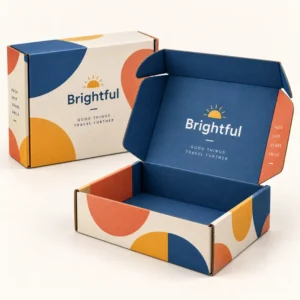
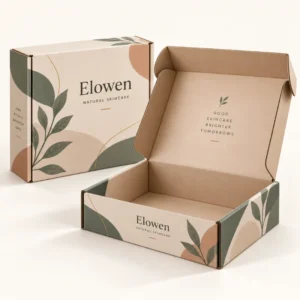
Custom printed mailing boxes are branded postal boxes made to send products safely, whether you post a handful of orders a week or a regular subscription run. They protect the contents, carry your logo and colours through delivery, and give the customer a tidy, professional opening experience. For shops, subscription brands and gift senders, a good mailing box turns routine posting into a consistent part of the brand.
How custom printed mailing boxes serve different sellers
A small shop may need one reliable box size for a core product, with print that makes every order recognisable. A subscription brand needs a box that opens in a satisfying way, holds a changing mix of items securely, and looks the same month after month. A gift sender needs a box that protects the contents, hides the surprise where appropriate, and still feels special when it arrives. The same basic idea, a printed box built for posting, can serve all three, but the details of size, board and interior will differ.
Businesses that post a mix of products often benefit from a small range of box sizes rather than a single size. A flat box for prints and clothing, a medium box for cosmetics and small gifts, and a deeper box for sets and hampers can cover most orders without forcing small items into large boxes. That range keeps packing simple, because the team can choose from a short list of familiar sizes, and it keeps parcels compact, which customers notice.
Board, flute and protection for posted goods
Corrugated board is the usual choice for mailing boxes, because the fluted layer helps the box resist crushing and absorb knocks. A fine flute prints smoothly and suits light products, while a coarser flute adds cushioning for heavier or more fragile goods. For very heavy parcels, double wall board adds a second fluted layer and extra stacking strength, but it also adds bulk, so it should be matched to products that genuinely need it.
When to add inserts, dividers or extra wrap
Inserts and dividers are worth adding when items can move, knock together or shift during transit. A divided box keeps a set separate, a shaped insert supports a fragile item at its weakest points, and a simple tissue wrap can stop surface scuffs on printed or coated products. For single robust items, a well fitting box alone may be enough, and adding unnecessary filler can make the parcel feel wasteful.
Print that works from warehouse to doorstep
Mailing box print has to survive handling, stacking and varied light, so clarity matters more than intricate detail. A bold logo, a clear colour scheme and legible text will still read well after a journey, while very fine lines and pale colours on brown board may fade into the background. Check the proof on the actual board, and view it from a short distance, as a customer or courier will, rather than only at close range on a screen.
Outer print, inner print and label space
Outer print carries the brand during delivery, inner print rewards the customer on opening, and label space makes posting practical. Plan all three together: keep the label area clear, keep key outer branding away from folds, and keep inner print simple enough to read at close range. A box that balances those three elements looks intentional from every angle, rather than impressive on the outside and cluttered on the inside.
Packing, posting and returns with mailing boxes
Packing should be quick, repeatable and easy to check. A box that folds in a clear sequence, closes securely and stacks neatly on a packing bench helps a team post accurately, even on busy days. Test the packing process with real products and real team members, and watch for steps that slow the process or cause errors, such as a flap that needs tape to stay shut or an insert that fits only one way round.
Returns deserve thought at design stage, because a box that tears on first opening cannot easily be reused for a return. A tuck flap or a resealable style can make returns simpler and can also let the customer reuse the box for storage. If returns are common for your product type, mention the return process on an inner card or printed panel, so the customer knows what to do without searching for instructions.
Sustainability and disposal for posted packaging
Customers increasingly judge packaging by what happens after opening. A paper based mailing box is widely accepted in paper recycling when kept clean and dry, and a simple board and paper insert is easier to recycle than a mix of materials. Avoid adding plastic windows, mixed material inserts or heavy lamination unless they serve a clear purpose, and give a short recycling note inside the lid where it will be seen on opening.
Right sizing as a practical sustainability step
Right sizing is one of the most practical ways to reduce packaging waste. A box that fits the product uses less board, needs less filler and takes less space in a van, which helps across a whole run of orders. Review your box sizes regularly, because a product range changes over time, and a size that once fitted well may become too large or too small as products are added or redesigned.
Ordering custom printed mailing boxes from Personalized Mailer Boxes
Share your product range, typical order sizes, posting volumes and artwork, and request a quote for mailing boxes built around those orders. Standard lead times after final artwork approval are 10 to 14 working days, corrugated styles take 12 to 15 working days, and rigid or specialist styles take 13 to 16 working days. These are production lead times, not a guaranteed delivery date, so allow extra time for proofing and for seasonal peaks.
You can explore related options through custom printed mailing box for single items and custom printed mailer boxes for online brands, browse the shop for packaging ideas, check timing on the delivery information page, and when you are ready use the get a quote page to send your brief.
Frequently asked questions about custom printed mailing boxes
What is the difference between mailing boxes and mailer boxes
The terms overlap a great deal, and many brands use them for the same kind of printed postal box. In general, both describe a box that posts and presents a product, with print that carries the brand through delivery to opening.
How many sizes do I need for a mixed product range
Most mixed ranges work well with a small set of sizes, such as a flat size, a medium size and a deeper size. Choose sizes around your most posted products, and use inserts or tissue to adapt the fit for smaller items.
Can mailing boxes hold subscription orders
Yes, mailing boxes suit subscription orders well, because they can hold a changing mix of items, open cleanly and carry a consistent brand design month after month. A divider or insert helps keep varied items in place.
Are custom printed mailing boxes recyclable
Paper based mailing boxes are widely accepted in paper recycling when kept clean and dry. Simple board and paper inserts are easiest to recycle, so avoid mixed materials unless they serve a clear purpose.
How long do custom printed mailing boxes take after artwork approval
Standard boxes usually take 10 to 14 working days after final artwork approval, corrugated boxes 12 to 15 working days, and rigid or specialist boxes 13 to 16 working days. Allow extra time for proofing and for busy seasonal periods.