
custom printed ecommerce packaging
Showing the single result
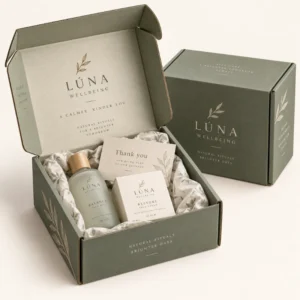
Custom printed ecommerce packaging is packaging made for online orders and printed with your brand, so a delivery feels like an extension of your shop rather than a plain parcel. It covers mailers, shipping boxes, tissue, inserts and cards that work together to protect the order and to make opening it memorable. For online sellers, good ecommerce packaging can encourage repeat orders, reviews and social sharing, because the unboxing is often the only physical contact a customer has with your brand.
Custom printed ecommerce packaging that turns a delivery into a brand moment
When a customer buys online, they do not walk into a shop, browse shelves or speak to staff, so the parcel carries a great deal of brand responsibility. A printed box, a branded tissue wrap and a short thank you card can recreate some of that shop feeling in a few seconds. The best ecommerce packaging feels intentional without being wasteful: a clear logo, a consistent colour palette and a tidy interior are often more persuasive than layers of extra packaging. Think about the order of opening, because the customer will see the outer box, then the tissue or insert, then the product, and each layer should feel like a natural next step rather than a hurdle.
Choosing the right packaging mix for your online shop
Most online shops need a mix rather than a single box. A mailer box suits products that benefit from a presentation led opening, such as cosmetics, jewellery, stationery and gift sets. A shipping carton suits heavier, larger or multi item orders where strength and stacking matter more than the opening moment. Tissue, a belly band or a printed card can be added to either style to lift the opening without changing the outer box. If you sell both single items and sets, a small mailer and a larger shipping box may be more practical than one compromise size that fits neither well.
Balancing protection, presentation and packing time
Ecommerce packaging must work on a busy packing bench as well as in the customer’s hands. A design that takes too long to assemble will slow dispatch during peaks, while a design that is too simple may feel plain on opening. Choose inserts that can be placed quickly, tissue that folds neatly and a closure that is secure without needing excessive tape. Test the pack with a real order, time the packing process and check the result after a gentle shake, because a pack that looks good on a desk but fails in transit will create returns and disappointed customers.
Materials, print and sustainability for online orders
Corrugated board is the workhorse of ecommerce packaging, because it protects during transit and can be printed inside and outside. Kraft board gives a natural, honest look that suits many independent shops, while white board gives brighter colours and a cleaner, more modern feel. Card inserts, tissue and printed cards can add branding without adding much weight, which matters for postage. Many customers also judge packaging on sustainability, so consider board that can be recycled, inks and finishes that do not hinder recycling, and a design that avoids unnecessary layers. A simple note inside the box explaining how to recycle or reuse the packaging can help, as long as it is accurate for the materials you actually use.
Print that works across mailers, boxes and inserts
Print should be consistent across every piece of ecommerce packaging, so a customer who receives a mailer one month and a shipping box the next still recognises your brand. Use the same logo, the same main colours and a similar type style across boxes, tissue and cards, and keep the most important elements, such as the logo and a short message, in the same relative positions where possible. For inserts, keep text short and useful, such as care instructions, a return note or a discount for a future order, rather than filling every surface with marketing. Clear, useful print is more likely to be read and kept than a dense block of text.
Returns, repeat orders and the second use of packaging
Ecommerce packaging often needs to handle returns as well as first deliveries, so think about whether a box can be resealed cleanly or whether a returns label area should be left clear. Packaging that can be reused, such as a sturdy mailer that a customer can keep for storage, can extend brand visibility beyond the first opening. If you include a card that encourages a repeat order, make sure the offer or message is clear and easy to act on, and avoid cluttering the card with too many messages at once. A single clear next step is more effective than several competing calls to action.
Ordering ecommerce packaging and planning for growth
Ordering starts with your bestselling products and order types, not with a single box size. List your typical single item orders, multi item orders and gift orders, and note the sizes and weights for each, because that list will reveal whether you need one, two or three packaging styles. Artwork approval is the stage to check logo placement, colour consistency across box types, and any text about returns or care, because those details affect every order. After final artwork approval, standard ecommerce packaging usually takes 10 to 14 working days and corrugated ecommerce packaging usually takes 12 to 15 working days, and those timings are planning guides rather than guaranteed delivery dates. See the delivery information page for current guidance.
What to include in your ecommerce packaging brief
A helpful brief includes product sizes and weights, typical order combinations, board and colour preferences, print areas and any inserts or cards you want. Mention your peak periods, such as seasonal sales, because a packaging system that works at normal volume should also work when order numbers rise. If you use a fulfilment centre, mention their packing process, because a design that works in your studio may need to be simpler for a third party team. When you request a quote for ecommerce packaging, share those details so the advice can be practical rather than generic.
Testing ecommerce packaging with real orders
Before a larger run, pack several real orders in the proposed packaging, including a single item, a multi item order and a gift order, and check each one for movement, presentation and packing time. Open each pack as a customer would and note anything that feels awkward, wasteful or unclear. You can also browse the full shop range for related styles, and visit the Personalized Mailer Boxes home page for an overview. For related packaging, see custom print mailer boxes and custom printed boxes for shipping.
Frequently asked questions
What does ecommerce packaging usually include?
It usually includes a printed mailer or shipping box, plus tissue, an insert or a card that protects the product and presents your brand on opening. The exact mix depends on your products, order types and whether presentation or strength matters most.
Should I choose a mailer or a shipping box for online orders?
Choose a mailer for presentation led products such as cosmetics, jewellery and gift sets, and a shipping carton for heavier, larger or multi item orders where strength and stacking matter more. Many shops use both styles for different order types.
How can ecommerce packaging support repeat orders?
Consistent branding, a tidy opening and a clear, useful card can encourage a customer to return. Keep the card message simple, with one clear next step, and make sure any care or returns information is easy to find.
How long does ecommerce packaging take after artwork approval?
After final artwork approval, standard packaging usually takes 10 to 14 working days and corrugated packaging usually takes 12 to 15 working days. Those timings are planning guides, not guaranteed delivery dates.