
custom postage box packaging
Showing the single result
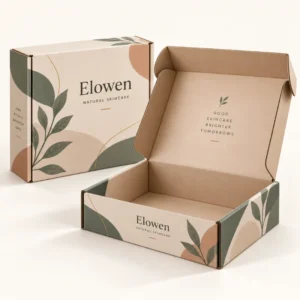
Good custom postage box packaging is a complete system, not just a box, because the outer box, the insert, the closure, and the label all work together to get a parcel to its destination safely and attractively. When each part is specified for the product and the posting format, parcels arrive undamaged, look professional on opening, and are easier for packing teams to prepare consistently. When any part is mismatched, even a strong box can fail, because a loose insert, a weak seal, or a poorly placed label can undo good design.
Why custom postage box packaging needs a whole pack view
Many posting problems come from thinking about the box alone. A box that fits the product but has no insert may allow movement, while a good insert in an oversized box may still shift because the insert itself is not held in place. A secure closure matters just as much, because a parcel that opens in a sorting centre can lose items or arrive damaged, even if the board is strong. Labels, tape, and void fill complete the system, and each should be chosen with the product, the box, and the carrier in mind.
A whole pack view also helps with cost and sustainability. Right sizing the box reduces board use and void fill, a fitted insert reduces damage and returns, and paper based materials throughout the pack make recycling simpler for the customer. Over time, a consistent pack specification makes packing faster, because teams learn one reliable routine for each order type, rather than improvising with whatever boxes and fill are at hand.
The parts of a complete postal pack
A complete postal pack usually includes a corrugated outer box, an insert or divider where needed, tissue or paper wrap for presentation or surface protection, a secure closure such as a self locking design or tape seal, and a label placed on a flat area clear of folds. For fragile items, additional cushioning or a foam fit may be needed inside the box, while for flat items, a precise die cut depth may be the most important feature. Each part should be listed in the pack specification, so repeat orders use the same combination.
How inserts and void fill work together
Inserts hold products in a set position, while void fill occupies any remaining space and cushions against knocks. A fitted insert usually needs little void fill, and adding too much loose fill can make the pack look messy and hide the product on opening. Where void fill is needed, paper based options keep the pack widely recyclable, while plastic fill may need a separate disposal route. The goal is a pack that feels solid when shaken gently, without being overfilled.
Matching postal packaging to Royal Mail size bands
For UK posting, size and weight bands decide how a parcel is handled and priced, so packaging should be planned with those bands in mind. Royal Mail publishes a size and weight guide that sets out the limits for letter, large letter, small parcel, and medium parcel formats, including maximum length, width, depth, and weight for each format. A large letter, for example, must stay within a strict thickness limit, so a flat postal box for that format needs a precise cut and a firm board that does not bulge when filled. A small parcel allows greater depth and weight, and suits thicker products or multi item orders.
Always measure the packed parcel, not just the empty box, because inserts, wrap, closure, and labels can add size or weight. A test parcel sent through the normal route can confirm whether the packed size stays within the intended band, and whether the box holds its shape through handling. Carrier limits can change, so check the current guide before finalising a new postal pack, especially for a high volume product where a small size change affects many orders.
Designing for flat, fragile, and multi item parcels
Flat parcels need depth control and surface protection, so a die cut postal box with a firm, flat profile often works best. Fragile parcels need cushioning and separation, so a stronger board, a fitted insert, and careful closure are more important than a minimal design. Multi item parcels need dividers or trays that keep items apart, so they do not knock or scratch each other, and a box size that fits the full set without forcing the lid closed. Each parcel type has a different priority, and the pack should be designed around that priority.
Protecting corners, edges, and surfaces in transit
Corners and edges are the parts of a parcel most likely to take impact, so board strength and insert design should protect those areas first. A product that touches the box wall directly is more vulnerable than one held centrally by an insert, and a delicate surface can be scratched by a divider that is too tight or too rough. Tissue, paper wrap, or a smooth insert surface can protect finishes, while a snug insert keeps the product away from the walls. Testing with the real product reveals these risks better than a drawing alone.
Branding, artwork, and ordering postal packaging
Branding on postal packaging should be clear, durable, and appropriate for handling. A logo and brand colours on the outside help recognition, while a short message or care instruction inside adds value on opening. Print should resist scuffs through sorting and delivery, so the finish matters as well as the design, and text should stay clear of folds, seams, and label areas. A proof checked at actual size, on the chosen board, is the best way to confirm that the finished pack will look as intended.
When ordering, share product dimensions, packed weight, the number of items per parcel, the intended posting format, print requirements, and quantity. Note any inserts, closures, or special handling needs, because these affect the structure and the specification. Standard lead times after final artwork approval are 10 to 14 working days, and corrugated boxes take 12 to 15 working days. These are production lead times, not a guaranteed delivery date, so allow time for artwork approval, sample testing, and delivery planning.
Packing routines that keep quality consistent
Consistent packing routines protect quality as order volumes grow. A simple written guide for each pack type, covering box folding, insert placement, product orientation, closure, and label position, helps new team members pack to the same standard. Keep boxes flat until needed, store inserts and tissue near the packing bench, and check a sample parcel at the start of each packing session. Small routines like these prevent the gradual drift that leads to damaged parcels or inconsistent presentation.
Checking a postal pack before dispatch
Before dispatch, check that the box closes cleanly, the label is flat and legible, the seal is secure, and the parcel feels solid without rattling. If a parcel rattles, the insert or void fill needs adjustment, and if the lid bulges, the box may be overfilled or the wrong size for the contents. A quick check at this stage catches problems before they reach the customer, and it builds confidence in the pack specification over time.
Explore custom mailer boxes, browse shop all packaging, request a pack specification via get a quote, and check delivery information. For carrier size limits, see Royal Mail size and weight guide.
Frequently asked questions
What is custom postage box packaging?
It is the complete postal pack for a product, including a printed outer box, inserts or dividers where needed, a secure closure, and a label area, all specified together so the parcel is protected and well presented.
How does postage box packaging differ from a single postage box?
A single box is only the outer container, while postage box packaging covers the whole system, including inserts, void fill, closure, and label placement. Specifying the system together gives better protection and more consistent results.
How do I keep a parcel within a Royal Mail size band?
Measure the packed parcel, including box, insert, wrap, and closure, and check size and weight against the current Royal Mail size and weight guide before production. Test a real packed parcel through the normal route where possible.
What packaging suits fragile items for posting?
Fragile items usually need stronger corrugated board, a fitted insert or foam fit to hold the product centrally, and a secure closure. Test the pack with the real product, including a drop and tilt check, before a full order.
How long does custom postage box packaging take after artwork approval?
Standard lead times after final artwork approval are 10 to 14 working days, and corrugated boxes take 12 to 15 working days. These are production lead times, not a guaranteed delivery date.