
custom packaging for ecommerce
Showing the single result
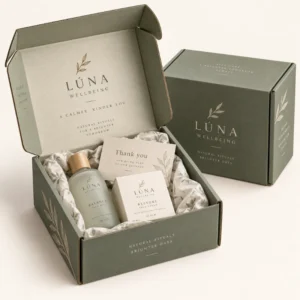
For online sellers, custom packaging for ecommerce turns a plain parcel into a clear brand moment, protects the product inside, and helps the order arrive looking as good as it did when it left the packing bench. A box made to fit the product, printed with the right colours and message, and closed securely does far more than carry goods from warehouse to doorstep. It shapes first impressions, reduces damage and returns, and gives customers a reason to order again.
Why custom packaging for ecommerce matters for online sales
Online shoppers cannot touch a product before they buy it, so the parcel is often the first physical contact they have with a brand. A well made box, a neat interior, and a clear logo can turn that moment into something memorable, while a loose, oversized, or damaged box can undo a great deal of good work done on a website or in advertising. Good ecommerce packaging also works hard in practical terms. It keeps items still during transit, reduces the need for extra void fill, and helps packing teams work faster because the box fits the product first time.
Right sizing matters for another reason. A box that is much larger than its contents wastes board, takes up more storage space, and can allow products to move and knock against each other. A snug fit, with a suitable insert where needed, keeps the product centred and protected. For brands that ship every day, that consistency also makes costs easier to predict, because packing time, void fill use, and damage rates all become more stable.
What good ecommerce packaging includes
A complete ecommerce pack usually starts with a mailer box or shipping carton in corrugated board, chosen for the weight and fragility of the product. Inside, tissue, a printed insert card, or a fitted divider can present the product well and add useful information, such as care instructions, a thank you note, or details about returns. Tape, labels, and seals should be easy to apply and hard to tamper with, so the parcel stays closed through sorting and delivery.
Choosing board strength for the journey
Light, flat items such as printed materials or soft accessories may suit a lighter board, while heavier or fragile goods need stronger corrugated board and extra internal protection. The choice should follow the product weight, the number of items in the box, and how far the parcel will travel. A supplier can advise on board grade once product dimensions and packed weight are known, and a sample pack can confirm the fit before a full order is placed.
Designing branded ecommerce boxes that customers remember
Branding on ecommerce packaging works best when it is clear, simple, and consistent with the rest of the brand. A logo on the outside helps recognition on the doorstep, while print on the inside can surprise and delight when the box is opened. Many brands use one strong colour, a short message, and clean typography rather than covering every surface with detail, because a calm design is easier to read at a glance and photographs well for social sharing.
Artwork needs care at the preparation stage. Logos should be supplied at a size that stays sharp in print, colours should be checked against a proof, and important text should sit clear of folds and cut lines. It also helps to think about the unboxing order: what the customer sees first, how the product is revealed, and where an insert card or offer sits so it is noticed rather than lost under tissue. Small choices like these make the opening feel considered rather than rushed.
Print finishes and colours for online brands
Full colour print can reproduce photographs, patterns, and detailed artwork, while a simpler one or two colour design can look confident and clean, especially on natural kraft board. Finishes such as matte or gloss lamination change how a box feels and how well it resists scuffs, and foil or embossing can add a premium touch for gift ranges or limited editions. The right finish depends on the brand position, the product, and how the box will be handled in transit.
Keeping print consistent across repeat orders
Repeat orders should look the same as the first run, so it is worth agreeing the exact board, print method, and colour references before production begins. Keeping a record of the approved artwork, the box dimensions, and the insert specification makes reordering straightforward and reduces the risk of a subtle change that customers notice. When a brand updates its logo or packaging design, a fresh proof should be approved before the new version goes into full production.
Packing, sustainability, and practical ordering advice
Sustainable ecommerce packaging is now a buying factor for many customers, and it is also good business sense. Corrugated board is widely recyclable, and many brands now choose kraft board, paper based void fill, and paper tape so the whole pack can be recycled together. Clear disposal guidance printed on the box or on an insert helps customers recycle correctly, and avoiding mixed materials where possible makes recycling simpler at the end of the parcel journey.
Ordering in a planned way also helps. Start with accurate internal dimensions, measured around the product plus its insert and any protective wrap, and confirm the packed weight. Share the number of items per box, the expected order volume, and any seasonal peaks, so the specification can cope with busy periods as well as quiet weeks. For standard mailer boxes after final artwork approval, lead times are 10 to 14 working days, and for corrugated boxes the lead time is 12 to 15 working days. These are production lead times, not a guaranteed delivery date, and they should be planned around launch dates and stock levels.
How to brief a quote for ecommerce packaging
A clear brief speeds up a quote and leads to a better result. Include product dimensions, packed weight, box style preference, print requirements, insert needs, and the quantity required. Note any special requirements, such as a tear strip for easy opening, a returns seal, or inside print, because these affect the structure and the tooling. A short note about the brand, the customer, and how the parcel should feel on opening helps the supplier suggest a structure that fits both the product and the brand.
Testing before a full run
Before committing to a large quantity, test a sample pack with the real product inside. Check the fit, the closure, the ease of opening, and how the pack survives a drop from bench height onto a firm surface. Ask a colleague who has not seen the design to open it without guidance, because that reveals whether instructions, seals, and inserts are clear. Any change at sample stage is far easier than a change after a full production run.
For a full range of printed options, explore custom mailer boxes and shop all packaging. For a tailored specification, use get a quote and check delivery information for lead time guidance.
Frequently asked questions
What is custom packaging for ecommerce?
It is packaging made to fit a specific product and brand, rather than a generic stock box. It usually includes a printed mailer box or carton, plus inserts or tissue where needed, so the product is protected and presented well on arrival.
How do I choose the right box size for online orders?
Measure the product with its insert and protective wrap, then choose internal dimensions that give a snug fit without squeezing the product. A box that is too large wastes board and allows movement, while a box that is too small can damage the contents or fail to close cleanly.
Can ecommerce packaging be recyclable?
Yes, corrugated board and many paper based inserts are widely recyclable, especially when plastic tape and mixed material void fill are avoided. Check the final materials, coatings, and adhesives with your supplier, and add clear recycling guidance for the customer where helpful.
What artwork do I need for printed ecommerce boxes?
Supply a clear logo and artwork at a size that stays sharp in print, with colours checked against a proof. Keep important text clear of folds and cut lines, and approve a proof before full production so the finished box matches the design intent.
How long does standard ecommerce packaging take after artwork approval?
Standard lead times after final artwork approval are 10 to 14 working days, and corrugated boxes take 12 to 15 working days. These are production lead times, not a guaranteed delivery date, so allow time for artwork checks and delivery planning.