
custom mailer boxes cheap
Showing the single result
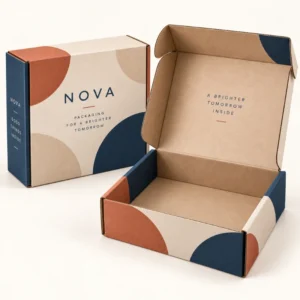
Custom mailer boxes cheap is a search for good value, not a request for the lowest possible box at any cost. The aim is a box that protects the product, carries your branding clearly and fits your budget across the whole order, including packing time and damage rates. When specification choices are made deliberately, custom mailer boxes cheap can still look professional and arrive in excellent condition.
What custom mailer boxes cheap really means
Value in packaging comes from the total effect of the box, not from a single unit figure in isolation. A box that is slightly more robust but prevents damage, or that packs faster because it folds cleanly, can offer better overall value than a thinner box that slows packing or leads to replacements. The same logic applies to print. A simple, well placed logo on kraft can look intentional and premium, while a complex full colour design on the wrong board can look muddled and waste its extra specification.
Think about where your customers actually notice value. They notice a box that arrives undamaged, opens easily and looks like it belongs to your brand. They rarely notice whether you chose a premium finish or a simpler one, unless the finish is part of your brand story. Spending specification where it is visible and useful, and simplifying where it is not, is the core of a sensible budget approach.
Specification choices that affect value
Board choice is the first lever. Kraft corrugated board often gives a strong, natural look without the need for heavy print coverage, because the material itself carries character. A single colour print can be enough for a clear logo and a short message, while full colour print is best reserved for designs that genuinely need photography or complex colour. Size is the second lever, because a box that fits well uses less board and less filling, and it can also reduce parcel weight.
Finish is the third lever. Matte and gloss lamination protect print and improve handling, but they are not essential for every brand. If your design is bold and simple, an unlaminated print on good board can look excellent and keep the specification straightforward. If your boxes will be handled heavily or stored for a long time, a protective finish may be worth keeping, because scuffed print undermines the value you saved elsewhere.
When simple print works best
Simple print works best when your logo is strong, your colours are bold and your message is short. A large logo, a clear brand name and one line of text can fill a panel without crowding it, and they reproduce reliably on kraft and white board alike. Simple print also proofs faster, because there are fewer colour and alignment details to check, which helps when you need a quick turnaround.
Avoiding false economies in cheap mailer boxes
The most expensive cheap box is one that fails in transit. A board that is too thin for the product weight can crush at the corners, while a box that is too large allows movement that causes scuffs and breakages. A closure that does not hold can open in a sorting centre, and a print area that is too small can leave branding illegible. Each of these faults creates extra work, replacement parcels and disappointed customers, which quickly outweighs any saving on specification.
Test the specification against real packing conditions before committing to a large run. Pack the actual product, close the box as your team would, and handle it as a courier might, including stacking and turning. Check the corners, the lid closure and the interior after opening. That practical test is a better guide to value than any specification sheet alone.
Quantity, storage and repeat ordering
Ordering a quantity that matches your real sales pattern helps value in two ways. It avoids tying up cash and storage space in boxes that sit unused, and it avoids frequent small reorders that interrupt packing. Flat packed boxes store efficiently, but they still need dry, clean storage away from direct sunlight and heavy stacking that can crease the board. Keep a note of the exact specification, so a repeat order matches the first run without a new round of sampling and proofing.
If you sell seasonal products, plan the main box size around your core range and use inserts, tissue or cards to adapt it for special editions. That approach keeps your main specification consistent while still allowing a seasonal look, which is often more economical than creating a separate box for every short promotion.
Designing for a smaller budget
Design for the panel, not for the whole box at once. Choose one hero panel for the logo, use the side panels for a pattern or a short message, and keep the interior simple with a thank you note or a care tip. That structure looks complete without requiring complex artwork on every surface, and it keeps proofing focused on the panels that matter most.
How to get a clear quote without prices online
This site operates on a quote only basis, so you will not see a fixed figure on a product page. That approach allows the quote to reflect your exact size, board, print and quantity, rather than forcing your order into a generic tier. To get a useful quote, share product dimensions, the number of boxes you need, whether you need print on one side or both sides, and any insert or finish you have in mind.
Use the get a quote page to send those details, browse the custom mailer boxes range for related styles, and check the delivery information page for production timing. Standard production after final artwork approval is 10 to 14 working days, corrugated boxes are 12 to 15 working days, and rigid or specialist boxes are 13 to 16 working days. Those ranges help you plan, but the quote will confirm the timing for your specification.
Questions that improve a budget quote
Ask what would change if you simplified print coverage, changed board or adjusted quantity, because those comparisons reveal where value is gained or lost. Ask whether a different size would reduce board use without harming protection, and whether an insert would allow a simpler box to perform better. A quote that explains those trade offs is more useful than a quote that simply confirms a single specification, because it lets you choose with confidence.
A practical value checklist
Check fit, board strength, closure, print legibility and packing speed together, rather than judging any one factor alone. If all five perform well, the box offers good value even if it is not the most elaborate specification available. If one factor fails, address that factor first, because a single weakness can undermine an otherwise sensible order.
Posting and packaging duties
Check the finished parcel against the Royal Mail small parcel guide before you book postage, because size and weight limits affect which service suits the parcel.
Checking duties that may apply to sellers
If you supply packaged goods in volume, read the GOV.UK guidance on extended producer responsibility for packaging to understand whether packaging duties apply to your business. That check is separate from box specification, but it helps you plan responsibly as order volume grows.
Frequently asked questions
Are cheap custom mailer boxes still good quality?
They can be, provided the board, size and closure suit the product. Value comes from a specification that protects well and packs efficiently, not from cutting corners on strength.
How can I keep custom mailer boxes affordable?
Choose a fitting size, consider simple print on kraft or white board, and avoid finishes or complex artwork that do not add visible value for your customers.
Is full colour print always worth it?
Not always. Full colour suits photography and complex designs, while a bold single colour logo often looks cleaner and proofs more reliably on a budget specification.
Why are there no prices shown online?
This site works on a quote only basis, so each quote reflects your exact size, board, print and quantity rather than a generic figure.
How long does production take after artwork approval?
Allow 10 to 14 working days after final artwork approval for standard production, with 12 to 15 working days for corrugated boxes and 13 to 16 working days for rigid or specialist boxes.