
custom mailer box with insert
Showing the single result
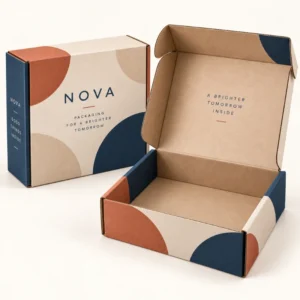
A custom mailer box with insert is a printed mailer box that includes a shaped divider, tray or support made to hold your product in one exact position. The insert stops the contents sliding, turning or knocking against each other during delivery, and it presents the product neatly the moment the lid is lifted. For a single item that deserves a careful reveal, a custom mailer box with insert gives both protection and presentation in one package.
Why a custom mailer box with insert protects better
A box without an insert relies on the product fitting tightly or on loose filling to fill empty space. That approach can work for sturdy items, but it often leaves fragile or oddly shaped products free to move. An insert creates a defined home for the product, with walls, cut outs or folds that grip the shape without squeezing it. The result is less movement, fewer scuffs and a calmer unboxing, because the customer lifts out an item that is exactly where it should be.
Inserts also help with packing speed. When the position is obvious, staff do not need to improvise with extra filling for every order, and the finished parcel looks consistent from one shipment to the next. That consistency matters for subscription brands and gift sellers, where customers compare boxes online and notice when one order looks polished and another looks improvised.
Insert materials and how they behave
Card inserts are light, printable and easy to recycle with the box, and they suit cosmetics, candles in tins, stationery and many retail products. Corrugated inserts add more structure and suit heavier items, because the fluted board absorbs shock while keeping the layout simple. Foam inserts suit delicate instruments, glass and precision items, because the material can be cut to a close profile and cushions each edge. A fabric lined insert suits jewellery and premium gifts, where touch and appearance are part of the product experience.
The right material depends on weight, fragility, shape and the impression you want to create. A light product in a heavy foam insert can feel over engineered, while a heavy product in a thin card insert can bend or tear. Share the product weight and the surfaces that must not be scratched, and the insert can be matched to those needs rather than chosen on appearance alone.
Card inserts for everyday products
Card inserts work by folding into compartments, sleeves or cradles that hold the product upright. They can be printed to match the box, which turns the interior into a second branding surface, or left plain for a clean, practical look. Because card is flat before assembly, it stores efficiently and adds little weight to the parcel, which helps when you ship in volume.
Sizing a custom mailer box with insert
Sizing starts with the product, not the box. Measure length, width and depth at the widest points, including lids, caps, handles or protruding parts that are easy to overlook. Then allow a small clearance so the product slides in and out without forcing, while still being held firmly enough that it does not rattle. The insert thickness also matters, because a thick foam layer or a folded card wall takes up internal space that must be included in the box dimensions.
If the product has more than one part, map the layout before choosing the box depth. A bottle and a small card, for example, may need separate compartments at different heights, while a set of flat items may suit a layered tray. Sketch the layout from above and from the side, even roughly, and you will spot problems early, such as a lid that cannot close because a cap sits too high, or a compartment that leaves a visible gap.
Layouts for single items and small sets
A single item layout usually uses a central cradle with clear space around it, so the product is the clear focus when the box opens. A two part layout may place the main item centrally and a smaller item, such as a sample or a care card, in a side pocket. A gift layout may add a raised platform, so the product sits slightly higher and is easier to lift out. Each layout should allow the customer to remove the product without tearing the insert, because a damaged insert spoils an otherwise careful presentation.
Think also about the order in which items are revealed. The first item seen sets the tone, so place the hero product where the eye lands first and keep instructions or extras underneath or to one side. That simple sequencing turns packing into storytelling, without adding complexity to the box itself.
Foam inserts for fragile items
Foam inserts are cut to the product profile, which spreads contact across a wider area and reduces pressure points. They suit glass, ceramics, electronics and items with sharp edges or polished surfaces. Foam can be supplied in layers, so a product can sit in a shallow recess on top while accessories sit in a lower layer, keeping the whole set organised in a single box.
Print, finish and the unboxing moment
The box exterior sets expectations, but the insert shapes the moment of opening. A printed insert can carry a message, a pattern or a simple diagram that explains how to use the product. A plain kraft insert can suit a natural brand, while a white insert can make colours pop and keep the interior bright. The finish of the box should also suit the insert, because a premium insert inside a flimsy box feels inconsistent, just as a plain insert inside a highly finished box can feel like a missed opportunity.
For related ideas, explore the custom mailer boxes with inserts range and the custom mailer boxes range, then use the get a quote page to describe your product and insert needs. Standard production after final artwork approval is 10 to 14 working days, corrugated boxes are 12 to 15 working days, and rigid or specialist boxes are 13 to 16 working days. Check the delivery information page for the full process.
What to tell the team about your product
Share accurate dimensions, weight, fragility and any parts that must stay upright or apart. Mention whether the product will be packed with tissue, a card or a second item, and whether customers need to lift it out easily or will keep it stored in the insert. Photographs from several angles are helpful, especially for curved or irregular shapes, because they reveal details that a single measurement cannot convey.
Testing the fit before a full run
A sample or a careful flat proof check is worth the time, particularly for fragile or high value items. Place the real product in the insert, close the lid, turn the box gently and open it again. Check for movement, pressure marks and ease of removal. That simple test often reveals a small adjustment, such as a deeper recess or a wider finger notch, that improves the whole experience.
Posting and packaging duties
Check the finished parcel against the Royal Mail small parcel guide before you book postage, because size and weight limits affect which service suits the parcel.
Checking duties that may apply to sellers
If you supply packaged goods in volume, read the GOV.UK guidance on extended producer responsibility for packaging to understand whether packaging duties apply to your business. That check is separate from box specification, but it helps you plan responsibly as order volume grows.
Frequently asked questions
What does an insert do in a mailer box?
It holds the product in a fixed position, reduces movement in transit and presents the item neatly when the box is opened.
Which insert material is best for fragile items?
Foam is often best for fragile items because it can be cut to the product shape and cushions edges. Card and corrugated inserts suit lighter and sturdier products.
Can an insert hold more than one item?
Yes, inserts can be made with separate compartments for a main product and smaller items such as samples, cards or accessories.
How do I size a box with an insert?
Measure the product at its widest points, allow a small clearance for easy removal, and include the insert thickness in the internal box size.
How long does production take after artwork approval?
After final artwork approval, allow 10 to 14 working days for standard production, 12 to 15 working days for corrugated boxes, and 13 to 16 working days for rigid or specialist boxes.