
custom made shipping boxes
Showing the single result
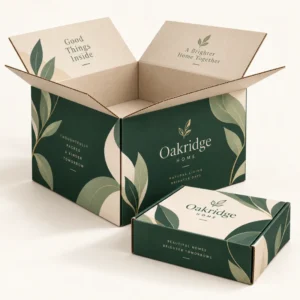
Custom made shipping boxes are boxes built around your product, your brand and the journey the parcel will make. They replace a box that is almost the right size with one that fits properly, protects better and looks like it belongs to your business. For any business that posts orders regularly, custom made shipping boxes can reduce damage, reduce wasted void fill and make every delivery feel more professional.
Why choose custom made shipping boxes for posting orders
A standard box forces your product to adapt to the packaging. A custom made box does the opposite. Length, width and depth are set from the product itself, with room for the protection it actually needs and no large empty space for items to move around in transit. That closer fit helps fragile goods stay in place, helps heavier goods sit squarely on the base and helps lighter goods avoid being crushed by other parcels stacked on top.
Print adds a second job to the same box. Your logo, brand colours and a clear handling message can sit on the outside, so the parcel is recognisable before it is opened. Inside print can carry a thank you note, care instructions or a simple reorder reminder. When the box and the product inside feel like part of one experience, customers are more likely to remember the brand and to trust the next order.
What makes a shipping box strong enough for transit
Strength starts with board choice. Single wall corrugated board suits many everyday parcels, while double wall board gives extra stacking strength for heavier or more valuable goods. The fluted layer inside corrugated board absorbs knocks and vibration, while the outer liners resist scuffs, moisture from handling and pressure from strapping. Choosing the right grade matters more than simply choosing the thickest board available, because an overspecified box adds weight and cost without adding useful protection.
Matching board grade to parcel weight
Light clothing, books and soft goods often travel well in a lighter corrugated grade with a snug fit and a small amount of tissue or paper void fill. Glass, ceramics, electronics and liquids need a stronger grade, internal dividers or inserts and a fit that stops movement in every direction. Very heavy items benefit from a reinforced base, strong tape seals and a size that lets the carrier handle the parcel safely. If you are unsure, send the product dimensions and weight when you request a quote so the board can be matched to the real load.
Sizes, styles and finishes for custom made shipping boxes
Shipping boxes come in many forms beyond the familiar taped carton. A regular slotted carton is simple, economical and easy to store flat. A mailer style shipping box with a tuck lid gives a cleaner opening experience and suits online orders where presentation on opening matters. A crash lock base speeds up packing for high volume fulfilment, while a full overlap flap adds strength to the top and bottom for heavier parcels. The right style depends on how fast you pack, how the customer opens the parcel and how much protection the contents need.
Size is worth measuring carefully. Measure the product at its longest, widest and tallest points, then add space for protection and for any insert that will hold it in place. A box that is only a few centimetres too large in each direction can double the void fill needed and can push a parcel into a larger carrier size band. A box that is too tight risks pressure on corners and edges. A short test pack with the real product is the fastest way to confirm a size before a full run.
Printing and branding options to consider
Print can be as simple as a single colour logo on the outside or as complete as full colour artwork on every panel, inside and out. Single colour print suits a clean, confident brand mark and keeps artwork simple. Full colour print suits illustration, photography and detailed patterns. Consider where the logo will be seen first, whether handling marks such as this way up or fragile need to be clear, and whether the inside should stay plain for a calm opening or carry a message that rewards the customer for opening the box.
Finishes that keep print looking sharp in transit
A matte finish gives a soft, modern feel and reduces glare on photography, while a gloss finish makes colours look brighter and helps resist light scuffing. Foil can highlight a logo or a short phrase for premium ranges, and embossing can add texture that customers notice when they pick the box up. Keep finishes practical for a shipping box. A finish that looks beautiful in a studio photograph but scuffs badly on a conveyor will disappoint, so ask for samples or proofs where a finish is new to your range.
Ordering, lead times and practical packing advice
Ordering starts with product size, quantity, board preference and artwork. A clear brief saves time and avoids a second proof. Include the product weight, whether items are fragile or liquid, how many items go in each parcel and whether the box will also be used for presentation on opening. The team can then advise on board, style and print so the finished box works for packing staff as well as for customers. For related presentation options, see the range of custom mailer boxes for online orders and the full shop range.
After final artwork approval, standard lead times are 10 to 14 working days, corrugated boxes are 12 to 15 working days and rigid or specialist boxes are 13 to 16 working days. These are production lead times, not a guaranteed delivery date, so allow time for artwork checks and for any proof you want to review. If you have a launch or a seasonal peak, share the date early so production can be planned around it. For delivery details, see the delivery information page.
Good packing habits protect even the best box. Seal the base fully, place the heaviest item at the bottom, fill remaining space so nothing can shift and seal the top with a neat tape run. Label clearly, keep the address away from seams where possible and avoid reusing a box that has lost its rigidity. When you request a tailored quote, use the get a quote form with your sizes and quantities.
Common mistakes to avoid when sizing a shipping box
The most common mistake is choosing a box for the largest product and using it for everything. That wastes board, void fill and carrier space. The second is forgetting the insert, sleeve or protective wrap when measuring, so the finished pack is tight and hard to close. The third is ignoring stacking. A parcel that travels well on its own can still be damaged if it cannot bear weight from parcels above it. Test the finished pack by stacking, shaking gently and dropping from a low height onto a firm surface before committing to a large quantity.
Checking a sample before a full order
A sample lets you check the fit, the print colour, the ease of assembly and the feel of the board in real hands. Fold it, tape it, pack the real product and open it as a customer would. Check that flaps close cleanly, that print is not lost on a fold and that any insert sits flat. Small adjustments at sample stage are quick. The same adjustments after a full production run are costly and wasteful.
Frequently asked questions
Are custom made shipping boxes suitable for fragile items?
Yes, when the board grade, internal fit and protection are chosen for the product. Glass, ceramics and electronics need a snug fit, suitable inserts or dividers and enough cushioning to stop movement. Share the product weight and fragility when you request a quote so the box can be specified correctly.
How do I choose the right size?
Measure the product at its longest, widest and tallest points, then add space for protection and inserts. A test pack with the real product is the best check. Avoid a box that leaves large empty space, because that space allows movement and increases void fill.
Can I print on the inside as well as the outside?
Yes. Inside print is often used for a thank you message, care instructions, a reorder reminder or a pattern that makes opening feel special. Outside print carries branding and handling messages that are seen during delivery.
How long does production take after artwork approval?
After final artwork approval, standard lead times are 10 to 14 working days, corrugated boxes are 12 to 15 working days and rigid or specialist boxes are 13 to 16 working days. These are production lead times, not a guaranteed delivery date.
Are corrugated shipping boxes recyclable?
Corrugated board is widely recyclable in the UK, but recyclability of a finished box also depends on coatings, tapes, labels and inserts used. Keep the pack as simple as possible and check local recycling guidance for any non paper elements.