
custom made cardboard shipping boxes
Showing the single result
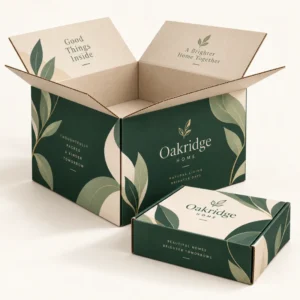
custom made cardboard shipping boxes are cardboard boxes cut and printed to your product size, rather than chosen from a fixed stock range. They use corrugated board in a grade matched to the weight and journey, with a size that reduces movement, void fill and damage. For businesses that ship regularly, a made to size cardboard box gives consistent protection, tidier packing and a more professional delivery.
Why custom made cardboard shipping boxes beat a stock size
A stock box is convenient, but it rarely fits a product exactly. If it is too large, staff fill the space with void fill, the product can still move, and the parcel costs more to send because of its size. If it is too small, the product may be squeezed, labels may be damaged, or the box may split under pressure. A custom made size removes that compromise: the internal dimensions follow the product and its protection, so packing is faster, protection is more reliable and the finished parcel looks intentional.
Custom sizing also helps with storage and handling. Boxes that share a footprint stack more neatly, palletise more efficiently and fit racking better than a mix of unrelated stock sizes. For businesses that pack on a bench or a conveyor, a consistent box size speeds up taping, labelling and quality checks. Over time, that consistency reduces packing errors, because staff learn one box and one packing method for each product range.
Understanding corrugated board grades
Corrugated board is made from a fluted layer between flat liners. The flute profile affects cushioning and print quality, while the liner and the number of walls affect strength. Single wall board, with one fluted layer, suits most everyday shipping: clothing, books, cosmetics, small electronics and other light to medium goods. Double wall board, with two fluted layers, suits heavier goods, stacked parcels and longer journeys where boxes may be handled several times. The right grade depends on packed weight, fragility and stacking, not on box size alone.
Choosing between single wall and double wall
Choose single wall board when the product is light, not fragile, and the parcel will be handled few times. Choose double wall board when the packed weight is high, the product is fragile, or parcels will be stacked on pallets or in a warehouse. If you are unsure, pack a test parcel in each grade, seal it, lift it and check for bowing, corner damage and movement after handling. The test is more reliable than guessing from weight alone, because shape and fragility matter as much as weight.
Designing custom made cardboard shipping boxes
Design starts with internal measurements. Measure the product with any lid, handle or protruding part, then add space for protection such as edge protectors, dividers or cushioning. Record the dimensions as length, width and height, and state whether they are internal or external, because a small misunderstanding here can make a box unusable. Also state the packed weight and whether the box will be taped, strapped or palletised, so the board and closure can be specified correctly.
Closure and style affect packing speed. A regular slotted carton, sealed with tape, suits most shipping and is easy to assemble. A self locking mailer style suits ecommerce orders where presentation matters, but it may not suit very heavy goods. Die cut handles help with lifting, but they weaken side panels, so they should be used only when the board grade allows it. If returns are common, a resealable strip or a second seal area can make the box easier for customers to reuse for a return.
Print and labelling on cardboard
Cardboard gives a large, practical print surface. A logo, brand colours and handling marks can be printed directly on the box, while a clear area must be kept for the delivery label. On brown kraft, bold one or two colour print often looks sharp, while on white board, full colour print gives more detail and brighter colours. Keep handling text large and simple, and place it on more than one face if parcels are often turned. Check a proof on the actual board colour, because print contrast changes significantly between kraft and white.
Reducing waste with a better fit
A made to size box usually uses less void fill, less tape and less outer material than an oversized stock box. That saves packing time and reduces waste for the customer, who receives less packaging to dispose of. Cardboard boxes can usually be recycled through household or business cardboard recycling, provided tape and labels are removed where local guidance asks for that. If you want to highlight recyclability, print clear recycling guidance inside the lid, where it is seen on opening rather than hidden under a label.
Ordering custom made cardboard shipping boxes
For a quote, provide internal size, packed weight, board preference, print artwork, quantity and storage format. Flat packed boxes save space, but check the flat pack size for very large boxes, and confirm how many boxes fit on a pallet or rack. Agree the proof process before production, and check the proof for size, board colour, print legibility and closure. After final artwork approval, corrugated lead times are 12 to 15 working days, as a production guide rather than a guaranteed date.
You can request a quote for cardboard shipping boxes with your sizes and board needs, and browse the full shop for related packaging. For a large size option, see custom large shipping boxes. Delivery guidance is on the delivery information page. When using Royal Mail, check parcel limits on the Royal Mail Tracked 24 service information page.
Testing a new cardboard box before volume
Before ordering in volume, pack a sample exactly as you would pack a customer order, including protection, inserts and the finished label. Seal it, lift it by the base, turn it gently and check for movement, bulging and corner damage. If the product moves, adjust the internal layout or the box size before committing to a run. Repeat the test after any change in product size, weight or protection, because a box that worked for one product may not work for a revised version.
Storing cardboard boxes well
Store flat packed boxes flat, dry and off the floor, away from damp and direct heat. Rotate stock so older boxes are used first, and keep boxes away from sharp racking edges that can dent the board. Check a sample from each delivery for size, print and fold quality before packing a full batch, so any fault is found early.
Frequently asked questions
What is the difference between single wall and double wall board?
Single wall board has one fluted layer and suits light to medium goods. Double wall board has two fluted layers and suits heavier goods, stacked parcels and longer journeys. Choose by packed weight, fragility and handling, not by box size alone.
How do I measure for a custom made cardboard box?
Measure the product with any lid or protruding part, then add room for protection. Give internal length, width and height, and state the packed weight, so the box and board can be specified correctly.
Can cardboard shipping boxes be printed?
Yes. Cardboard suits logo print, brand colours and handling marks. Keep the delivery label area clear, and check a proof on the actual board colour before production.
Are cardboard shipping boxes recyclable?
Cardboard is widely recyclable through household and business cardboard recycling, provided tape and labels are removed where local guidance asks for that. A better fit also reduces void fill and waste.
How long does production take after artwork approval?
Corrugated lead times are 12 to 15 working days after final artwork approval, as a production guide rather than a guaranteed date. Quantity, print complexity and board availability can affect timing.