
custom ecommerce packaging
Showing all 2 results
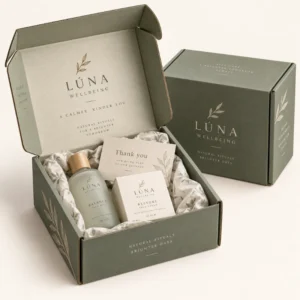
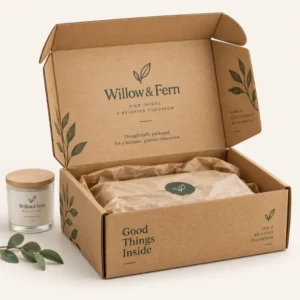
For online shops, custom ecommerce packaging is the complete branded system used to pack, protect and present an online order, from the outer box to inserts, tissue, tape and labels. It turns a routine delivery into a coherent brand experience while keeping products safe through handling and transit. For online shops, the packaging system is often the only physical part of the brand a customer touches.
What custom ecommerce packaging includes
A packaging system works as a set, not as a collection of unrelated items. The outer box sets the size and strength. An insert or divider holds products in place. Tissue or a sleeve softens the presentation and adds a layer of care. A card can carry a thank you note, care instructions or returns guidance. Tape seals the parcel, and the label carries the address clearly. When each element is chosen with the others in mind, packing becomes faster and the result looks consistent.
That consistency matters for repeat orders. A customer who orders twice should recognise the parcel at once, find the products in the same arrangement, and know where to look for returns information. Staff benefit too, because a standard packing pattern reduces mistakes, especially during busy periods when new team members may be packing. A documented system, with a packed sample to copy, is one of the simplest ways to keep quality steady as order volume grows.
Outer boxes, inner protection and presentation layers
Choose the outer box for the journey and the product, then build the inner layers around it. Corrugated mailers suit light to medium orders and print well inside and out. Deeper cartons suit heavier or multi item orders. Inside, a die cut card insert can hold bottles, jars or sets upright. Tissue can wrap apparel, gifts and delicate items. A sleeve or belly band can group a set together and carry a short brand message without adding a separate box.
Protection should be proportionate. Fragile items need a divider, a shaped insert or a higher board grade, not simply more loose filler. Heavy items need a stronger base and a firm tape seal. Soft goods need a clean, dust free inner layer and a box that does not crush the contents. Test each combination with a real packed sample, and check it after a short drop, a turn and a lift by the base, to see how it would cope with normal handling.
Branding across every touchpoint
Branding does not have to appear on every surface to be effective. A logo on the outer box, a pattern or message inside the lid, and a small card with the brand voice can be enough. Tape printed with a logo or a short line can seal the parcel and brand it at the same time. Labels should stay clear and scannable, so avoid covering them with decorative elements. The aim is a parcel that looks branded without making packing slower or delivery harder.
Designing custom ecommerce packaging for different shops
Apparel shops often need slim mailers, tissue and a simple insert that keeps folded garments neat. Beauty shops often need inserts that hold bottles upright, protect caps and prevent leaks from spreading to other items. Homeware shops often need dividers and stronger board for ceramics, glass and boxed sets. Food shops selling dry goods need sealed inner packs, a sturdy outer box and clear guidance on storage. Each trade has a different risk, and the packaging system should reflect that risk.
Subscription shops have an extra consideration, since the same customer receives a parcel regularly. The box, insert and card should stay recognisable month to month, with seasonal artwork used as a variation rather than a complete redesign. That familiarity builds anticipation and makes the parcel easy to photograph and share. Promotional sends and gift orders benefit from a similar approach, with a presentation layer that feels special without making the parcel hard to open or return.
Packing speed, storage and fulfilment
A good system packs quickly. Flat packed boxes store neatly by size. Inserts stack flat. Tissue and cards sit beside the bench in the order they are used. A simple packing guide, with a photograph of a correctly packed parcel, helps new staff and reduces variation. If fulfilment is handled by a third party, share the packing guide, the box specification and the insert layout, so parcels packed elsewhere match parcels packed in house.
Storage planning also affects cost in handling time. Ordering a small range of boxes and inserts that cover most orders is usually more efficient than holding many sizes that are rarely used. Review order data each season, retire sizes that no longer fit the range, and add a size only when a clear pattern of orders needs it. That discipline keeps the warehouse tidy and packing decisions simple.
Sustainability in a packaging system
Sustainability works best when it is built into the whole system. A well sized box uses less filler. Paper based inserts, tissue and tape alternatives are usually easier for customers to recycle than mixed materials. Corrugated board is widely recyclable when clean and dry. Keep any sustainability claim on the packaging to what the materials actually support, and give customers a short, clear recycling note rather than a long explanation that is unlikely to be read.
Ordering custom ecommerce packaging
Start by describing your products, your usual orders, your brand look and your packing process. Note any problems with current packaging, such as damaged corners, leaking bottles, wasted filler or slow packing. Share artwork if you have it, or describe the style you want, from natural kraft to bright full colour. A complete brief helps the specification cover the whole system, not just the outer box.
Lead time for standard packaging is 10 to 14 working days after final artwork approval, while corrugated elements take 12 to 15 working days after final artwork approval. Those timings cover production after artwork is agreed, and they are not guaranteed delivery dates, so allow extra time for proof changes and seasonal peaks. Ask for proofs of the main elements together, so you can see how the box, insert and card work as a set before production.
To begin, you can request a quote for your packaging system. You can also read the delivery information page, browse the shop range for ideas, or visit the about us page to learn more about the business.
Testing before a full run
Pack a sample exactly as staff would pack a real order, then handle it as a courier might. Check the seal, the label position, the insert fit and the presentation on opening. Ask a colleague who has not seen the design to open it and describe what they notice first. That fresh view often reveals a confusing card, a hard to open seal or a product that moves too much, all of which are easier to fix before a full run than after customers have received parcels.
Keeping the system consistent over time
Keep artwork, box sizes, board grades, insert designs and packing guides on file, and note any changes with a date. When a supplier or a material changes, test the new combination before it reaches customers. Consistency in packaging builds trust, because customers learn what to expect and staff learn a reliable routine. Small, planned changes are far better than sudden, unexplained ones.
Frequently asked questions
Question 1: Is ecommerce packaging just the box?
Answer: No. It includes the box, inserts, tissue or sleeves, cards, tape and labels, all working together to protect products and present the brand.
Question 2: How do I keep packing fast with custom packaging?
Answer: Use a small range of sizes, a standard packing pattern and a photographed sample at the bench. Flat packed boxes and inserts that stack neatly also speed up packing.
Question 3: What should I include for fragile products?
Answer: Use a shaped insert or divider, a suitable board grade and protection for corners and edges. Test a packed sample through normal handling before ordering in volume.
Question 4: How long does production take?
Answer: Standard packaging takes 10 to 14 working days after final artwork approval, and corrugated elements take 12 to 15 working days after final artwork approval.
Question 5: Can packaging be recyclable and still look premium?
Answer: Yes. Well sized corrugated boxes, paper inserts and simple, confident print can look premium while remaining widely recyclable when clean and dry.