
custom ecommerce boxes
Showing all 2 results
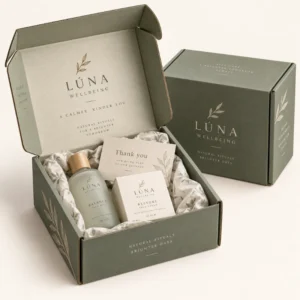
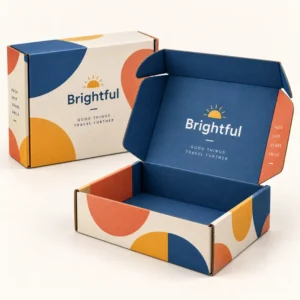
For online brands, custom ecommerce boxes are boxes made for online orders, sized to your products and printed with your branding to protect goods and shape the unboxing. They replace generic cartons with packaging that looks intentional from the doorstep to the first opening. For online brands, that first physical contact often decides whether a customer remembers the order fondly.
Why custom ecommerce boxes matter for online brands
Online customers cannot touch a product before buying, so the box becomes part of the product experience. A well sized box that opens cleanly, holds products neatly and carries a clear brand message feels considered. A box that is far too large, arrives crushed or looks anonymous can undo good work on the website, the product and the customer service. Packaging is therefore not an afterthought for ecommerce; it is the moment the brand becomes tangible.
Custom boxes also help operations. When the internal size fits the usual order, packing is faster, filler use falls, and parcels are less likely to move in transit. Staff can follow a consistent packing pattern, which reduces errors during busy periods. Customers receive a parcel that is easy to open, easy to store if needed, and easy to return if a size or item needs to change. Those practical gains matter as much as the visual impact.
Box styles for different online orders
Mailer boxes suit apparel, beauty, stationery, books and gift sets. They fold into a neat, self locking shape, print well inside and out, and present well on a doorstep photograph. Shipping cartons suit larger, heavier or multi item orders, where strength and stacking matter more than a slim profile. Product boxes suit single items that need retail style presentation inside a larger outer parcel, such as a candle, a bottle or a small electronics item.
Many brands use a small family of boxes rather than one size for all orders. A slim mailer can cover single item orders, a medium mailer can cover standard baskets, and a deeper carton can cover large or multi item orders. That range keeps most parcels close to the right size, which helps control filler, parcel dimensions and the customer impression. Review order data before choosing sizes, and look for the basket combinations that occur most often.
Designing for the unboxing moment
Think about the sequence a customer follows. First they see the outside, then they break the seal, then they see the inside and the products. Each stage can carry a different message. The outside can carry the logo and a simple, confident design. The inside can carry a pattern, a welcome line or a short note. The products themselves can sit in tissue, in a printed sleeve or in a shaped insert. When those stages work together, the unboxing feels planned rather than accidental.
Materials, print and finishes for custom ecommerce boxes
Corrugated board is the usual choice for ecommerce boxes because it protects well and prints cleanly. E flute suits slim mailers and light to medium orders. B flute suits heavier orders and goods that need more cushioning. Kraft board gives a natural look that suits artisan, food and lifestyle brands. White board gives brighter colour for bold graphics, photography style artwork and clean minimal designs.
Print options range from a single colour logo to full colour artwork across all panels. Inside print is a strong choice for subscription and gift brands, since it rewards the customer at the moment of opening. Finishes can change the feel without changing the artwork. Matte lamination feels soft and modern. Gloss lamination makes colour brighter. Foil can lift a logo, a name or a seasonal message, while spot gloss can draw attention to a single detail. Use finishes sparingly, so the box still reads clearly at a glance.
Sizing, inserts and product protection
Start by listing your best selling products and your most common order combinations. Measure each product, including any bottle cap, lid or sleeve that adds height. Then test the internal size with a packed sample, checking that products do not press against the flaps, that inserts hold items upright, and that the box closes without force. A box that closes easily will seal well and will look better on arrival.
Inserts turn a good box into a reliable one. A card insert can hold bottles, jars or small sets in place. A divider can separate items that might scratch each other. Tissue can soften the presentation for apparel and gifts. A printed card can carry care instructions, a returns note or a discount for a future order, although any offer wording should be checked carefully before printing. For fragile goods, raise the board grade or add a protective inner layer rather than relying on loose filler alone.
Sustainability and customer disposal
Customers increasingly notice packaging waste. A box that fits well uses less filler and less board, which is a practical sustainability gain. Corrugated board is widely recyclable, and paper based inserts and tissue are usually easier for customers to recycle than mixed material alternatives. Keep recycling guidance short and accurate, and avoid claims about recycled content unless the specification supports them. A simple note on the inside flap can help customers dispose of the box correctly.
Ordering custom ecommerce boxes
Share your product range, your usual order sizes, your brand artwork and the look you want customers to remember. If you already use generic boxes, note what works and what fails, from crushed corners to wasted filler to labels that do not scan well. That history helps set a specification that solves real problems rather than repeating them in a printed version.
Lead time for standard boxes is 10 to 14 working days after final artwork approval, while corrugated boxes take 12 to 15 working days after final artwork approval. Those timings cover production after artwork is agreed, and they are not guaranteed delivery dates, so allow extra time for artwork changes and peak seasons such as Christmas. Ask for a proof and check it at actual size, including how text sits across folds and how colour looks on your chosen board.
To begin, you can request a quote with your product sizes and order patterns. You can also review the delivery information page, browse the shop range for inspiration, or visit the about us page to learn more about the business.
Planning for growth and seasonal peaks
Choose box sizes that will still work if your range grows, and keep artwork in a form that can be reused for repeat orders. If you run seasonal editions, plan the artwork early so production does not clash with peak packing. Keep a small stock buffer for best sellers, and review box sizes after a season, since a change in product range or order mix can make a previously perfect size less suitable.
A practical brief for your first order
Include product dimensions, usual basket combinations, heaviest packed parcel, board preference, print areas, insert needs and expected quantity. Add notes on returns, fragile items and any seasonal design. A complete brief leads to a more accurate quote, a more useful proof and a box that works in daily packing, not just in a photograph.
Frequently asked questions
Question 1: What is the best box style for an online shop?
Answer: It depends on your products. Slim mailers suit light, flat or soft goods, while deeper cartons suit heavy or multi item orders. Many shops use a small range of sizes to cover both.
Question 2: Can I print on the inside of an ecommerce box?
Answer: Yes. Inside print is popular for subscription boxes and gifts, and it can carry a welcome message, a pattern or simple care and returns guidance.
Question 3: How do I choose the right size?
Answer: Measure your products and your most common order combinations, then test a packed sample. The box should close easily, hold items still and leave only a small margin for an insert or tissue.
Question 4: How long does production take?
Answer: Standard boxes take 10 to 14 working days after final artwork approval, and corrugated boxes take 12 to 15 working days after final artwork approval.
Question 5: Are ecommerce boxes recyclable?
Answer: Corrugated board boxes are widely recyclable when clean and dry. Paper inserts and tissue are also usually recyclable, which helps customers dispose of packaging simply.