
custom corrugated mailing boxes
Showing the single result
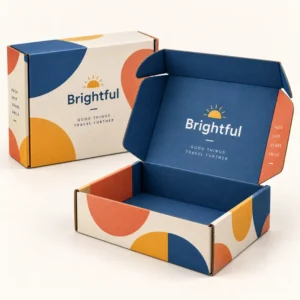
For brands that post regularly, custom corrugated mailing boxes are postal boxes made from fluted board, sized to your product and printed with your branding. They protect goods through sorting, handling and delivery while giving every parcel a clean, professional arrival. Because the board is light yet strong, these boxes suit regular posting, subscription sends and online orders alike.
What custom corrugated mailing boxes are made to do
A corrugated mailing box is built around the journey, not just the product inside it. The fluted layer between two liner sheets absorbs knocks, resists crushing and helps the box hold its shape when parcels are stacked or moved quickly. That structure matters for books, cosmetics, apparel, stationery and small homeware, where a dented corner or a bent cover can spoil the whole purchase. When the internal size matches the product closely, there is less movement in transit and less need for bulky filler.
Print turns that protective box into a brand asset. A logo on the outside tells the courier handler and the customer at a glance who sent the parcel. Print on the inside creates a second moment when the box opens, which works well for a welcome note, a simple pattern, care instructions or a prompt to reorder. Kraft board gives a natural, understated look, while a white liner gives brighter colour and a crisper finish for detailed artwork. Either route can carry full colour print, a single spot colour or a restrained repeated pattern.
Choosing board, flute and closure
E flute board is a popular choice for mailing boxes because it is slim, light and still strong enough for most postal goods. It keeps the parcel within a sensible postal size and prints well, which helps brands that post every day. B flute board is thicker and suits heavier or more fragile contents, such as ceramics, glassware or boxed sets, where extra cushioning is worth the added bulk. Double wall board is the step up for very heavy kits or for parcels that will travel through several depots.
Closure choice affects packing speed and the customer experience. A self locking design folds into place without tape and opens cleanly, which suits subscription boxes and gifts. A tape sealed flap gives a firmer seal for heavier parcels and for goods that may be handled many times. A tear strip can make opening easy and satisfying, and it also shows clearly if a parcel has been opened before delivery. The right combination depends on product weight, packing volume and whether the box needs to be resealed for a return.
Getting the size right before you order
Measure the product at its longest, widest and tallest points, then allow a small margin for any sleeve, tissue or insert. If several products ship together, measure the assembled set rather than each item alone. Send those internal dimensions with your enquiry, along with the heaviest expected parcel weight and the type of goods inside. A box that is only a little too large will need more filler and may push the parcel into a larger postal band, while a box that is too tight can strain the closure and mark the product.
Uses for custom corrugated mailing boxes in everyday trade
Online shops use these boxes for single orders, multi item orders and repeat subscription sends. A clothing brand can post folded garments in a slim mailer that still looks considered when it arrives. A skincare brand can use an insert to hold bottles upright and stop them rolling. A publisher can post books flat, with the cover protected and the spine held firm. A food brand selling dry goods, tea or confectionery in sealed inner packs can use a sturdy mailer that keeps the outer presentation tidy.
They also work for promotional mailings, sample kits, welcome packs and trade sends. A sample kit needs compartments or a simple card insert so small items do not move. A welcome pack benefits from inside print that sets the tone before the customer reads any letter. Because corrugated board is widely recyclable, many brands add a short recycling note on the inside flap, which helps customers dispose of the box correctly after delivery. That small detail supports a cleaner brand story without making claims that cannot be supported.
Print, finish and inserts that add value
Print does not have to cover every panel to be effective. A bold logo and a short line of text on the outside, paired with a patterned inside, often reads better than a busy design on all sides. Matte lamination gives a soft, modern feel and helps resist scuffs in transit. Gloss lamination makes colour look brighter and can suit bold retail artwork. Foil or spot gloss can lift a logo or a title, but they work best when used sparingly so the main message stays clear.
Inserts deserve as much thought as the box itself. A die cut card insert holds products in place and can be printed with assembly notes or a simple diagram. Tissue paper adds a layer of care for gifts and apparel. A small card with care instructions, a returns note or a thank you message turns the unboxing into a conversation. If the product is fragile, a corrugated divider or a padded inner can be added, and the outer board grade can be raised to match. Every addition should be tested with a real packed sample before a full run.
Packing, storage and posting tips
Boxes supplied flat store neatly and save warehouse space, which matters for small studios and busy fulfilment rooms alike. Pack on a clean bench, check the closure before sealing, and place the address label on a flat panel where it will not cross a fold. Keep a packed sample beside the bench for new staff to copy, so every parcel leaves in the same condition. If you post in high volume, agree the box size and board grade with your carrier early, and check how the finished parcel sits in the relevant postal size guides for your service.
Ordering custom corrugated mailing boxes with confidence
Start with the product, the quantity you expect to use, and the look you want the customer to see. Share artwork in a print ready form if you have it, or describe the design and let the team advise on layout, colour and finish. Ask for a proof and check it at actual size, looking at text legibility, logo placement and how the design sits across folds. A short proofing step at this stage prevents a large run of boxes with a small but visible error.
Lead time for corrugated boxes is 12 to 15 working days after final artwork approval. That timing covers production after artwork is agreed, and it is not a guaranteed delivery date, so allow extra time for seasonal peaks or for artwork changes. If you need a repeat order, keep the artwork and the box specification on file so the next run matches the first. Consistency matters for subscription customers, who notice when a box changes size, colour or closure without warning.
To begin, you can request a quote with your sizes, quantities and artwork ideas. You can also read the delivery information page for lead time guidance, browse the shop range for ideas, or visit the about us page to learn more about the business behind the boxes.
Questions to settle before production
Settle the product list, the heaviest parcel, the posting method and the quantity you will use in the first run. Decide whether print should appear inside, outside or on both sides, and whether an insert is essential or a nice addition. Confirm the board finish that fits your brand, from natural kraft to bright white. If sustainability is part of your brief, ask about recycled content and recyclable board options, and keep any claim on the box to what the specification actually supports.
A simple specification checklist for your enquiry
Include internal length, width and depth, product weight, board preference, print areas, finish preference, insert needs and expected quantity. Add the posting method and any return requirement, since both affect closure choice. With those details, a quote can be prepared accurately and the proof will reflect the box you actually need, rather than a generic size that almost fits.
Frequently asked questions
Question 1: Are custom corrugated mailing boxes strong enough for postal delivery?
Answer: Yes, when the flute and board grade match the product weight and the journey. E flute suits light to medium goods, B flute suits heavier goods, and double wall board suits very heavy or high value kits.
Question 2: Can I print on the inside of the box as well as the outside?
Answer: Yes. Inside print is a popular choice for subscription boxes, gifts and welcome packs, and it can carry a message, a pattern or simple care guidance.
Question 3: What size should I choose?
Answer: Choose an internal size that holds the product plus any insert with only a small margin. Measure the assembled set if several items ship together, and test a packed sample before ordering in volume.
Question 4: How long does production take?
Answer: Corrugated boxes take 12 to 15 working days after final artwork approval. Allow extra time for proof changes and for busy seasonal periods.
Question 5: Are corrugated mailing boxes recyclable?
Answer: Corrugated board is widely recyclable in the UK, provided it is clean and dry. Remove tape and non paper inserts where possible before recycling, and follow local recycling guidance.