
custom corrugated mailer boxes
Showing all 3 results
-
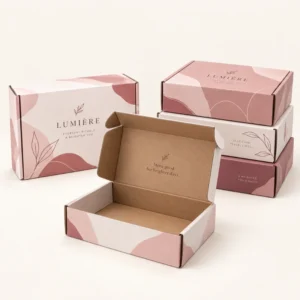
Custom Corrugated Mailer Boxes
Get a Quote -
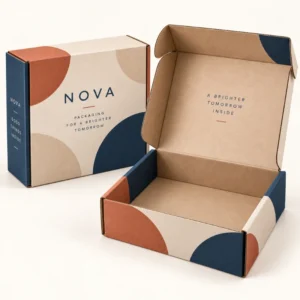
Custom Mailer Boxes UK
Get a Quote -
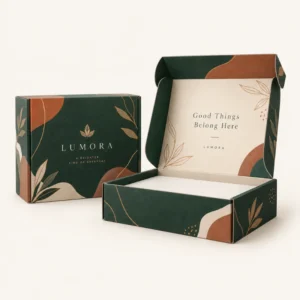
Personalized Mailer Boxes
Get a Quote
custom corrugated mailer boxes are self closing postal boxes made from fluted corrugated board, printed with a brand design and sized to fit the product inside, so an online order arrives protected and feels like a considered package rather than a plain parcel. They combine the strength of corrugated board with the clean opening of a mailer, with tabs that lock the lid in place, a flat base for packing and a surface that prints well on the outside and the inside. For ecommerce, subscription and gifting brands, they are often the first physical contact a customer has with the brand after ordering.
What custom corrugated mailer boxes are
A mailer box is a folding box with a lid that tucks or locks into the front of the box, so it closes without a separate lid and without relying solely on tape. Corrugated mailer boxes use fluted board for that structure, which gives cushioning, stacking strength and resistance to crushing during sorting and delivery. The result is a box that is light enough to post economically, strong enough to protect its contents and attractive enough to serve as part of the brand experience.
Mailer boxes differ from standard shipping cartons, which usually have top flaps that meet in the middle and are sealed with tape. A mailer opens like a presentation box, with a single lid movement, which makes the unboxing moment cleaner and more memorable. That opening experience is why subscription brands, gift brands and premium ecommerce sellers often choose mailers over plain parcel boxes, even when both would protect the product. For a broader transit option, see custom cardboard shipping boxes, and for general board packaging, see custom cardboard packaging.
E flute, B flute and board choice
Corrugated board is described by flute size, which is the height and spacing of the wavy layer. E flute is a fine flute, giving a smooth surface that prints well and a slim profile that suits postal boxes for light to medium products. B flute is a coarser flute, giving greater cushioning and stacking strength, which suits heavier products, larger boxes and parcels that will travel through multiple handling stages. The choice depends on product weight, fragility and the print quality you need.
When E flute works best
E flute works best for subscription boxes, cosmetics, stationery, small gifts and other light to medium products where a slim, smart looking box matters and the contents are not especially heavy or fragile. Its smooth surface gives cleaner print than coarser flutes, and its slim profile keeps the box light and easy to store flat. For products that need extra protection, an insert or a layer of tissue inside an E flute mailer can provide additional cushioning without changing to a heavier board.
Locking tabs, tuck in lids and seals
The closure of a mailer box should be secure in transit, easy for the customer to open and, where possible, show whether the box has been opened before delivery. Locking tabs that slot into the front wall give a clean, tape free closure for many mailers, while a tuck in lid gives a simpler closure for lighter boxes. For higher value orders, a seal, a sticker or printed tape over the closure can add tamper evidence and reassurance, without spoiling the design.
Designing an opening customers enjoy
Design the opening as part of the customer experience, not just as a functional step. Inside print on the lid, such as a welcome message, a thank you note or a simple pattern, is revealed the moment the box opens, and it can make a routine delivery feel personal. Keep the opening mechanism simple, so customers do not need to tear the box to access the contents, and ensure that any insert or tissue is arranged to present the product clearly when the lid lifts.
Sizing a mailer for ecommerce and subscription orders
Sizing a mailer starts with the product and its presentation, not with a standard box size. Measure the product, plus any insert, tissue or protective layer, in the position it will sit in the box, and choose internal dimensions that hold the product snugly without forcing the lid closed. A mailer that is too large wastes postage, needs extra fill and lets the product move, while a mailer that is too small can crush the product or split the closure during packing.
Single product mailers and multi item sets
Single product mailers are sized around one item, with a simple insert or tissue layer to hold it in place. Multi item mailers need more planning, because several items of different sizes must sit together without knocking each other or shifting during transit. Card dividers, trays and fitted inserts help here, by giving each item its own space within the mailer, while still presenting the set as a whole when the lid opens.
Inserts that hold products still
Inserts should be designed at the same time as the mailer, because the insert determines the internal layout and the mailer size. A card tray with cut outs for each item, a divider that separates fragile items, or a foam layer for delicate products can all improve protection and presentation. Test pack the full set with the insert, close the lid and check that nothing moves, rattles or presses against the lid when the box is turned or shaken gently.
Subscription boxes and repeat runs
Subscription boxes are sent repeatedly, often monthly or quarterly, so consistency across runs matters. Customers expect the same box size, the same opening experience and the same print quality each time, even if the contents change. Keeping the mailer specification, artwork files and insert design on record ensures that repeat runs match, and it makes it easier to plan seasonal variations, such as a different inside print or a limited edition colour, without changing the core structure.
Seasonal and limited edition variations
Seasonal variations can refresh a subscription without redesigning the whole mailer. A different inside print, a seasonal sleeve or a limited edition insert can mark a special edition, while the external box and structure remain the same. This approach keeps packing familiar for staff, keeps postage consistent and gives subscribers a reason to look forward to each delivery, without the cost and complexity of a completely new box for every season.
Print, branding and the unboxing moment
Print is central to a mailer box, because the box is often photographed, shared and remembered before the product itself is used. A strong exterior design, with a clear logo, brand colours and a simple message, makes the parcel recognisable on a doorstep and in a photograph. Inside print extends that experience, turning the moment of opening into a brand moment that customers associate with quality and care.
Outside print that works on corrugated board
Outside print on corrugated board works best when the design is bold, with clear shapes, legible type and strong colour contrast. Very fine detail, small type and complex photographs can lose clarity on a fluted surface, especially on kraft board with its natural texture. Test the design at actual size on the board you plan to use, and check it under normal lighting, not just on screen, before approving a full run.
Kraft and white board looks
Kraft board gives a natural, eco aware look, with brown tones that suit artisan, food, beauty and lifestyle brands. White board gives brighter, more vivid print and a cleaner, more premium appearance, which suits brands with detailed artwork or light colour palettes. Both are paper based and widely recycled, and the choice should reflect your brand identity and the print quality you need, rather than a general preference for one look over the other.
Inside print, messages and returns guidance
Inside print can carry a thank you message, a product story, care instructions or a simple pattern that complements the exterior design. It can also carry practical information, such as returns guidance, a QR code for instructions or a reminder about recycling, without needing a separate leaflet. Keep inside print uncluttered, so the product remains the focus when the lid opens, and ensure that any essential information is also available elsewhere if the customer discards the box.
Photography and social sharing
Customers often photograph an attractive mailer before opening it, and again when the contents are revealed. A clean exterior, a tidy interior and a product that is presented well inside the box all increase the chance that a customer will share the unboxing. That sharing is valuable, but it should not be the only reason for choosing a mailer. Protection, fit and ease of packing remain the foundation, with presentation built on top of a box that works reliably in transit.
Ordering, sustainability and delivery planning
Ordering custom corrugated mailer boxes involves confirming size, flute, board colour, closure, print areas and quantity, plus any inserts or finishes. Confirm the delivery label area as well, so the label does not cover key branding or handling print, and so couriers can scan it reliably. A proof check before full production helps catch alignment, colour and readability issues that are costly to fix after printing.
On sustainability, corrugated board is widely recycled in the UK, but the finished mailer, including coatings, tapes, inserts and labels, determines how easily a customer can recycle it. Keeping coatings simple, using paper based inserts and giving clear recycling guidance on the box all help. Businesses that place packaging on the UK market should review the extended producer responsibility for packaging guidance to understand their duties.
Artwork approval and lead time
Artwork approval is the final check before printing, covering size, bleed, colour, type legibility and label placement. The known lead time after final artwork approval is 12 to 15 working days for corrugated boxes and 10 to 14 working days for standard boxes. These are planning figures, not a guaranteed delivery date. Use the request a quote page to confirm your specification, and check the delivery information page for dispatch detail.
Storage of flat mailers
Mailer boxes are usually supplied flat, which saves warehouse space and makes stock control easier. Store flat mailers in a dry area, away from damp floors and direct sunlight, with each size and design clearly labelled. Flat storage also allows you to hold several designs or seasonal variations without needing large amounts of shelf space, and it helps packers pick the correct mailer quickly during busy dispatch periods.
Frequently asked questions about custom corrugated mailer boxes
What are custom corrugated mailer boxes?
They are self closing postal boxes made from fluted corrugated board, printed with a brand design and sized to fit the product inside. They protect online orders during transit and create a clean, memorable opening experience for the customer.
What is the difference between E flute and B flute?
E flute is a fine flute that prints cleanly and suits light to medium products in a slim postal box. B flute is coarser, giving greater cushioning and stacking strength for heavier products or parcels that will go through multiple handling stages.
Do mailer boxes need tape to close?
Many mailer boxes close with locking tabs or a tuck in lid and do not need tape for normal use, although tape or a seal can add tamper evidence for higher value orders. The best closure depends on product weight, value and how the box will be handled in transit.
Can I print inside the mailer as well as outside?
Yes, inside print is a popular option for welcome messages, thank you notes, care instructions and patterns. It is revealed when the lid opens and can make a routine delivery feel personal without changing the external size of the box.
How long does production take after artwork approval?
The known lead time after final artwork approval is 12 to 15 working days for corrugated boxes and 10 to 14 working days for standard boxes. These are planning figures, not a guaranteed delivery date, so allow time for proofing and dispatch.
Are corrugated mailer boxes recyclable?
Most plain corrugated mailer boxes can be recycled through household collections when clean and dry, but coatings, tapes and mixed material inserts can affect recyclability. Keeping the structure simple and giving clear recycling guidance helps customers dispose of the box correctly.