
corrugated packaging boxes
Showing the single result
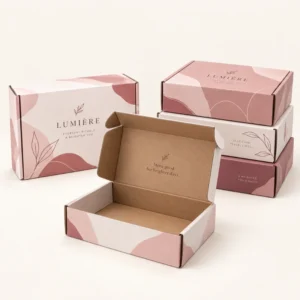
Corrugated packaging boxes are board cartons built from a fluted layer between flat liners, and they serve storage, transit and fulfilment in a single, adaptable system. They range from light single wall cartons for everyday goods to strong double wall cartons for heavy or stacked loads, and they can be printed, cut and fitted to suit almost any product.
How corrugated packaging boxes are built
The core idea is simple and effective. A wavy sheet, called the flute, is glued between two flat liner sheets. The waves create air gaps that cushion shocks, while the liners spread pressure and give a surface for print and labelling. Single wall board has one fluted layer. Double wall board has two fluted layers, with a middle liner between them, and gives much greater stacking strength. Triple wall board adds a third layer for industrial loads, but most warehouse work uses single wall or double wall board.
Flute size changes the character of the board. E flute is thin, about 1.5 mm, and gives a smooth print surface for presentation boxes. B flute is about 3 mm, with good crush resistance and clean print. C flute is about 4 mm, and balances cushioning with stacking strength for general shipping. A flute is about 5 mm, with the most cushioning among single wall options. Choosing a flute is a trade off between protection, thickness, weight and print quality, and the right choice depends on the product and the journey it will face.
Single wall, double wall and when each fits
Single wall board suits light and medium goods, parcel packing, inner cartons and most parcel orders. It folds easily, stores flat and keeps parcel weight down. Double wall board suits heavy goods, fragile goods, high stacks in a warehouse and long courier routes. It also suits products that will be palletised, because the extra layer resists the pressure of boxes above. If a single wall box crushes at the bottom of a stack, the load was too heavy for that board, and a double wall specification is the practical answer.
Board grades and liner choices
Kraft liner gives a natural brown face and strong performance for shipping. White top liner gives a bright face for high quality print without a separate printed sheet. Recycled liner, often called test liner, can reduce material impact and cost, but strength varies, so it suits inner boxes and light goods more than heavy export loads. Ask for the board specification in the quote, not just the box size, because two boxes of the same size can perform very differently.
Uses across storage and transit
In a warehouse, corrugated packaging boxes hold stock, protect goods on shelves and form the outer carton for picked orders. In transit, they guard against knocks, stacking pressure and handling, while staying light enough to keep parcel weight sensible. For customer facing orders, a printed corrugated box can act as both transit pack and presentation pack, especially for gift sets, subscription kits and seasonal ranges. In the home or office, the same boxes serve for archiving, moving and storing, because they stack, label and flatten for reuse.
Box style matters as much as board. A regular slotted carton, with four flaps top and bottom, suits warehouse and courier work and tapes quickly. A die cut mailer style box suits presentation and postal delivery. A full overlap carton adds extra strength at the top and bottom for heavy goods. A crash lock or auto lock base speeds packing for high volume lines. Choose the style by how the box will be filled, sealed, stacked and opened, not by appearance alone.
Sizing and stacking for warehouse work
Size boxes to the product and to the shelf or pallet they will sit on. A box that matches a standard shelf depth stacks neatly and wastes less space. A box that is too large for its contents needs filling and risks crushing when stacked. A box that is too small strains its seals. Keep a sizing guide for each product line, and review it when a product changes, because a small change in product size can make a previously good box a poor fit.
Protecting goods inside a packaging box
Use inserts, dividers and trays to separate items that could collide. Wrap fragile items individually, and place heavy items low in the box. Fill gaps just enough to stop movement, without overfilling. Seal the top and bottom fully, with tape centred on the seam, and check that the box holds its shape when lifted. A well packed box should feel solid, not loose and not bulging.
Print, sustainability and ordering
Print can be simple, such as a logo and handling notes, or full, with artwork across every panel. Simple print suits warehouse cartons where labelling matters most. Full print suits subscription boxes where the box is part of the brand. Finishes such as matte or gloss lamination add scuff resistance, while foil or embossing highlight a special range. Keep print clear of tape seams where possible, so the design stays intact after sealing.
Corrugated board is widely recyclable through household and commercial cardboard recycling, and many boards use recycled fibre. Plain board is usually simplest to recycle. Reuse is also practical, because a sturdy box can serve for storage or for a return before recycling. For custom printed orders, artwork approval comes first, and production follows after final artwork is approved. Corrugated lead times after final artwork approval are 12 to 15 working days. These are production lead times, not a promised delivery date, so allow time for artwork checks and for delivery itself when planning a range launch. To start, request a custom quote and a quote will confirm the specification, quantity and print details for your exact products. You can also browse the full shop, read delivery information, learn about the team, and view corrugated shipping boxes for transit focused options.
What to specify in a quote
Specify internal size, wall type, flute, liner, box style, print coverage and quantity. Add product weight and stacking details, because those details decide board strength. Share artwork or a clear design brief, and note any inserts, dividers or special closures. A complete specification leads to a more accurate quote and fewer revisions.
Checking a new box specification
Fill a sample with the real product, seal it, stack it with the weight it will face, and open it as a customer would. Check for crushing, seal failure, print damage and movement inside. Repeat the test with the heaviest product in the range. A specification that passes that test is ready for a full run.
Frequently asked questions about corrugated packaging boxes
What are corrugated packaging boxes made from?
They are made from corrugated board, with a fluted layer glued between flat liners. Single wall board has one fluted layer, double wall board has two, and the liner face can be kraft, white or recycled.
When should I choose double wall board?
Choose double wall board for heavy goods, fragile goods, high warehouse stacks and long routes. Single wall board suits most light and medium parcel work.
Are corrugated packaging boxes recyclable?
Yes, corrugated board is widely recyclable through household and commercial cardboard recycling. Flatten the box and remove tape and labels where practical before recycling.
Can corrugated packaging boxes be printed?
Yes. Print can range from a simple logo to full artwork across every panel, with finishes such as matte or gloss lamination, foil and embossing for special ranges.
How do I order custom corrugated packaging boxes?
Use the quote page to share sizes, board specification, style, print ideas and quantities. You will receive a quote based on your specification, and production follows after final artwork approval.