
cheap custom mailing boxes
Showing the single result
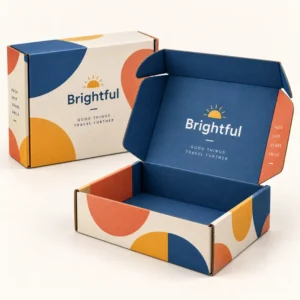
cheap custom mailing boxes give small brands a practical way to post orders that look considered from the moment they arrive. They combine a protective board structure with print that carries your logo, colours and message, without the need for a separate outer carton. For many online sellers, that combination keeps packing simple, keeps parcels tidy and keeps the opening moment firmly on brand.
What cheap custom mailing boxes are for
A mailing box is made to travel. It is usually supplied flat, folds up quickly and closes with a tuck lid or a secure flap, so packing teams can work through orders without tape guns, extra sleeves or fiddly assembly. The board protects corners and edges during sorting and delivery, while the printed outside does the work of a label, a leaflet and a shopfront at the same time. That is why mailing boxes suit sellers who post regularly and want every parcel to feel intentional.
Think first about the journey, not just the product. A slim item such as a book, a folded garment or a set of cards needs a shallow box that stops movement inside. A bulkier order needs depth, stronger board and room for protective filling. If the box is too large, the product slides around and the parcel looks wasteful. If it is too small, packing becomes a struggle and corners can split. Measuring the product after it has been wrapped, and adding a small allowance for filling, is the simplest way to get the size right.
Who uses mailing boxes every day
Online shops use mailing boxes for single orders and for repeat subscription parcels. Makers use them for gifts, sample packs and limited runs where presentation matters as much as protection. Small publishers, stationery brands and beauty sellers use shallow formats for flat or light items. In each case, the box is part of the product experience, not an afterthought, and a consistent size across orders makes storage, packing and posting far easier.
Keeping repeat orders consistent
When you settle on a size, a board and a print layout, reordering becomes straightforward. Packing staff learn one fold, one closure and one label position. Customers recognise the parcel before they open it. That consistency also helps you compare quotes fairly, because you are asking for the same specification each time rather than starting from a blank page.
How to keep cheap custom mailing boxes good value
Value in this context does not mean the thinnest board you can find. It means a specification that protects the product, survives delivery and still looks good, with no feature added simply because it sounds impressive. A single colour logo on kraft board, for example, can look warm and confident for a natural brand. A white board with full colour print suits a bright, graphic identity. Choosing one strong print area, rather than printing every panel in full colour, often gives a cleaner result and a simpler brief.
Board choice is where most savings are made or lost. Kraft board has a natural, uncoated look and suits brands that want an honest, recyclable feel. White board gives colours more punch and suits bold artwork. Corrugated board adds a fluted layer that cushions the contents and resists crushing, which matters for parcels that will be stacked or handled many times. For light, flat items, a lighter board may be enough. For heavier or fragile items, a stronger corrugated board is the sensible choice, even if the box itself feels a little more substantial.
Print choices that suit a tight budget
Start with the outside. The lid and the main panels are what the customer sees first, so put your logo, your name and one clear message there. Inside print can be delightful, with a thank you note, a care instruction or a simple pattern, but it is an extra. If the budget is tight, keep the inside plain for the first run and add inside print later, once you know the box size and the artwork work well in practice.
Artwork that prints cleanly
Simple artwork usually prints best on board. Large areas of flat colour, clear lettering and a logo supplied at a good resolution will look sharper than tiny text or very fine detail. Leave a clear margin around folds and edges, check that text will not sit across a crease, and ask for a proof before production. A proof lets you check spelling, colour and position while changes are still easy to make.
Choosing the right size and board for cheap custom mailing boxes
Size and board should be decided together. A shallow box in a strong board can carry a surprising amount of weight, while a deep box in a light board may bow or crush under stacking. Weigh a packed example, including filling and any insert, and think about how it will be posted. Will it go through a letterbox, or will it need a courier collection? Will it be stacked with other parcels? Answers to those questions point to the right depth, board grade and closure.
Standard sizes can be excellent value because they avoid a bespoke cutting tool and a long setup. If your product fits a standard size with a little room for filling, that is often the smartest route. A bespoke size earns its place when the product is unusual, when you need a very shallow depth for letterbox delivery, or when a standard size leaves so much empty space that you are paying to post air. In that case, a closer fit can save on filling, on parcel size and on returns caused by movement in transit.
Storage, assembly and packing tips
Boxes supplied flat store neatly and take up far less space than ready made cartons. Keep them dry, flat and away from damp walls, and keep a small packed sample on the shelf so new packers can see the finished result. A simple packing routine helps: fold, insert, add filling only where needed, close, label in the same place every time. That routine reduces damage, speeds up dispatch and keeps the unboxing experience consistent.
Recycling and reuse after delivery
Customers increasingly notice what happens to packaging after opening. A board box that can be recycled through normal paper recycling, with tape and labels removed where practical, is easy for the recipient to deal with. Avoid mixed materials where you can, such as plastic windows or heavy laminates, if recycling matters to your brand. A short note inside the box can explain how to recycle it, without turning the parcel into a lecture.
Ordering cheap custom mailing boxes with a clear brief
A clear brief leads to a clear quote. Share the internal size you need, the product type and packed weight, the board you prefer, the print areas and colours, and the quantity you have in mind. Mention any inserts, such as a card divider or a tissue wrap, and say whether the box needs to fit a letterbox or a particular postal size. The more specific the brief, the fewer revisions the artwork will need.
Standard lead times after final artwork approval are 10 to 14 working days, while corrugated formats are usually 12 to 15 working days. Those times are a planning guide, not a guaranteed delivery date, so allow extra time for a first order, for artwork changes and for busy seasonal periods. Ordering a little earlier than you think you need to is cheaper in stress than rushing a reorder when stock runs low. For details on the ordering route, see the get a quote page, browse the shop, or explore cheap mailer boxes for a related format. You can also learn more on the about us page and check delivery information before you confirm a specification.
Frequently asked questions
Are cheap custom mailing boxes strong enough for posting?
Yes, when the board matches the product. Light items suit a lighter board, while heavier or fragile items need corrugated board with enough depth and filling to stop movement. A packed sample test, including a drop from waist height onto a firm surface, is a useful check before a large run.
What artwork do I need to supply?
Supply your logo and artwork at a good resolution, with text checked for spelling and clear margins around folds. A proof should be approved before production, so any colour, position or spelling issue can be corrected while it is still easy to fix.
Can I start with a small quantity?
Quantities depend on the specification and the format, so include your expected quantity in your quote request. Starting with a size and print layout you can reuse makes later reorders simpler and keeps your packaging consistent.
What is the difference between a mailing box and a shipping carton?
A mailing box is designed to be seen by the customer, with a neat lid and printed branding. A plain shipping carton is mainly a protective outer case. Many brands use a mailing box on its own for lighter orders and a stronger carton for heavier or multi item orders.