
box mailers near me
Showing the single result
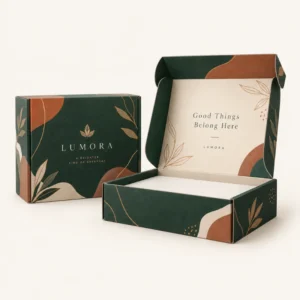
When someone searches for box mailers near me, they usually want a UK supplier who can make a box that fits the product, carries the brand clearly and survives posting without damage. A good mailer box does more than hold an order together, it protects the contents, keeps packing simple and gives the customer a tidy first impression on arrival. This guide explains how to judge size, board, print and ordering, so a small seller or a growing brand can choose with confidence.
Why box mailers near me is a practical starting point for UK sellers
Local search often reflects a practical need rather than a wish to visit a shop in person. A seller may need a repeat run quickly, a sample to test with a real product, or clear advice on which board will cope with a heavier parcel. Working with a UK supplier also makes artwork checks, delivery planning and repeat orders simpler, because the conversation stays in one place and the specification can be reused next time. For brands that post every week, that continuity matters as much as the first order.
Mailer boxes suit a wide range of goods, from clothing and cosmetics to books, gifts, food related items in suitable board, and subscription sets. The common thread is a product that benefits from a rigid outer box, a clean opening experience and a surface that can carry print on the outside, the inside, or both. A plain postal carton can protect an order, but a mailer box is designed to be seen as well as to travel, which is why so many independent brands choose it for direct orders.
What a good mailer box does in transit
A mailer box should close securely, resist crushing at the corners and edges, and keep the product from moving around inside. Self locking tabs and a snug fit reduce the need for large amounts of void fill, and a well chosen insert can hold a fragile or awkward item in place. The outside should stay presentable after handling, so print, colour and finish need to suit the journey as well as the shelf or the doorstep photograph.
Board strength and the fit around the product
Board choice starts with weight, fragility and the way the parcel will travel. Light items in a single product box may suit a lighter corrugated board, while heavier sets, glass containers or multi item orders need stronger board and a closer fit. Measure the product at its widest and tallest points, allow a small margin for an insert or protective wrap, and test the packed box by lifting, shaking gently and stacking it as a courier might. A box that is only slightly too large can still cause damage, because movement creates impact.
Choosing size, material and print for a mailer box
Size is the decision that affects every other choice. Too large a box wastes board, increases storage space and can raise postage costs, while too small a box risks crushed corners or a lid that will not close cleanly. Start with the product, then the insert, then the outer dimensions, and keep a note of the internal measurements so a repeat order matches exactly. Many sellers find it helpful to keep one standard size for their most common order and a second size for sets or larger items, rather than ordering many sizes at once.
Material choice also shapes the look of the brand. Natural kraft board gives a warm, understated feel and suits handmade, natural or eco focused brands. White board gives a clean base for bright colour and detailed artwork, while a fully printed design can turn the whole box into a brand surface. Inside print is worth considering for unboxing, because a simple message, pattern or care note inside the lid can make an ordinary delivery feel considered without adding a separate insert.
Print, colour and finish that stay readable after posting
Print should be planned for the surface it will sit on. Dark, detailed artwork can look different on kraft board compared with white board, so a proof or sample is valuable before a large run. Keep the main logo and the most important message clear at a glance, and avoid crowding the lid with small text that will be hard to read once the box is taped or labelled. A matte finish can soften colour and reduce glare in photographs, while a gloss finish can make colour feel brighter and more vivid.
Artwork checks before a mailer run is approved
Before artwork is approved, check spelling, contact details, care wording and any legal wording the product needs, and view the design at the real box size rather than only on screen. Confirm that folds, tabs and glue areas will not cover an important part of the design, and that any barcode or label area stays clear. These checks take little time and prevent a run that looks good in a digital proof but disappoints in the hand. Once final artwork is approved, standard lead times are 10 to 14 working days, corrugated lead times are 12 to 15 working days, and rigid or specialist lead times are 13 to 16 working days, and these are production times rather than a guaranteed delivery date.
Ordering mailer boxes and planning repeat runs
When requesting a quote, share the product size, the likely order quantity, the board preference, the print coverage and whether an insert is needed. That information lets a supplier advise on the most suitable structure and finish without a long exchange of messages. If the product range will grow, mention the other sizes early, because a family of boxes that shares the same board, colour and print style will look more coherent than a set of unrelated boxes ordered at different times.
Storage and packing also deserve a place in the decision. Flat packed mailer boxes store well and assemble quickly, which helps a small team packing orders at a table or in a spare room. Keep a packed sample on the shelf as a reference, and note any packing steps that slow the team down, such as an insert that needs folding twice or a lid that needs extra tape. A small change to the structure can save minutes on every order, and those minutes add up across a busy week.
Questions to ask before you confirm a mailer box order
Ask how the box will be supplied, whether a sample is available, how artwork should be supplied, and what happens if a size needs a small adjustment after testing. Ask about delivery planning after artwork approval, and keep the approved specification in a single document with internal dimensions, board, print details and insert details. That record makes a repeat order straightforward and reduces the risk of a second run that differs from the first.
Working with a UK supplier on custom mailer boxes
A useful starting point is to explore custom mailer boxes for related styles, then browse the shop range to see the wider range. When the size and print are clear, use request a quote for custom boxes and check delivery information after artwork approval for planning. This sequence keeps the decision practical, with the product fit tested before the brand finish is finalised.
Frequently asked questions
1. What size mailer box should I choose for posting? Measure the product at its widest and tallest points, add a small margin for wrap or an insert, and choose the smallest box that closes cleanly without forcing the lid. Test a packed sample before ordering a large run.
2. Are kraft mailer boxes strong enough for posting? Kraft board in a suitable corrugated grade is strong for many ecommerce orders, provided the fit is close and fragile items have an insert or wrap. Heavier or glass items need stronger board and a closer internal fit.
3. Can a mailer box be printed inside and outside? Yes, print can be placed on the outside, the inside, or both, and inside print works well for a welcome message, care notes or a simple pattern that appears on opening.
4. How long does production take after artwork approval? Standard production is 10 to 14 working days after final artwork approval, corrugated production is 12 to 15 working days, and rigid or specialist production is 13 to 16 working days. These are production times, not a guaranteed delivery date.
5. Do I need an insert in a mailer box? An insert is helpful when the product moves inside the box, when several items are packed together, or when a fragile item needs to stay upright. For a single sturdy item with a close fit, an insert may not be needed.