
blue mailer box
Showing all 2 results
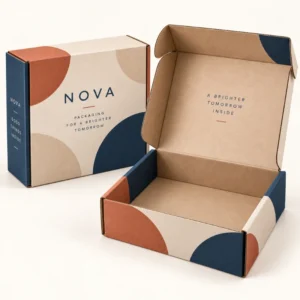
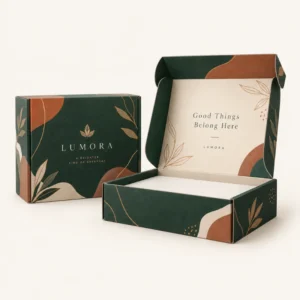
A blue mailer box is a sturdy, self closing shipping box in blue, designed to protect a product in the post and to present it well when it is opened. It combines the strength of corrugated board with the look of branded packaging, so a customer receives something that feels considered rather than purely functional. For a small business, it turns an ordinary delivery into a first impression that supports repeat orders.
How a blue mailer box protects an order
A mailer box differs from a simple postal carton because it is made to be opened by the customer, not just to survive transit. The lid folds over and locks, often with a peel and seal strip or a tuck flap, so the box stays closed without tape across the front. Inside, the product sits in a clean space that can be fitted with tissue paper, a card insert or a shaped insert, depending on how fragile it is. The corrugated board cushions knocks and stacking pressure, which matters when a parcel passes through sorting centres and delivery vans.
Colour is part of the protection story too, in a practical sense. A blue box is easy to spot among plain parcels, which helps a customer notice it on a doorstep or in a collection point. It also photographs well for social media unboxings, where a distinctive colour can make a small brand look established. The key is to choose a blue that prints cleanly and stays true across the run, so the box a customer receives matches the box shown on the website.
Choosing board strength and size
Board strength should match the weight and fragility of the product. A light product such as folded apparel, a candle in a tin or a set of stationery needs less board than a bottle, a ceramic item or a heavy gift set. A single wall corrugated board suits many ecommerce orders, while a double wall board is a safer choice for heavier or more fragile goods. If the product is very fragile, add an insert that holds it in place, because movement inside the box causes more damage than the board itself can prevent.
Measuring for a snug fit
Measure the product in its retail packaging, not on its own, and add a small allowance for protective wrapping. A box that is too large lets the product move and looks wasteful, while a box that is too tight can crush a lid or a corner. A good test is to pack a sample, seal it, shake it gently and open it again. If the product has shifted, add an insert or choose a smaller size. Repeat the test after any change to the product packaging.
Designing a blue mailer box for unboxing
The outside of the box is the first thing a customer sees, and the inside is the second. Many brands print a bold logo or pattern on the outside and a message, a pattern or a thank you note on the inside lid. That contrast creates a moment of surprise when the box opens, and it gives the brand a place to add care instructions, a returns note or a discount code for a next order without cluttering the outside. Keep the outside print simple enough to survive handling, and keep the inside print focused on one clear message.
Finishes change how the box feels in the hand. A matt lamination gives a soft, premium feel and helps resist scuffs during transit. A gloss finish makes colours look brighter and suits a playful brand. Foil or spot gloss can highlight a logo, but they work best when used sparingly on a small area. For a blue box, white print is a reliable choice, and a contrasting inner print in white or a pale colour keeps the inside light and easy to read.
Printing inside and outside
Full colour print allows a photograph, a pattern or a detailed illustration to cover the box, while a single colour print suits a logo and a short message. If the budget allows only one printed side, the outside usually gives more value, because it is seen by the customer, the courier and anyone who photographs the parcel. Inside print becomes worthwhile when unboxing is central to the brand, for example for subscription products, gifts and limited editions.
Keeping artwork readable after transit
Small text can blur or scuff during handling, so keep essential text at a readable size and avoid placing it near edges, folds or the seal strip. Test the artwork at actual size before approving it, and check how it looks under normal room light rather than only on screen. A proof on the real board is the best way to judge colour, because blue can shift noticeably between a screen and a printed corrugated surface.
Ordering a blue mailer box from Personalized Mailer Boxes
Share the product dimensions, the weight, the quantity and your artwork, and the team can advise on board, size and print. Corrugated lead times after final artwork approval are 12 to 15 working days, and standard lead times are 10 to 14 working days, so plan around product launches and seasonal peaks. These are production lead times, not a guaranteed delivery date, and they run from final artwork approval. Before choosing a size, check the Royal Mail size and weight guide so the finished parcel fits the service you plan to use.
You can also explore blue mailer boxes for a full range, browse the shop for packaging ideas, or go to request a quote for a blue mailer box. The delivery information page gives more detail on lead times.
Frequently asked questions about a blue mailer box
What is the difference between a blue mailer box and a plain shipping carton
A mailer box is designed for presentation as well as protection, with a clean folding lid and print on the outside or inside. A plain shipping carton is designed mainly for protection and usually needs tape and an outer label to look finished.
Can a blue mailer box be printed inside and outside
Yes, both sides can be printed. Many brands print a logo on the outside and a message or pattern on the inside lid for a stronger unboxing experience.
Will a blue mailer box protect a fragile item
Yes, when the board strength and the insert match the item. Choose a stronger board for heavier or fragile goods, and add an insert or wrapping to stop movement inside the box.
Does a blue mailer box need tape
Many mailer boxes use a peel and seal strip or a tuck flap and need no tape across the front. Tape can still be used on the base or for extra security if the parcel is heavy.
How do I choose the right size
Measure the product in its retail packaging, add a small allowance for wrapping, and test pack a sample. Check the finished parcel size against the Royal Mail size and weight guide for the service you plan to use.