
Kraft Boxes
Showing all 2 results
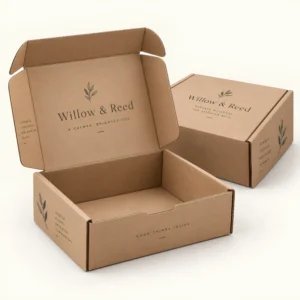
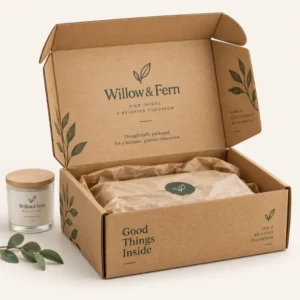
Kraft boxes give UK businesses a practical choice when they want packaging with the natural appearance of kraft board rather than a bright white surface. The category can cover compact product cartons, presentation formats and stronger corrugated boxes, depending on what needs to be packed and how the box will be handled. Printing can add logos, instructions or brand artwork while allowing the brown board itself to remain part of the design. Browse our kraft boxes to compare suitable structures for retail products, ecommerce orders and branded presentation, with free design support available when you need help planning the specification.
Choosing Kraft Boxes Around the Product, Not Just the Colour
Kraft boxes are often recognised first by their brown, natural-looking surface, but colour alone does not tell you how a box will perform. The useful starting point is the product itself.
A lightweight retail item may need a relatively simple folding carton. An ecommerce order exposed to handling needs a structure with greater rigidity. Gift sets and grouped products may require more internal space, a different opening style or an insert to keep individual items organised.
That distinction matters because kraft packaging is not one single box construction. The appropriate board, structure and dimensions should follow the intended use.
For UK businesses comparing packaging materials, the main questions are therefore practical: What is being packed? How heavy is it? Will the package sit on a shelf or travel through a delivery network? Does the product need a close fit, an insert or additional space around it?
Answering those questions before concentrating on decoration usually produces a more sensible specification.
Kraft Board and Corrugated Kraft Serve Different Jobs
Paper and board packaging covers several constructions, including paperboard and corrugated cardboard. They should not be treated as interchangeable simply because both can have a brown kraft appearance.
Folding kraft board works well where the packaging mainly needs to contain and present a relatively light product. It can be converted into cartons and other compact retail structures without the depth of a fluted corrugated sheet.
Corrugated boxes contain a fluted layer within the board construction. That gives the material a different level of rigidity and makes corrugated formats relevant where the box has to cope with greater handling demands.
Consequently, businesses comparing cardboard boxes and corrugated boxes should look beyond surface appearance. A box that looks suitable in a product photograph may use a completely different construction from the one needed for dispatch.
The right choice depends on the dimensions, weight and handling requirements of the packed product rather than a generic claim that one material is always better.
How Kraft Packaging Changes the Way Print Looks
Printing on brown kraft stock needs a different design approach from printing on a white base.
The natural board colour remains visible wherever ink is not applied. It also influences the overall appearance of printed artwork. For that reason, strong typography, clear logos and deliberately limited colour palettes can work particularly well when the designer intends the kraft surface to remain visible.
A design created for white packaging should not automatically be transferred to brown kraft without review. Pale colours, detailed photography and artwork that depends on a bright white background may require more careful planning.
Sometimes the strongest result comes from doing less. A restrained printed mark with plenty of exposed board can give the packaging a clear identity without covering the material that made kraft attractive in the first place.
At the same time, a more developed printed design may be appropriate when the box forms part of a retail range or branded ecommerce experience. The artwork should follow the actual printing specification rather than being chosen separately from it.
Personalized Mailer Boxes provides free design support where help is needed with the relationship between box structure and artwork.
Sizing a Kraft Box Properly
A box should be planned around the packed product, not an approximate outside measurement.
Start with the length, width and depth required by the item itself. Then consider anything that will sit inside the box with it, such as tissue, dividers, protective components, instruction cards or inserts.
Too much unused internal space can allow products to move. Too little space can make packing difficult, place pressure on the product or prevent the closure from sitting correctly.
This is especially important where several products are supplied as one set. Measuring each item separately is not enough if the final arrangement changes the footprint of the packed group.
It also helps to think about the person actually assembling the package. A mathematically tight fit is not always a convenient packing fit. Staff need enough room to place the product consistently without forcing the contents into position.
For repeat orders, standardising a sensible group of box sizes can also make stock control and packing routines easier than creating unnecessary dimensional variations for similar products.
Kraft Boxes for Ecommerce and Postal Packing
Kraft packaging is widely considered for ecommerce because the brown surface suits both plain and printed presentation. However, the word “kraft” should never be used as a substitute for assessing transit requirements.
If the package will enter a parcel network, the structure needs to suit normal handling as well as the weight and shape of its contents.
Custom mailer boxes are relevant where a self-contained opening and closing format is useful for ecommerce presentation. Corrugated kraft constructions may be considered where more rigidity is needed. Smaller retail cartons may instead need to sit inside separate outer packaging for dispatch.
Therefore, the retail box and the shipping pack do not always have to be the same item.
That distinction is useful for brands selling delicate, high-value or unusually shaped products. Trying to make one lightweight presentation carton perform every shipping function can lead to an inefficient specification.
Consider the complete packing system: primary product packaging, any insert or protection, and the outer shipping format where one is required.
Retail Presentation Without Hiding the Material
Kraft boxes also work well when businesses want the packaging material itself to contribute to the visual identity of the product.
The brown base can suit restrained branding, handmade product ranges, gift items, apparel accessories and other products where a heavily coated appearance is not the objective. However, the final structure still needs to match the way customers buy and open the item.
A shelf carton may need a clear front-facing print area. A presentation box may place more emphasis on the opening experience. An ecommerce mailer needs to balance the appearance of the inside and outside surfaces with practical dispatch requirements.
For this reason, deciding “we want kraft packaging” is only the beginning of the specification. Structure should come next, followed by dimensions and then print.
This order prevents visual preferences from forcing an unsuitable box format.
Inserts and Internal Organisation
An insert becomes useful when the outer box alone cannot hold products in a controlled position.
For example, a set containing several small items may look untidy if every component can move independently. A correctly planned insert can create individual positions and make the layout easier to understand when the box is opened.
It can also reduce the amount of unnecessary empty space inside the pack.
However, inserts should have a clear job. Adding internal components only for appearance introduces more material and can complicate assembly. If the product already fits securely without one, an insert may offer little practical value.
The decision should therefore follow the product layout rather than a generic packaging trend.
Consider the Whole Packing Process
Good packaging has to work before it reaches the customer.
Businesses packing regular orders should consider how quickly boxes can be formed, how much storage space unused packaging requires, how products are placed inside and how the finished pack moves to the next stage of fulfilment.
A complex structure may create a distinctive presentation but add unnecessary assembly steps to a high-volume operation. A simpler format can sometimes be the better commercial choice.
Likewise, a very deep box may look substantial but waste internal space when the product is shallow. A box sized closer to the contents can make the whole packing process more controlled.
In-house manufacturing also makes it useful to discuss these practical requirements during specification rather than treating the structure, dimensions and print as unrelated decisions.
Finishes Need to Be Judged Alongside the Board
Kraft packaging is sometimes chosen specifically because businesses want the natural board visible. In those cases, applying unnecessary surface treatments can work against the original design intention.
Finishes should solve a real design or performance requirement rather than being added automatically.
They also matter from a material perspective. UK guidance for paper and board packaging shows that coatings, laminations and other non-paper components can affect how packaging is classified and assessed for recyclability.
That does not mean every printed or finished kraft box receives the same result. The complete material composition has to be considered.
Businesses that have obligations under extended producer responsibility for packaging should therefore keep accurate material information and review the current rules that apply to them rather than relying on a broad “kraft equals recyclable” assumption.
Avoiding Unsupported Environmental Claims
The appearance of brown kraft packaging often leads to vague environmental language. Businesses should be more precise.
The colour of a box does not by itself prove its recycled content, recyclability, certification or environmental impact.
Current UK guidance treats paper and board according to material composition and, where applicable, collection, sorting and reprocessing criteria. Added components may influence the assessment.
For that reason, terms such as recycled, recyclable, biodegradable or certified should only be used where the specific packaging specification supports the claim.
This is also important for printed branding. Environmental statements placed directly on packaging can be seen by every customer, so they should describe the actual pack rather than assumptions about the appearance of kraft board.
What to Decide Before Requesting a Kraft Box Quote
A useful packaging brief does not need to be complicated.
Start with the product dimensions and approximate packed weight. Explain whether the box will be used for retail presentation, ecommerce dispatch, gifting or another purpose. Then identify how many items will sit inside and whether anything needs to be separated or held in place.
Next, consider how the box should open and how staff will pack it. Finally, provide the artwork requirements or explain the type of printed presentation you want.
Those details make it easier to compare suitable structures instead of selecting a box based only on photographs.
If you are also reviewing other packaging materials, compare the construction and use case rather than simply the surface colour.
Personalized Mailer Boxes offers free design support, in-house manufacturing, and fast and free UK delivery. Browse the available kraft boxes or discuss your product, dimensions and intended use before requesting a quote.
FREQUENTLY ASKED QUESTIONS
What are kraft boxes made from?
Kraft boxes are fibre-based packaging made using paper or board materials and are commonly recognised by their natural brown appearance. The exact construction varies. Some formats use folding board, while others use corrugated board with fluting for greater rigidity. The correct specification depends on the box structure and intended use.
Are kraft boxes suitable for ecommerce orders?
They can be, but the structure matters more than the brown surface. Ecommerce packaging should be selected around product weight, dimensions, internal movement and expected handling. A corrugated kraft mailer may suit dispatch requirements that a lightweight retail carton would not be designed to handle.
Can kraft boxes be custom printed?
Yes, kraft surfaces can carry branding and other printed artwork where the chosen manufacturing specification supports it. Because brown board provides a coloured base rather than a white one, artwork should be planned specifically for kraft. Darker graphics, clear typography and deliberately exposed board often produce a different result from designs created for white packaging.
How do I choose the correct size kraft box?
Measure the actual packed product and include any inserts, tissue, dividers or other internal components in the calculation. The box should provide enough room for efficient packing without leaving unnecessary space that allows the product to move. Multi-product sets should be measured in their final intended arrangement.
Do all kraft boxes provide the same level of protection?
No. Protection depends on board construction, structure, dimensions and the packed product. A folding kraft carton and a corrugated kraft box can look similar in colour while behaving very differently during handling. Packaging should therefore be specified for its real use rather than chosen from appearance alone.
Are kraft boxes recyclable?
Do not assume recyclability from the word “kraft” or from the brown colour alone. UK recyclability assessment guidance considers the complete packaging composition. Coatings, laminations, attached components and other materials can affect the result, so any environmental claim should be based on the actual specification.
Can you help choose a suitable kraft box style?
Yes. Free design support is available if you need help matching the structure, dimensions and artwork to your product. Sharing the product size, packed weight, intended use and preferred presentation gives the design team a better basis for recommending an appropriate format.