
Corrugated Boxes
Showing the single result
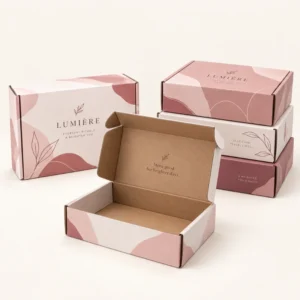
Corrugated boxes give UK businesses a practical packaging option when strength, structure and reliable product protection matter. Their fluted board construction adds rigidity without relying on a solid, heavy board, making corrugated packaging useful for ecommerce orders, product bundles, retail goods and items that need more support during handling. Different box structures, board configurations, sizes and print options can be selected around the product and packing process. Explore our corrugated boxes to compare suitable styles, or use our free design support if you need help deciding how your packaging should be structured and presented.
Corrugated Boxes Built Around Protection and Practical Packing
Corrugated boxes are used when a package needs more structural support than a simple folding carton can provide. The important difference is inside the board. Corrugated board uses flat liner papers combined with a shaped fluting layer. That construction gives the sheet rigidity and helps it resist forces encountered while a packed box is stored, stacked or moved.
That does not mean every corrugated box provides the same performance. Board construction, flute profile, overall box design, product weight, dimensions and the way the contents are arranged all influence how suitable a box will be.
For a UK business choosing packaging, therefore, the sensible starting point is not simply asking for the thickest board. It is understanding what the box actually needs to do.
A lightweight product that already has its own retail packaging may need a different specification from several glass containers packed together. Likewise, a box used mainly for presentation has different priorities from one that will pass through a parcel network.
How Corrugated Board Gets Its Structure
A basic corrugated sheet combines liners with a fluted paper medium between them. The curved fluting creates repeated arches through the board, while the liners form its flat outer surfaces.
This structure is what separates corrugated board from ordinary flat paperboard.
The combination can provide useful rigidity while keeping the finished packaging relatively lightweight. It also gives packaging designers several variables to work with rather than relying on board thickness alone.
Different flute profiles and board constructions may be selected according to the intended use. However, the correct choice depends on the packed product, box dimensions, expected handling and required presentation.
For that reason, specifying a corrugated box purely from an online photograph is rarely enough. Two visually similar boxes may perform differently once they are filled.
Businesses comparing cardboard boxes with corrugated options should pay particular attention to this structural difference. “Cardboard” is often used casually as a broad packaging term, whereas corrugated packaging has a distinct fluted construction.
Choosing a Box Structure That Matches the Job
Corrugated board can be converted into many different packaging structures. Some are designed primarily for transport. Others combine protection with a cleaner opening and presentation experience.
The FEFCO Code is widely used within the corrugated packaging industry to identify common structural designs using standardised numbers. This makes it easier for manufacturers, packaging buyers and designers to discuss a structure without relying entirely on long verbal descriptions.
For ecommerce, the right structure should take account of how quickly the box can be erected and packed as well as how it performs after closure.
A design that looks attractive but takes excessive time to assemble may create unnecessary work when order volumes increase. Conversely, a very basic shipping carton may provide adequate transport protection but not the presentation a direct-to-consumer brand wants when the customer opens the parcel.
This is why corrugated packaging should be considered as a complete system: board, dimensions, closure, internal support and packing method all work together.
Businesses specifically looking for presentation-led postal formats may also want to compare custom mailer boxes, while corrugated cartons can make more sense when the priority shifts towards transport, stacking or larger packed products.
Size Should Be Based on the Packed Product
Box dimensions affect much more than appearance.
A package that is unnecessarily large may leave the product free to move unless extra internal packaging is added. At the other extreme, an undersized box can place pressure on products or prevent flaps and closures from working correctly.
Start with the actual packed item rather than estimating from the product alone.
If several products will share the same box, position them in the arrangement you intend to use. Include any inserts, dividers, wrapping or protective material that forms part of the final pack. Only then should the internal space requirement be established.
This matters particularly for fragile items, bottles, jars, product sets and components that should not repeatedly knock against one another.
A close-fitting box does not automatically mean a better box either. Some products need controlled clearance for cushioning or an insert. The objective is an efficient internal layout that holds the goods appropriately without creating unnecessary empty space.
Product Weight and Distribution Matter
Packaging buyers sometimes focus on the total product weight while overlooking how that weight sits inside the box.
A compact, dense item creates different demands from a broad, lightweight product of the same overall weight. Several separate products can also concentrate force in particular areas if they are not restrained properly.
Consider the base, corners, side walls and closure as part of one structure.
Where multiple items are packed together, an internal divider or insert may help manage movement and maintain a consistent arrangement. However, an insert should have a real functional purpose. Adding extra material simply because it appears more elaborate is not automatically an improvement.
The product, rather than a generic packaging specification, should determine the construction.
Corrugated Packaging for Ecommerce Orders
Ecommerce packaging faces a particular combination of demands.
The box may be stored flat before use, erected by a packing team, filled, closed, labelled, stacked with other parcels and handled several times before reaching the customer. As a result, packing efficiency matters alongside structural performance.
For regular order fulfilment, businesses should consider how many folds or assembly steps a box requires. A complicated design may be perfectly manageable for a small premium run but inefficient when hundreds of orders must be packed.
The opening experience also deserves attention.
For direct-to-consumer products, the shipping container is often the first physical branded item a customer sees. A clean structure and considered internal layout can therefore support presentation without compromising the box’s primary protective role.
This is one reason custom cardboard mailer boxes and corrugated mailer formats are frequently considered for smaller ecommerce products, while other corrugated structures may suit larger consignments or multi-product orders.
Printing Corrugated Boxes
Corrugated packaging does not have to remain plain.
Printing can identify the brand, product range, handling information or other useful content, depending on the project’s requirements. The appropriate print approach will depend on factors including the board surface, artwork, colour requirements, production method and quantity.
Good artwork should work with the actual box rather than being treated as a flat graphic that happens to sit on packaging.
Panel positions, folds, edges, closure flaps and opening direction all influence how customers see the design. Important information should not fall awkwardly across a crease or disappear beneath a closure.
A restrained exterior can work well for a dispatch box, while other brands may place more attention on the interior or opening sequence.
Free design support is available if you need help adapting artwork to the box structure before production.
Kraft and Other Packaging Comparisons
Material appearance is another practical consideration.
Natural brown corrugated board is commonly associated with straightforward transit and ecommerce packaging, while lighter printing surfaces may be preferred where colour reproduction and presentation play a larger role.
The visual choice should follow the intended use rather than fashion alone.
Businesses that specifically prefer a natural paper appearance may also compare kraft boxes. However, “kraft” describes an appearance or paper specification rather than one universal box construction, so it should not be treated as interchangeable with corrugated structure.
Similarly, the broader packaging materials used around a product should be considered together. Void fill, dividers, wraps and inserts can change the protection provided by the complete pack.
A strong outer box cannot compensate for an unsuitable internal arrangement if a fragile product is left free to move.
Consider Storage and Packing Before Ordering
A box spends part of its life before anything is placed inside it.
For businesses working from compact stockrooms, workshops or fulfilment areas, storage efficiency can therefore influence the best structural choice. Flat-supplied packaging may reduce the space needed before assembly, although the erected box still needs to fit naturally into the packing workflow.
Think about where packaging is stored, where boxes are erected, where products are inserted and where completed parcels wait for collection.
Small inefficiencies at each stage become more noticeable as daily order volume increases.
It is also useful to standardise sizes where sensible. Too many nearly identical box dimensions can make stock control more complicated. On the other hand, forcing very different products into one universal size may increase void space or produce weaker packing arrangements.
There is no automatic advantage in either extreme. The useful balance depends on your product range and fulfilment process.
What to Check Before Choosing Corrugated Boxes
Before requesting a corrugated packaging specification, establish the basic requirements clearly.
Know the product dimensions, packed weight, quantity required and whether the box will hold one item or several. Decide if the package is primarily intended for ecommerce dispatch, retail presentation, storage, product kits or another purpose.
Then consider how much movement the contents can tolerate.
Fragile products may need internal separation or cushioning. Clothing and soft goods usually behave differently from bottles, books or dense components. Product sets may benefit from an organised layout even when the individual items are not particularly fragile.
Brand presentation comes after those fundamentals.
Once the structure and product fit make sense, printing and artwork can be developed around the physical box rather than trying to correct a poor packaging choice with graphics.
Personalized Mailer Boxes provides in-house manufacturing, free design support and fast and free UK delivery. If you are unsure which corrugated structure fits your products, discuss your packaging requirements before committing to a specification.
FREQUENTLY ASKED QUESTIONS
What are corrugated boxes made from?
Corrugated board is formed from flat paper liners combined with a fluted paper layer. The fluting creates the characteristic internal wave-shaped structure. Different board constructions and flute profiles can then be used according to the box design and intended application.
Are corrugated boxes the same as cardboard boxes?
Not exactly. “Cardboard” is commonly used as a broad everyday term for paper-based packaging. Corrugated board has a specific construction that includes a fluted medium combined with flat liners. Folding cartons and other forms of paperboard do not necessarily contain this fluted layer.
Are corrugated boxes suitable for ecommerce shipping?
They can be very suitable for ecommerce because the fluted construction provides useful rigidity for handling and delivery. However, the correct board and box structure should still be selected according to product dimensions, packed weight, fragility, internal movement and the expected distribution process.
How do I choose the correct size corrugated box?
Measure the complete packed arrangement rather than the bare product alone. Include any dividers, inserts, wrapping or cushioning that will sit inside the box. The aim is to provide sufficient space for the intended protection without leaving excessive room for the products to move.
Can corrugated boxes be printed?
Yes, corrugated packaging can be printed. The appropriate method and artwork approach depend on the board surface, structural design, colours, graphics and production requirements. Artwork should account for folds, panels, openings and closure areas rather than treating the box as one uninterrupted flat surface.
Do fragile products need additional packaging inside a corrugated box?
Often they do. The outer box provides only part of the packaging system. Products that can break, scratch or damage one another may require cushioning, dividers or inserts to limit movement and prevent direct contact during handling.
What information should I provide when requesting corrugated boxes?
Provide the product dimensions, packed weight, required quantity, intended use and details of anything that will sit inside the box. It is also useful to explain how the package will be handled and whether printing, inserts or particular presentation requirements are important.